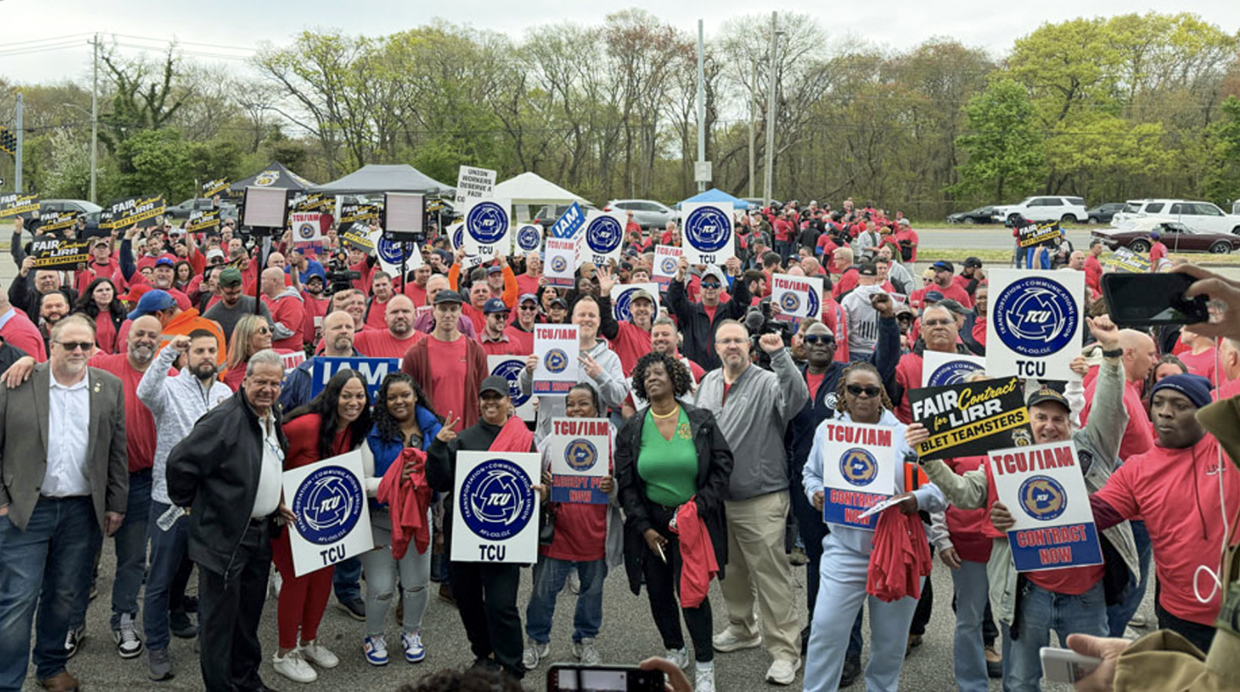
After nearly three years of negotiations with the Long Island Railroad, a coalition of union-represented workers that includes more than 900 members of Jamaica, N.Y., Local 589 reached a tentative agreement on an amended contract with the commuter carrier and its parent agency, the Metropolitan Transit Authority.
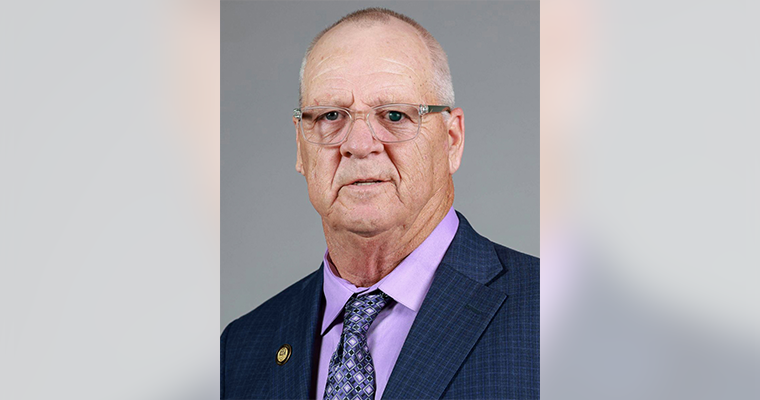
“Coalition bargaining was monumental to our success,” said Local 589 General Chair Jeff Klein, who led the IBEW’s contingent in the bargaining group, which also represented members of the Brotherhood of Railroad Signalmen, the International Association of Machinists, the Transportation Communications Union, and the Brotherhood of Locomotive Engineers and Trainmen.
“We disagreed sometimes, and sometimes it got heated, but like with siblings, we’d be back the next day at the bargaining table,” Klein said. “We were very fortunate.”
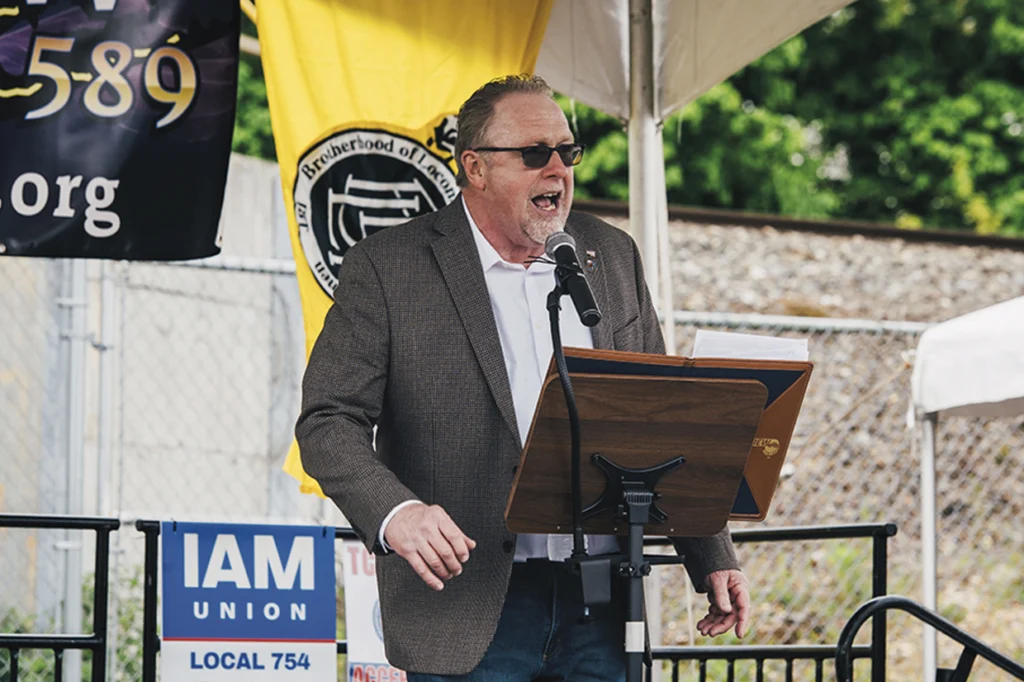

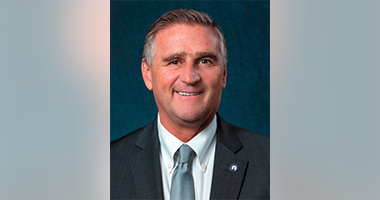
Among the speakers featured at a May 9 rally for members of the five-union coalition bargaining with the LIRR were Local 589 General Chair Jeff Klein (far left) and IBEW Railroad Director Danielle Eckert.
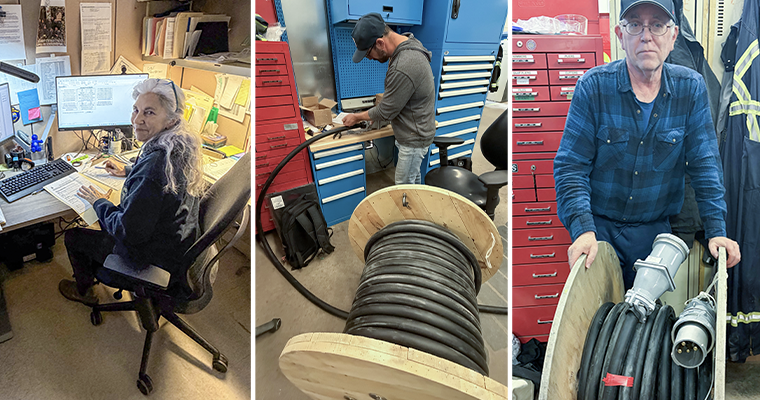
The LIRR carries more than a quarter-million riders on a given weekday, and Local 589’s members in the railroad’s engineering and maintenance departments support electrical equipment in the railroad’s trains, stations and other buildings. They also work on the system’s electrified third rail and signal gates, and they keep up the high-voltage lines connecting the railroad’s substations with the power grid.
Klein highlighted pay raises as among the biggest victories the coalition won in this tentative agreement: 3% raises in each of the first two years, 3.5% in the third and 4.5% in the fourth.
“That fourth-year increase helps everybody out,” said Third District International Representative Dominick Macchia, who services Local 589 and was involved throughout the negotiations. “That’s now the first-year floor for every new rail worker agreement in the metro New York area.”
The tentative agreement was announced May 19, about 3½ days after the members of the coalition, which represents more than 3,500 LIRR workers — over half of the railroad’s unionized workforce — authorized the first strike against the LIRR in nearly 30 years.
Under the Railway Labor Act, commuter and freight rail agreements in the U.S. do not expire. Instead, they become amendable at an agreed-on date, and the existing provisions remain in place until ratification of the amended version.
Negotiations between the union coalition and the LIRR began shortly after the agreement became amendable in June 2023.
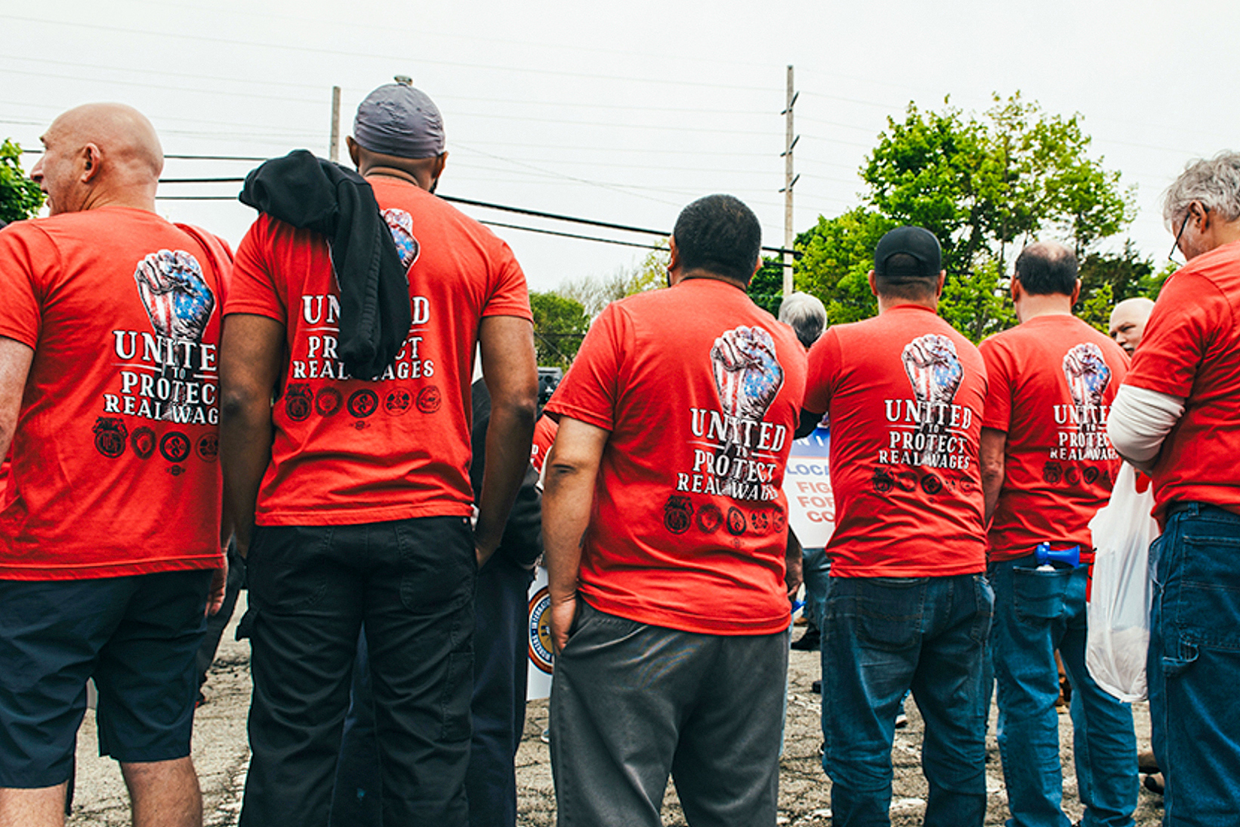
A major problem, Klein said, was that the railroad refused to recognize the five-union coalition.
“So I said, ‘Fine, the IBEW will take the lead,’” Klein said, “and then I would bring reps from the other unions as part of ‘my’ bargaining committee.” Local 589’s website kept members informed with regular updates.
A big coalition concern was the LIRR’s hiring and retention, he said.
“There’s a lot of competition with companies outside of railroads to find qualified electricians,” said Klein, a member of Local 589 for nearly 30 years. “People don’t take railroad jobs to get rich. They take them for their stability. We felt that the LIRR needed to up its game.”
Those issues and others remained in contention over the ensuing three years while thousands of LIRR workers remained on the job without a pay increase. Meanwhile, many of their railroad brothers and sisters around the country won raises.
“Our people were frustrated, especially because Long Island is a very high-cost place to live,” Macchia said. “Gas prices have gone through the roof, and they still didn’t have an agreement. They felt like they were running in sand and not making any progress.”
Direct bargaining between the five-union coalition and the LIRR followed the steps set forth by the Railway Labor Act and began shortly after the agreement became amendable. The process includes provisions for mediation via the National Mediation Board before parties can seek strikes or lockouts, and state governors can even request White House intervention — in the form of Presidential Emergency Boards — when disputes threaten interstate commerce. Numerous cooling-off periods, ranging from 30 to 120 days, are placed throughout.
“It’s just a slower process in the railroad world,” Macchia said.
“We would never have gotten to this point without the give and take of our coalition.”
– Jamaica, N.Y., Local 589 General Chair Jeff Klein
By fall 2024, the parties had still not made meaningful progress toward a voluntary agreement. That’s when the Presidential Emergency Boards, or PEBs, were authorized.
PEB 253’s decision sided with the union coalition, recommending in October that the parties adopt an amended agreement lasting through July 2027 and containing, among other things, 3% raises retroactive both to 2023 and 2024, followed by 3.5% for 2025 and 4.5% for 2026. In March, PEB 254 essentially recommended the coalition’s proposal as its preferred final offer.
The coalition deemed unacceptable an 11th-hour proposal by the railroad to require higher health care premium contributions from newly hired workers — essentially, a pay cut — and when it looked as if the final 60-day cooling-off period would pass without an agreement, the coalition members began preparing for a strike.
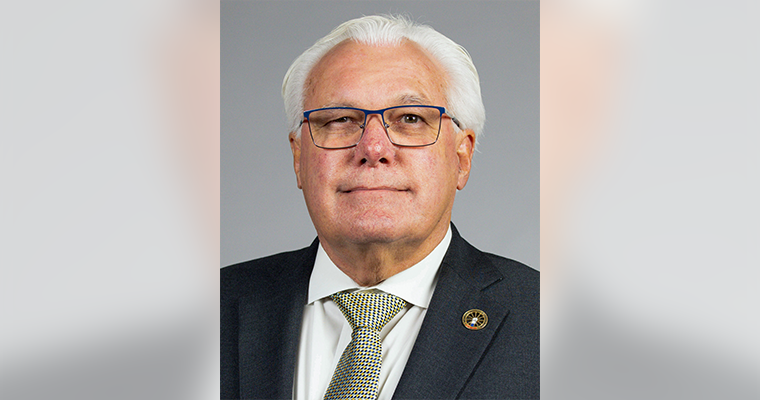
“The workers felt that they’d exhausted every avenue available under the RLA,” said IBEW Railroad Director Danielle Eckert. “They saw a strike as their way of fighting for fairness, respect and the future of the workforce.”
By noon on May 19, the parties had announced a tentative agreement that accepted the PEB recommendation — without the LIRR’s premium contribution proposal — and the LIRR’s trains started running again.
Macchia said no one worked harder to achieve the tentative agreement than Klein, who served as Local 589’s president for nearly 10 years before becoming its general chairman in 2025. The 1,300-member local also represents electricians at Newark International Airport, as well as the electrical workers who service John F. Kennedy International Airport’s AirTrain.
“In the bargaining room, you have different personalities, you have different egos,” Macchia said. “If it wasn’t for Jeff’s leadership, they probably would still be on strike.”
Eckert agreed. “Jeff helped hold the coalition together during bargaining and the PEB process,” she said.
Local 589’s members appreciated that Eckert showed up to stand with them on the strike’s picket lines, Macchia added.
“When Danielle spoke, she said, ‘We have something in common: I’m a railroad electrician,’” Macchia said.
Klein said that he was “blessed” to work with an army of dedicated unionists.
“We would never have gotten to this point without the give and take of our coalition,” he said.
When this article was prepared, the amended agreement had been ratified by 98% of Local 589 members who voted. Visit ibew589.org for updates.