
Declaring that intimidation and discrimination have no place in the IBEW, International President Kenneth W. Cooper and International Secretary-Treasurer Paul Noble emphasized the importance of Bystander to Upstander, a program designed to give members useful strategies for intervening to prevent on-the-job harassment and bullying.
“Every IBEW member — regardless of gender, color or creed — deserves a workplace that is safe, welcoming and free of harassment,” the two leaders wrote in a joint column for the January 2026 Electrical Worker. “And it is everyone’s responsibility to make that a reality.”
Safe and healthy workplaces happen when the union’s values and members’ behaviors align, said Education Director Amanda Pacheco, who is working with Civic and Community Engagement Director Jennifer Gray to develop Bystander to Upstander.
“I’ve met a lot of amazing people who are committed to the labor movement, their union and working people, and they continue to do that work every day,” Pacheco said. “Unfortunately, I’ve worked with some great union leaders and members who, for one reason or another, couldn’t stay in. A lot of times, it was because the movement wasn’t welcoming to them.”
Sometimes, such situations can escalate into tragedies, such as the murder last November of Amber Czech, a 20-year-old welder from Minnesota, in what authorities said was an act of targeted workplace violence.
“What hurts the victim most is not the cruelty of the oppressor, but the silence of the bystander.”
– Elie Wiesel, Holocaust survivor, political activist and Nobel Peace Prize winner (1928-2016)
The IBEW and several other AFL-CIO unions moved swiftly afterward to develop courses that go beyond traditional harassment training, said Pacheco, who noted that some of the training is related to a program used by First District IBEW members called “Be More Than a Bystander.”
“We need to help folks understand that it’s not okay to just ‘do no harm.’ We actually have to stand up when we see somebody being treated unfairly,” Gray said. “It might not be you today, but it could be you tomorrow.”
The highly interactive, two-hour Bystander to Upstander course calls special attention to the IBEW’s oath of membership, which contains a promise to abide by the union’s constitution — a document that begins with the declaration that members will always refuse “to condone or tolerate dictatorship or oppression of any kind.”
IBEW members, then, are duty-bound to be more than bystanders when they witness pranks that seem harmless, discriminatory jokes and even physical assaults, Pacheco said. They need to be intervening upstanders.
Such behavior can turn into a safety issue, she added. “When people don’t feel safe, they’re not at the top of their game,” Pacheco added. “Nobody wants to be on a line with somebody who’s not at their best.”
Going further, if the IBEW gains a reputation for not having the backs of its members, it could divide the Brotherhood and weaken the union’s organizing, bargaining and market share.
It takes courage and consistency to become an upstander, Pacheco said, so course participants engage in role-playing to practice using the “Three Ds” — direct, distract or delegate — while intervening during uncomfortable jobsite situations.
“You don’t want to be that person who was there and saw something happen but didn’t do anything to help your union brother, sister or sibling,” she said.
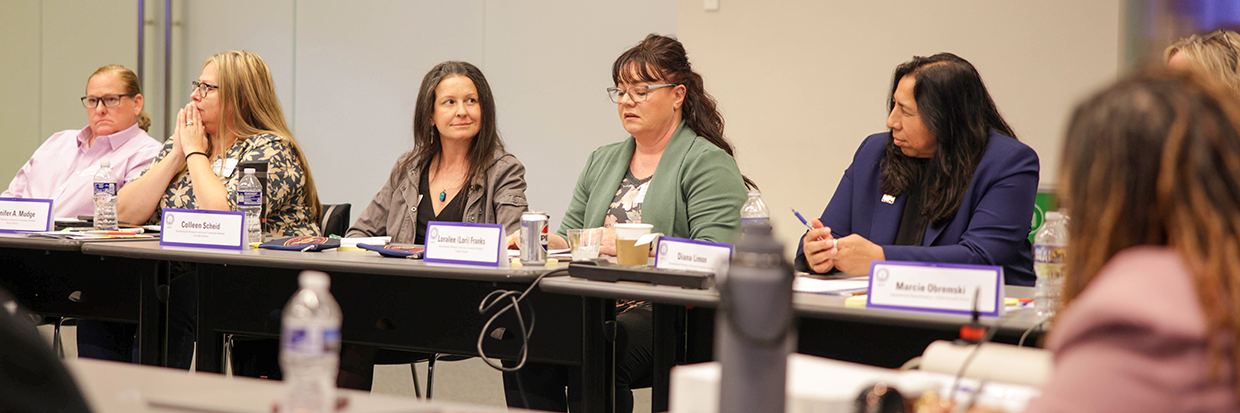
Members of IBEW affinity groups such as the International Women’s Committee, RENEW/NextGen and the Electrical Workers Minority Caucus have taken part in the training, and Pacheco said she hopes more members will have the same opportunity.
Meanwhile, Cooper and Noble encouraged the union’s district and local leaders to look for opportunities to bring Bystander to Upstander training to their members.
“When we look out for one another, challenge harassment and intimidation wherever they appear, support members who are struggling and ensure that every worker feels valued and protected, we build a union worthy of the people within it,” they said.
Bystander to Upstander, they said, reinforces the labor movement’s principle that an injury to one is an injury to all. “The IBEW built a culture of safety that expects every member to follow our standards and shows zero tolerance for anyone who does not.”