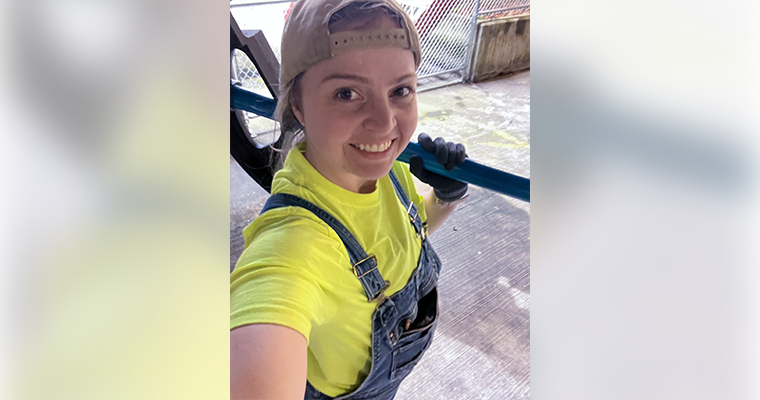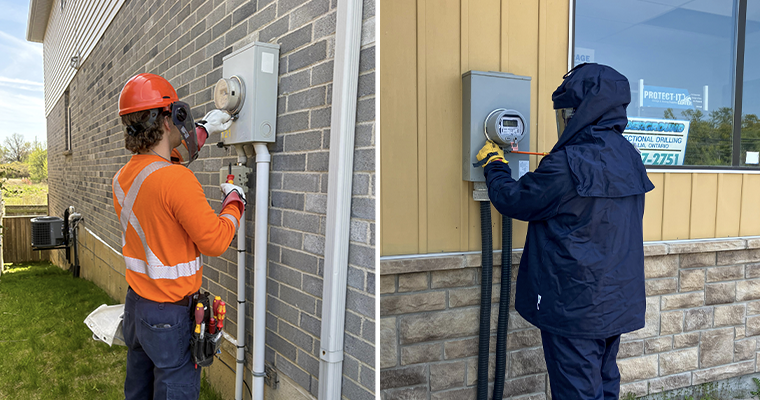
The only shop in the CSX railroad system where locomotives are being converted to use hydrogen fuel instead of diesel is in Huntington, W. Va., and highly trained IBEW electricians are playing a crucial role in ensuring that these conversions are completed thoroughly and safely.
“We’re very fortunate for what we get to do here every day,” said Huntington Local 549 President Chris Holley, a second-generation railroader who has worked with CSX for nearly 17 years.
Hydrogen offers locomotives an efficient, clean alternative to diesel. It’s especially well-suited for locomotives servicing urban centers in CSX’s operations area, which covers the eastern third of the United States.
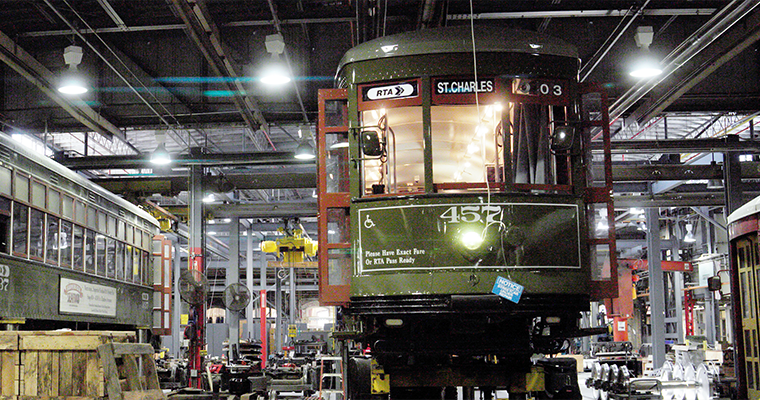
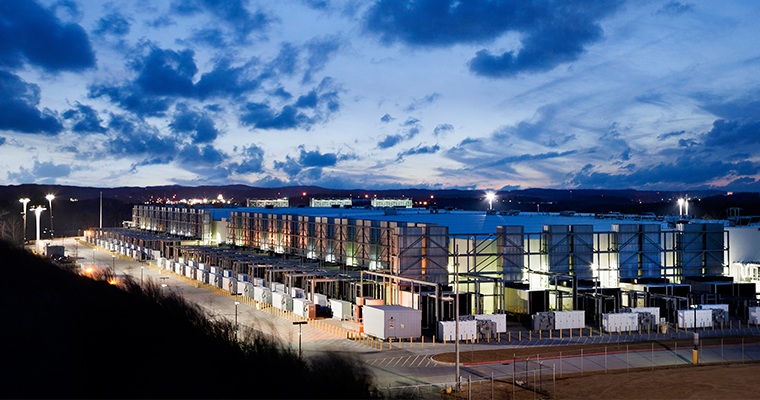
Within Huntington’s heavy-engine building and repair shop — an 11-acre indoor facility massive enough to hold almost 200 locomotives — nearly two dozen CSX workers represented by the IBEW and several other unions play key roles in the hydrogen conversion process, which commences when diesel engines “are flown with a 300-ton overhead crane into the high bay,” Holley said.
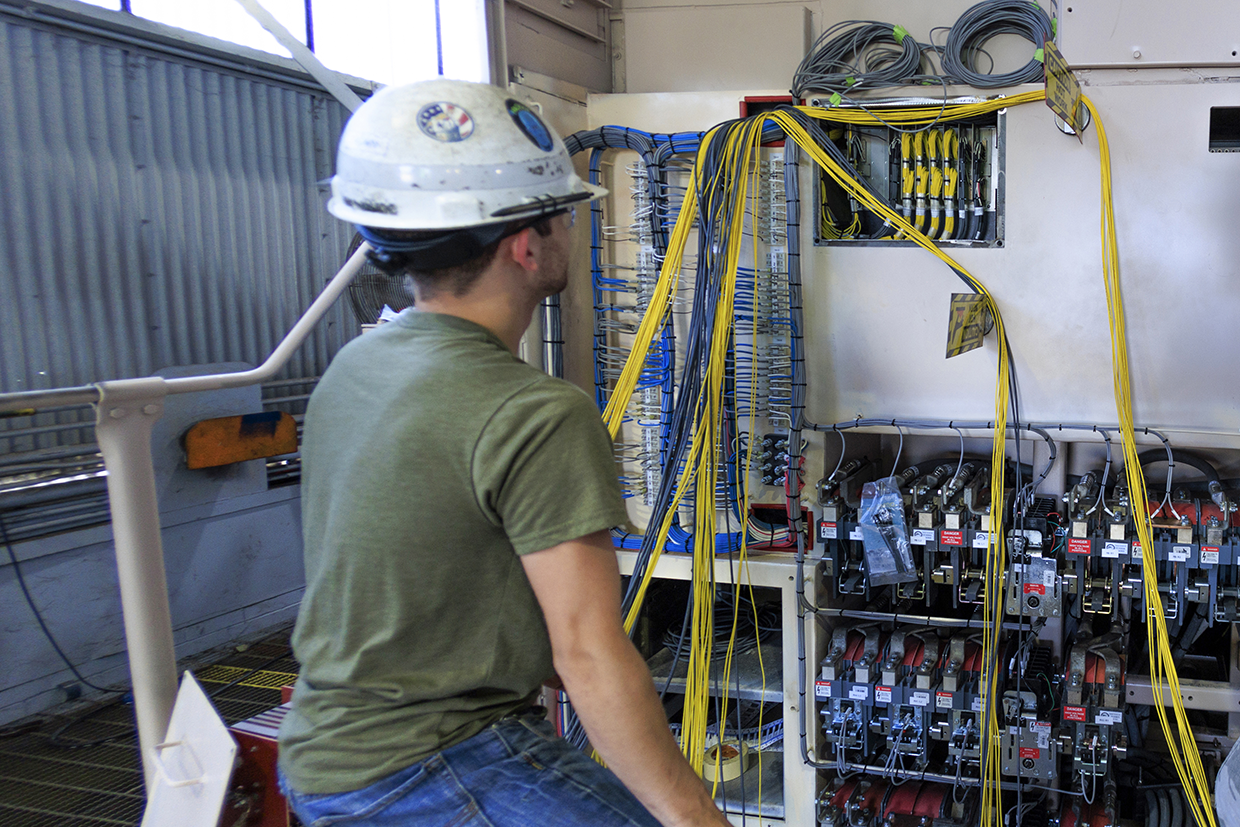
“They’re stripped down by each craft to the main frame, and then the rebuilding begins with boilermakers doing their modifications,” he said, alongside IBEW electricians who install upgraded hardware, software and wiring. “There’s over five miles of wire that runs through a locomotive.”
That kind of electrical work keeps Local 549 members busy throughout the weeks-long conversion process, working shoulder to shoulder — as they have for decades at the 71-acre rail yard — with their brothers and sisters in unions representing pipefitters, machinists, sheet metal workers, and anyone else who maintains locomotive components.
“Everybody here understands their role,” said Holley, who noted his personal experience with other railroad crafts.
“My dad was a clerk who retired after 38½ years of service,” he said. “I’ve got a brother-in-law who was a machinist, and an ex-brother-in-law who’s a current boilermaker here.”
CSX unveiled its first hydrogen locomotive in 2024 as part of a collaboration with the Canadian Pacific Kansas City railroad, which, like CSX, also employs hundreds of workers represented by the IBEW. Hydrogen conversions for CSX began in Huntington the following year.
“Our craftsmen quickly figured out exactly how they were going to make [conversions] work here,” Holley said. “They determined what needed to be done, and how.”
IBEW workers remain involved throughout the conversion process, he said, as locomotives move through fueling, testing and finishing. Workers at the Huntington shop are expecting to convert six or seven locomotives a year for the foreseeable future.
“It really is a careful process. CSX put a lot of safety features into this project,” Holley said. “Regardless of what type of fuel you use, you’re always going to have some type of risk. The key thing is that you have to make sure you do proper maintenance on anything you run, to ensure the safety of it.”
Fourth District International Vice President Austin Keyser, whose jurisdiction includes Local 359, noted that the hydrogen-powered units emit only water vapor.
“The IBEW has always been at the forefront of technological advancement,” Keyser said. “This project is another example of that.”
A fully converted hydrogen locomotive looks mostly like a traditional diesel version, Holley said, with a few distinctions.
“The painting scheme is completely different, a light blue, white and bright green with dark blue lettering,” he said. They also wind up being a bit taller.
“One thing that was kind of touch-and-go was when they first started building these things, it raised the height of the locomotive to where it was pretty close for them clearing the doors and getting out of the building,” Holley said.
Although none of the newly converted locomotives had problems exiting to the yard’s test tracks, he said that “one of the big running jokes was, ‘We can just let the air out of the tires if we need to.’”
Local 549 members work on a lot of other things besides hydrogen conversions, Holley noted.
“We have a full electric shop, building generators and traction motors,” he said. The nearly 90-member local also represents communication and roadside electricians, as well as workers at a CSX shop in nearby Russell, Ky.
In Huntington, IBEW electrical workers are also part of a CSX program to extend the lives of hundreds of other diesel locomotives by taking them almost completely apart and then rebuilding them with modernized cabs, frames and motors.
Innovation fueled by IBEW members helps railroads like CSX remain competitive, said Railroad System Council 6 General Chair Shannon Spotswood.
“It’s exciting to see Huntington leading the way into the future with their hydrogen program, because I think there’s a lot of potential going for it to develop into something big,” said Spotswood, whose 28-local jurisdiction includes Local 549. “It keeps our members working, and it could help bring future workers into the IBEW.”
Railroad Director Danielle Eckert agreed. “IBEW electricians remain crucial to railroad operations across North America,” Eckert said. “As fuel-cell technology continues to evolve, our training and expertise can help railroads continue to evolve along with it.”