With temperatures soaring, heat safety should be top of mind for everyone who works outdoors. Just don’t count on much guidance from Washington.
More people die each year from heat-related illness than all other natural disasters combined. And despite making up only 7% of the workforce, construction workers account for more than a third of all heat-related deaths. According to data from the Occupational Safety and Health Administration, construction is one of the top three jobs with the most heat-related deaths.
Heat-Related Illnesses and First Aid
Several heat-related illnesses can affect workers. Some of the symptoms are non-specific. This means that when a worker is performing physical labor in a warm environment, any unusual symptom can be a sign of overheating.
| Heat-Related Illness | Symptoms and Signs |
|---|---|
| Heat stroke | Confusion Slurred speech Unconsciousness Seizures Heavy sweating or hot, dry skin Very high body temperature Rapid heart rate |
| Heat exhaustion | Fatigue Irritability Thirst Nausea or vomiting Dizziness or lightheadedness Heavy sweating Elevated body temperature or fast heart rate |
| Heat cramps | Muscle spasms or pain Usually in legs, arms, or trunk |
| Heat syncope | Fainting Dizziness |
| Heat rash | Clusters of red bumps on skin Often appears on neck, upper chest, and skin folds |
| Rhabdomyolysis (muscle breakdown) | Muscle pain Dark urine or reduced urine output Weakness |
Employers and workers should become familiar with the heat symptoms. When any of these symptoms is present, promptly provide first aid. Do not try to diagnose which illness is occurring. Diagnosis is often difficult because symptoms of multiple heat-related illnesses can occur together. Time is of the essence. These conditions can worsen quickly and result in fatalities.
It’s not just construction workers. The need to protect all workers is becoming increasingly urgent. People performing a wide array of jobs face dangerous heat conditions, including those that are indoors, and it is only getting worse as each summer outpaces the previous one for hottest season on record. It’s gotten so dangerously hot, in fact, that the National Weather Service created a heat risk chart ranking the probability of heat-related illness as it correlates to the heat index, among other factors.
As striking as the numbers are, no federal law requiring a heat-related protocol exists. The Biden administration’s OSHA introduced a rule to create a heat protection standard, but the rulemaking process is notoriously slow, and time ran out. The current administration could continue the process, but it has thus far ignored the issue.
“It’s almost better that OSHA, as it is right now, does not revisit the heat rule,” Safety Director Mark MacNichol said. “They would almost certainly weaken it and take out worker protections.”
President Donald Trump’s OSHA took another heat-injury regulation from Biden’s tenure and watered it down to make it more employer-friendly. In 2022, OSHA instituted the National Emphasis Program for heat. It was launched to increase on-site inspections of industries where workers are at high risk for heat exposure. It also set a goal to have each OSHA regional office increase inspections. The new version, released in April, eliminated that part and did not replace it with an alternative metric.
The new NEP also defanged the original with language that calls for “consultations” in lieu of inspections, prioritizing employers over employees.
“This new policy limits OSHA’s ability to hold bosses accountable when they fail to protect workers from heat on the job,” AFL-CIO President Liz Shuler said. “It puts workers’ lives in danger, plain and simple.”
The Trump administration is markedly different from the Biden administration when it comes to regulation and worker protections, said Topeka, Kan., Local 304 Assistant Business Manager Gene Sicard.
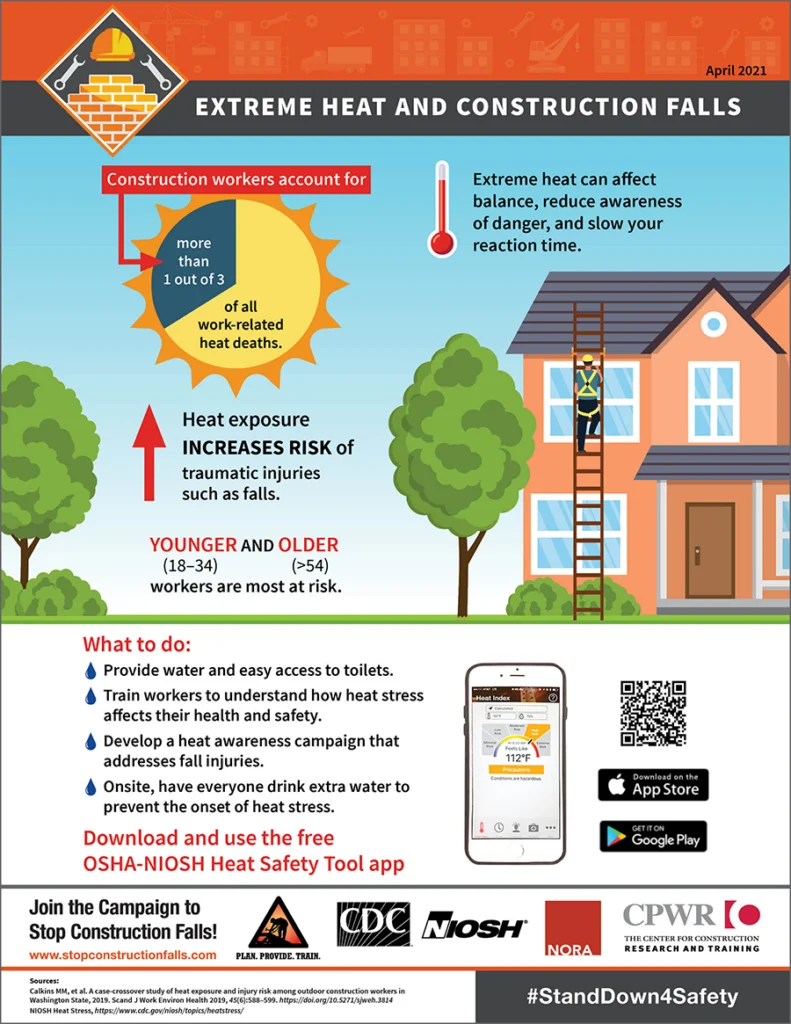
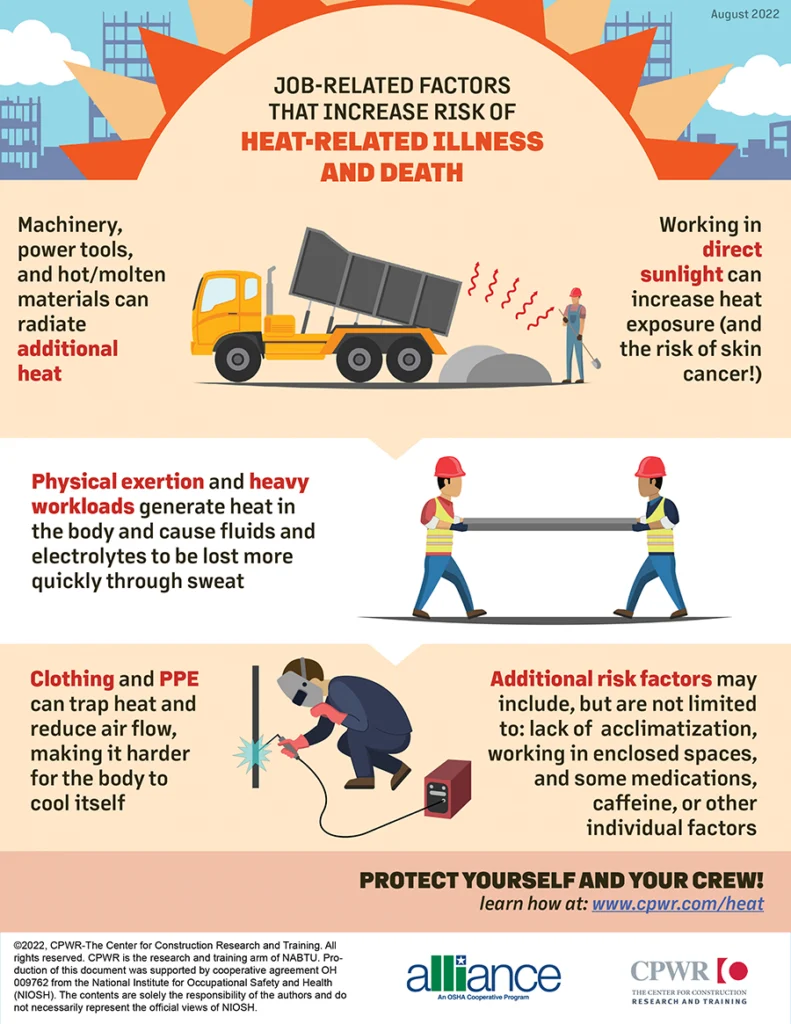
As temperatures climb to extreme levels, workers and employers should know what signs to look for and how to help someone experiencing a heat-related illness. Resources can be found through organizations like CPWR and OSHA.
“President Trump is very deregulation-oriented,” said Sicard, who serves on OSHA’s Advisory Committee on Construction Safety and Health. “Trump’s administration is currently leaning towards employer protections with the potential costs of removing worker protections, whereas President Biden worked to increase them.”
With little guidance from the federal level, states are stepping up and passing their own laws. Only seven states have regulations around heat safety, with varying language about who is covered, but close to 20 other states introduced bills in 2025 legislative sessions.
The Virginia Legislature passed a bill in March that directs the Health Codes Board and the Department of Labor to set standards that require safeguards like shade, water and rest; written heat illness prevention plans from each business; and heat training for workers and supervisors.
Some areas are seeing action at the local level, like Phoenix. The City Council unanimously passed a heat safety ordinance that requires employers with outdoor workers to have a heat safety plan on record.
Other states, however, are moving in the opposite direction. Florida and Texas both passed laws preempting local governments from passing their own laws on water breaks and other heat-related safety standards.
“Florida and Texas are two of the hottest states in the nation, and they’re acting like it’s not hot at all,” MacNichol said.
For most workers, the only way to ensure that heat-related protections are available is to join a union.