Dallas-Fort Worth Local 20 faces a challenge every day to meet the unprecedented demand for skilled electricians.
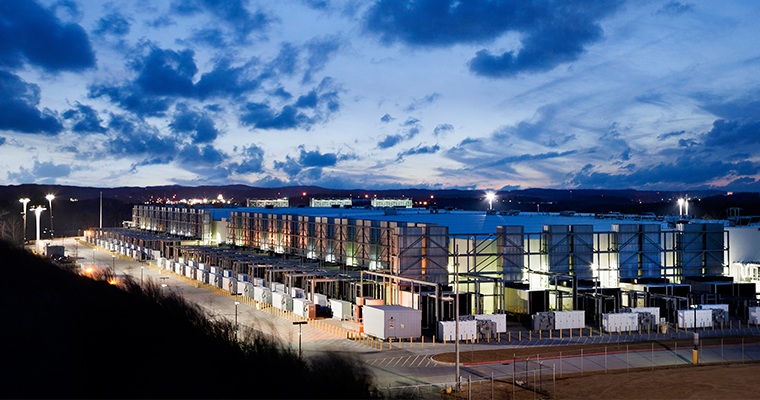
The Metroplex is one of the fastest-growing areas in the country, making it a magnet for new construction. Its jurisdiction is one of the hottest markets for data center construction. It must meet that demand while battling the historical anti-union headwinds in the Lone Star State.
An acute staffing crisis, however, provided a blueprint for local unions across the United States and Canada on how to quickly provide journeyman wiremen to signatory contractors — a challenge that International President Kenneth W. Cooper calls one of the biggest in the Brotherhood’s 134-year history.
“Opportunities are coming at us faster than ever,” Cooper said, “and we can’t afford to miss them.”
It isn’t easy, but it can be done. A four-day organizing blitz and job fair held in Dallas to support Local 20 in late March and early April showed just that.
A Call for Help
“The biggest struggle we face is overcoming the generations of misunderstanding and propaganda,” Business Manager Price Warwick III said. “Most of the [nonunion] workers we talk to say things they don’t even know if they are true or not, but it’s what they’ve been told. It’s just overcoming that and getting them to actually listen to you, and that makes a world of difference.”
The IBEW has only about 11% market share in Local 20’s jurisdiction — a number not uncommon in the anti-union South. Local 20 had about 200 open calls earlier this year, Warwick said.
That’s challenging enough, but it got even worse. Signatory contractors told him they needed another 1,200 electrical workers during the next six months. Without that, companies that relied on the IBEW and other skilled trades would be forced to turn to nonunion workers and temporary agencies to meet the demand.
Despite Local 20’s double-digit-percentage membership growth in recent years and the recent addition of a new signatory, Warwick knew he needed a lot of help. And fast.
So, he talked with Seventh District Organizing Coordinator Philip Lawhon and others about their options. Lawhon talked with district International Vice President Chris Wagner, and they reached out to the Construction Organizing Department at the International Office in Washington, D.C.
Enter SWAT — and no, not the hostage rescue team at your nearby police department.
Bringing In New Workers Now
For the IBEW, it’s an acronym for Strategic Winning Action Team, a program that has been used successfully during professional and industrial organizing campaigns.
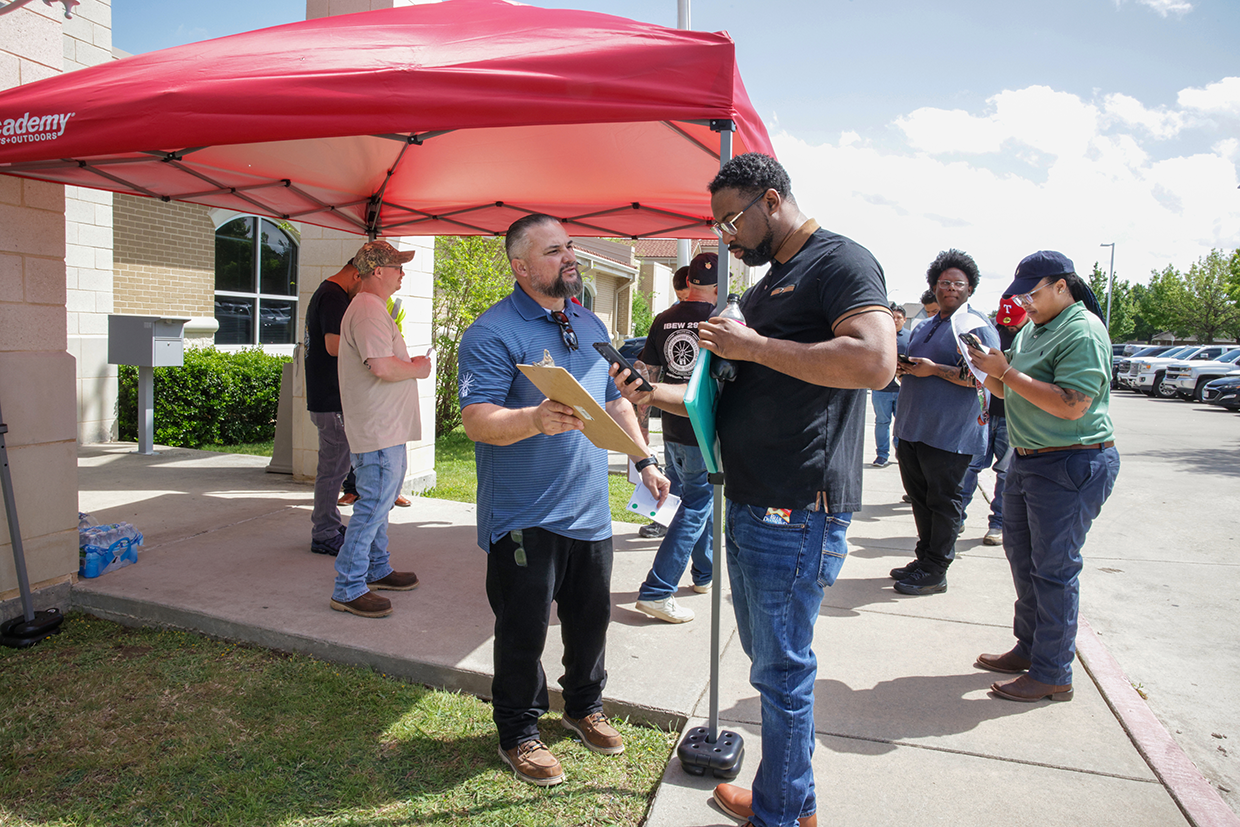
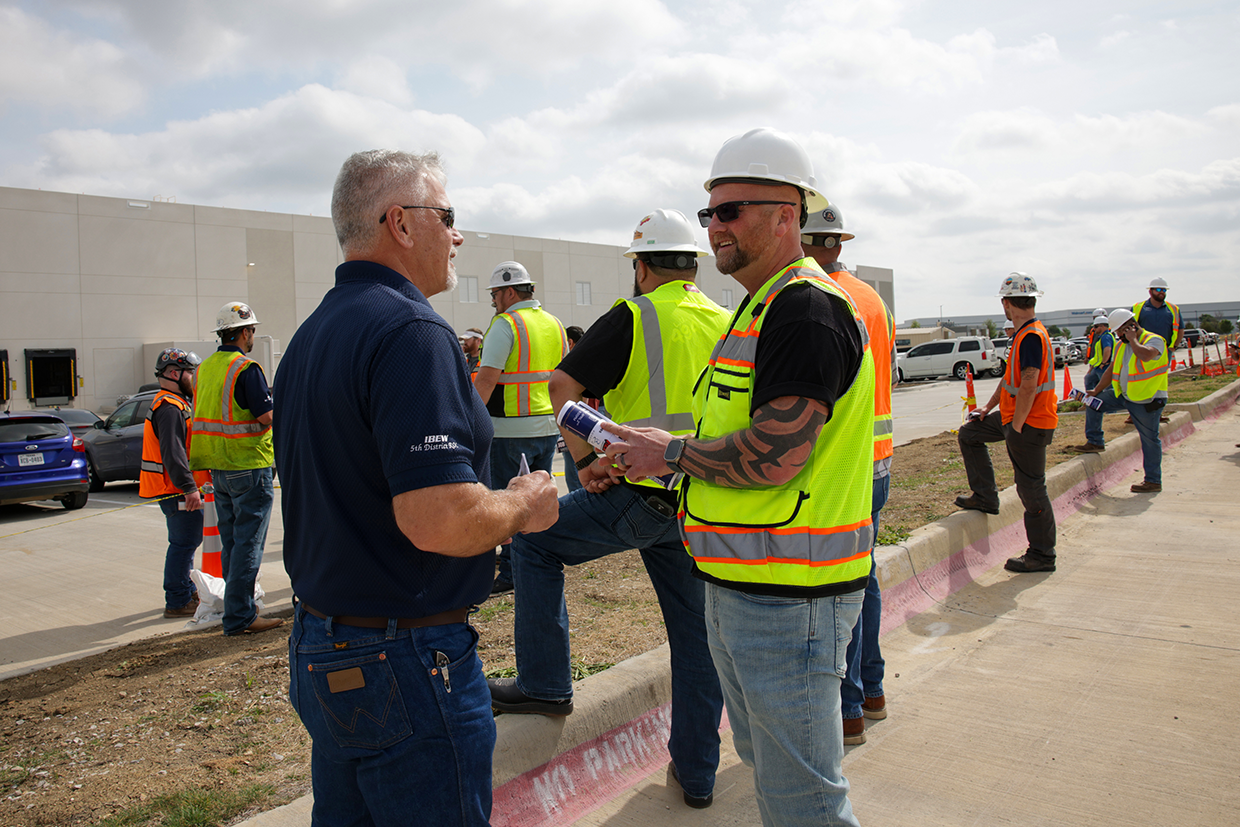
Officers, organizers — from the International Office and the district and local levels — and members from across North America travel to a targeted site, where they knock on employees’ doors and meet them outside their places of employment, urging them to join the IBEW.
It has played a key role in organizing wins at Atlanta Gas Light and BGE, but nothing on that large of a scale in construction.
There was no time to waste. With Cooper’s blessing, Lawhon, Construction Organizing Director Adrian Sauceda and Local 20 officials went to work. Within three weeks, they devised and executed an organizing blitz that would bring 83 volunteers and organizers to the Dallas-Fort Worth area.
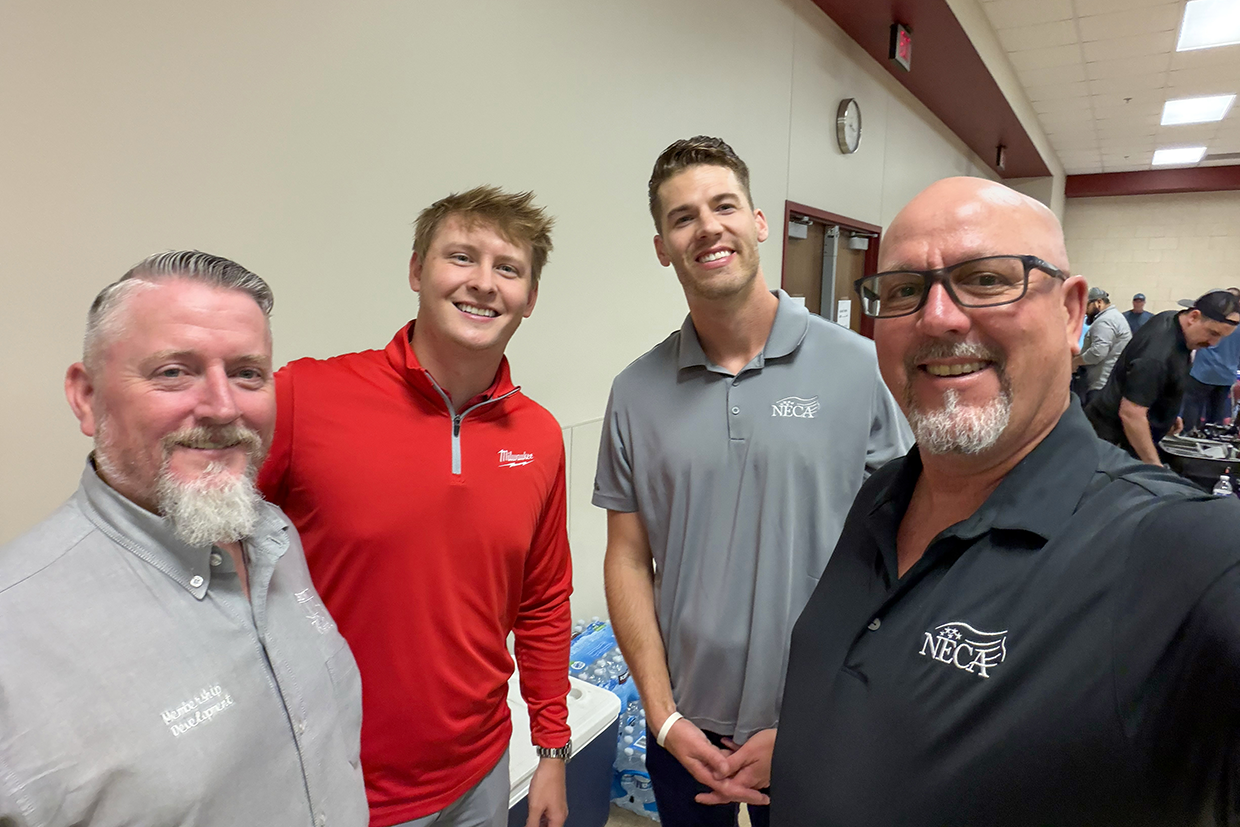
It would culminate April 2 in a huge job fair with over 500 attendees, with representatives from the National Electrical Contractors Association and signatory contractors in attendance.
Nearly 100 wiremen and other electrical workers were hired that night, bringing them the security of higher union wages and better benefits. The IBEW, which has seen its most rapid growth in 60 years, continued to strengthen its position to garner even more work and negotiate better contracts for members.
The momentum continues. Local 20 added 440 new members in April, the most it has ever added in one month, Warwick said. Nearly every morning, someone who attended the job fair or heard from others is waiting in the parking lot, anxious to see if they can become part of the Brotherhood.
“It was an overwhelming success,” said Lawhon, who has been an IBEW organizer for 25 years and is a member of Austin, Texas, Local 520. “We would not have been able to do this without the assistance from outside the district, because the Metroplex is just so big with so much development there.
“We could probably do it again tomorrow and get the same results,” he added.
Making SWAT Work
There might be another SWAT operation in Dallas at some point, but the program is available to all construction local unions that need help growing fast. Once approved, the Brotherhood can quickly bring in an army of enthusiastic organizers.
Here is how it worked in Dallas:
President Cooper put out a call in mid-March to districts and locals to send members to help with the Dallas blitz later that month.
That’s a quick turnaround, but IBEW members understood the importance and heeded the call. There were 83 volunteers from five districts. They included not only business managers and organizers but also rank-and-file members. There were even apprentices on hand, some identified by their own local as potential future leaders.
They traveled to Dallas, and most arrived March 29.
The following morning, they began knocking on doors and walking and leafleting on nonunion jobsites. Local 20 used public records to identify electrical workers within its jurisdiction, with special emphasis placed on reaching out to those holding a Texas state journeyman electrician license.
Organizers asked potential applicants if they had at least three years of experience on commercial projects to give contractors a talented pool of candidates at the job fair, Sauceda said.
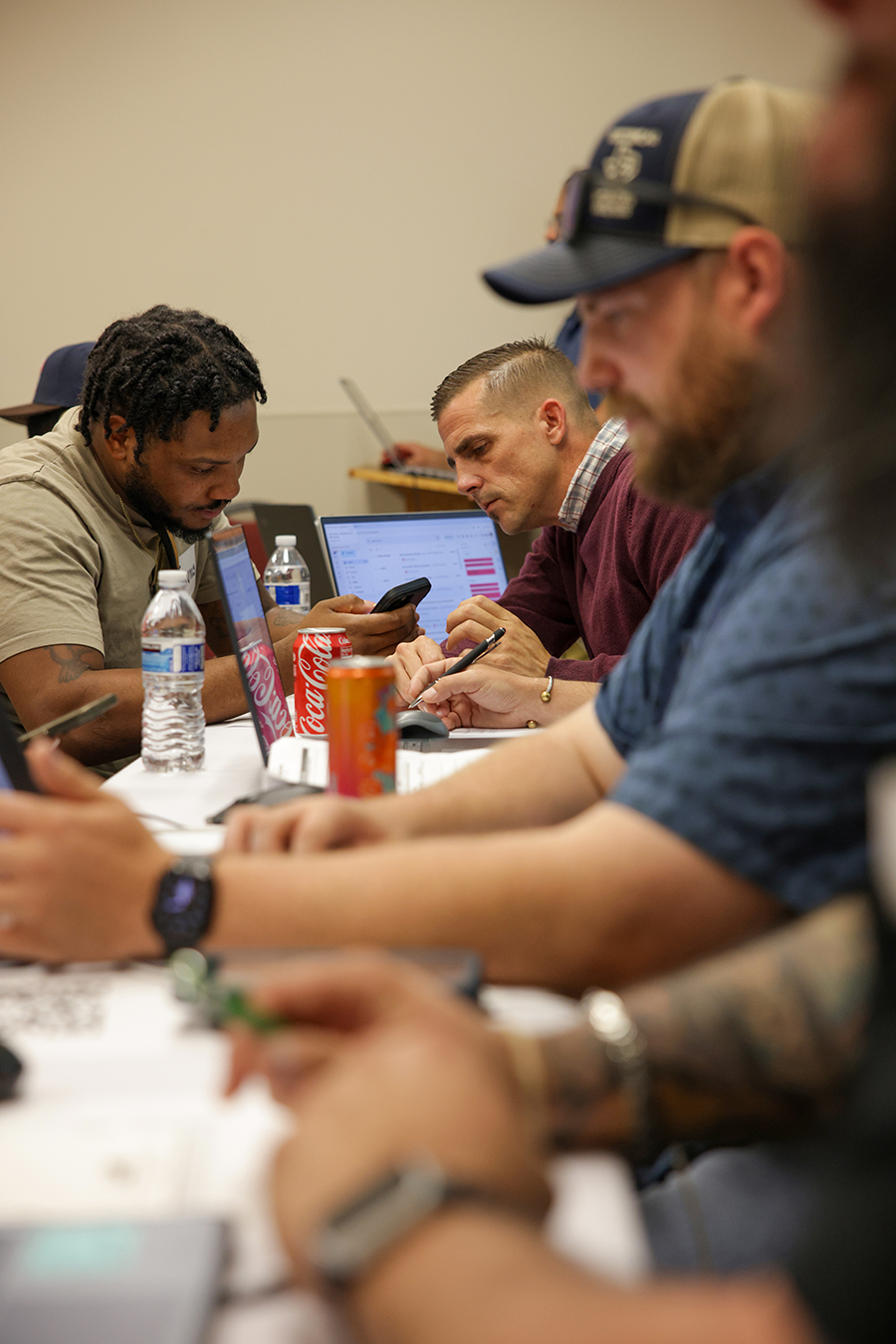
The days of filling out an application via pen and paper are nearly extinct. Anyone interested could apply on their phone or other internet device. Organizers quickly verified their work hours through irs.gov so a qualified candidate can be loaded into the IBEW’s Labor Power Express database and dispatched immediately.
The fair itself, which was held at Local 20’s hall, drew nearly 500 applicants. They each wore a badge with their name and color code that identified whether they were at journeyman or supervisor status. Contractors had their own individual QR code that was scanned when they wanted to hire an attendee, with that information added to Labor Power Express. Two food trucks provided a meal to everyone attending.
Paul Flynn, NECA’s director of workforce development and a former Peoria, Ill., Local 34 business manager, agreed that the competition among contractors was intense.
“The fact that people could walk out of there with a job referral helped make it such a success,” he said. “When you can have a job fair and you can dispatch on the night of the job, it’s game changing.”
Being able to confirm an applicant’s job history on the same night was crucial, Flynn said. That was possible due to a team of the volunteers on work verification duty walking each attendee through irs.gov.
“The contractors I’ve spoken to all said it was a success,” Flynn said. “They’d like to do another one again in a month.”
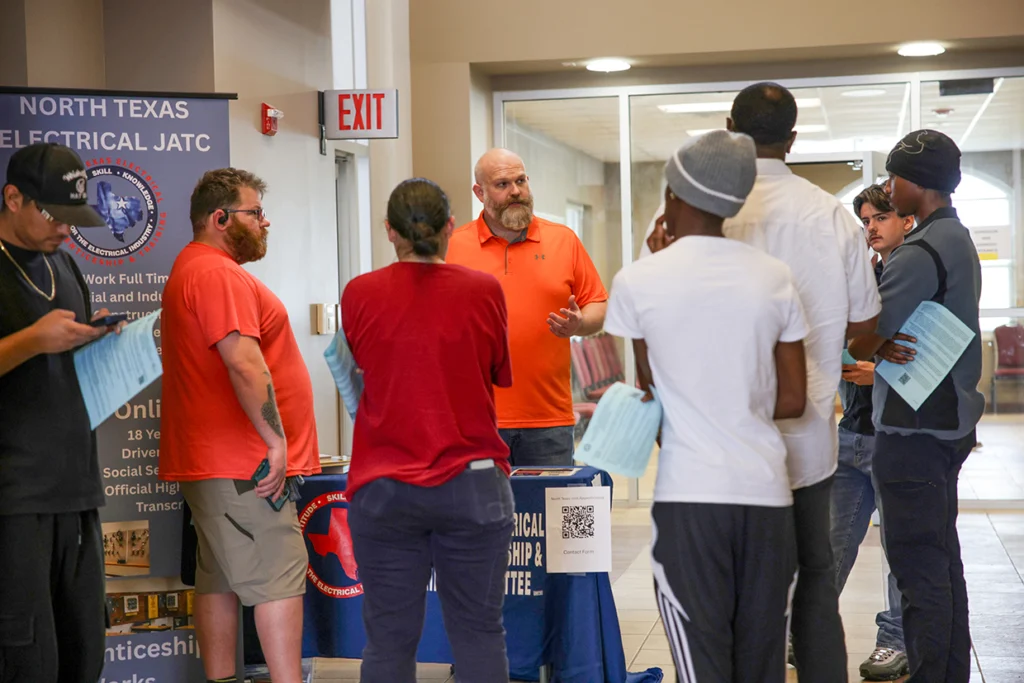
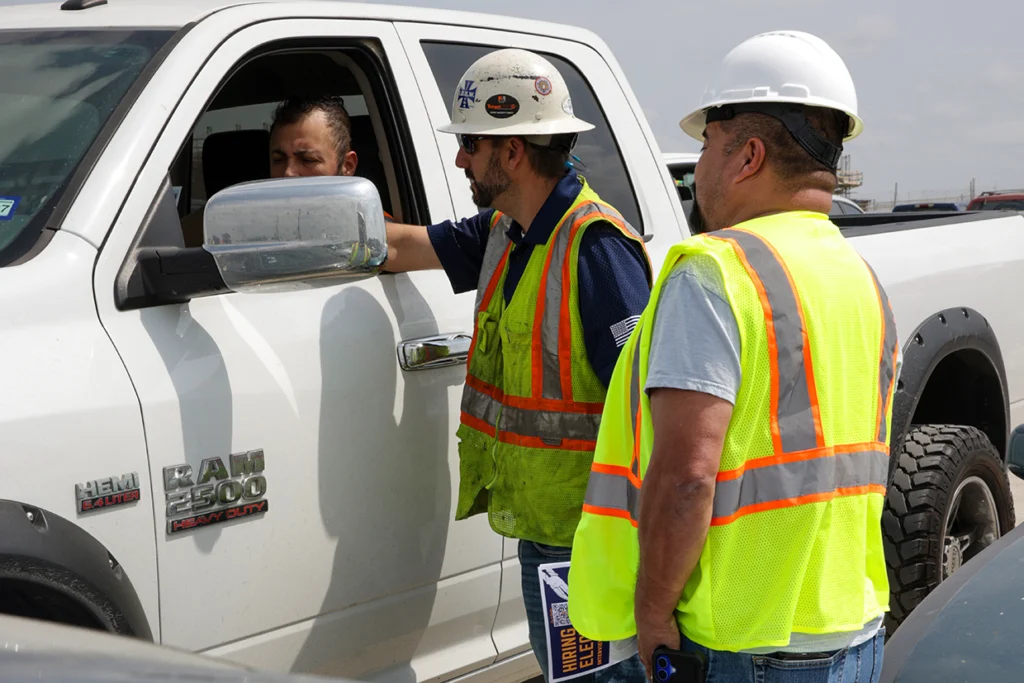
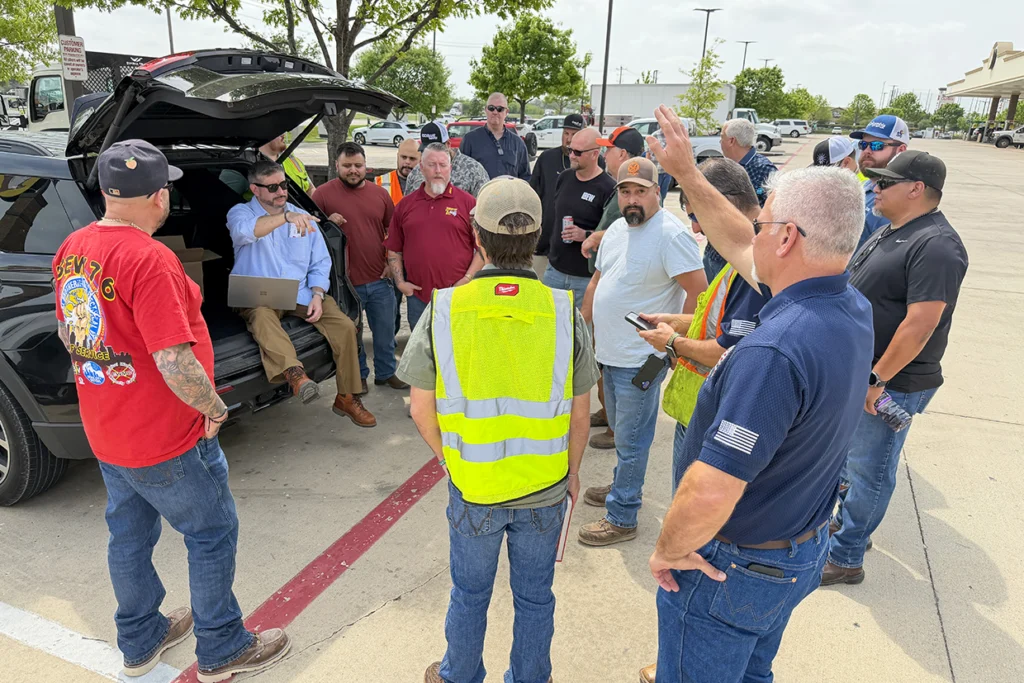
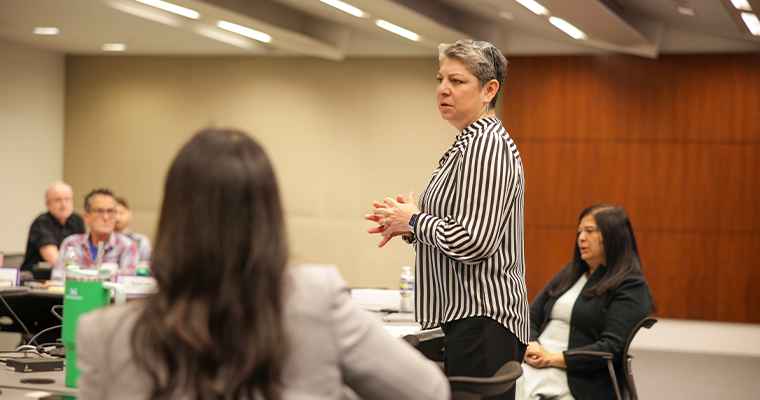
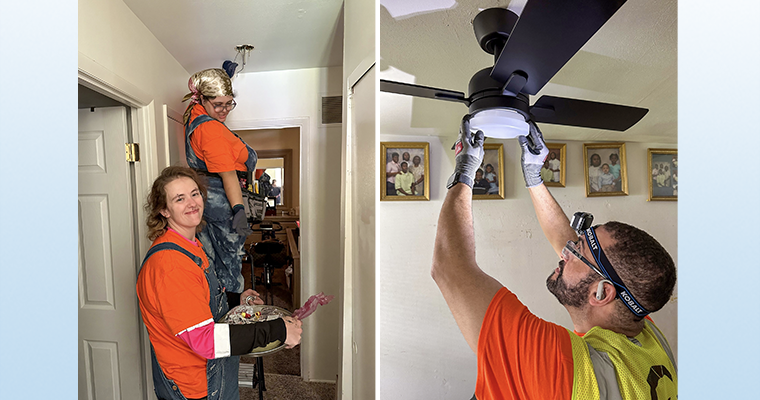
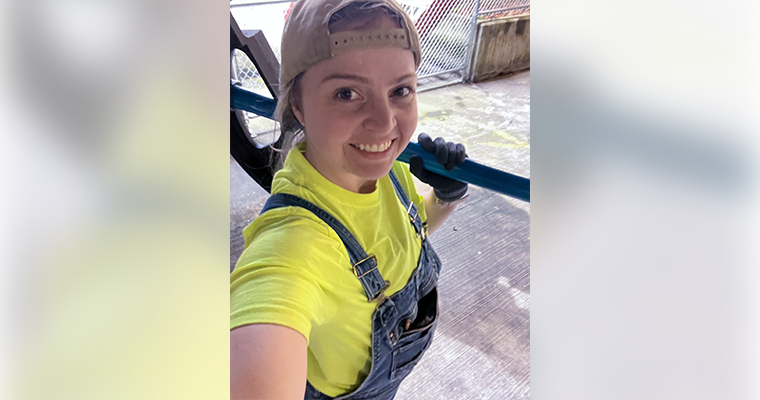
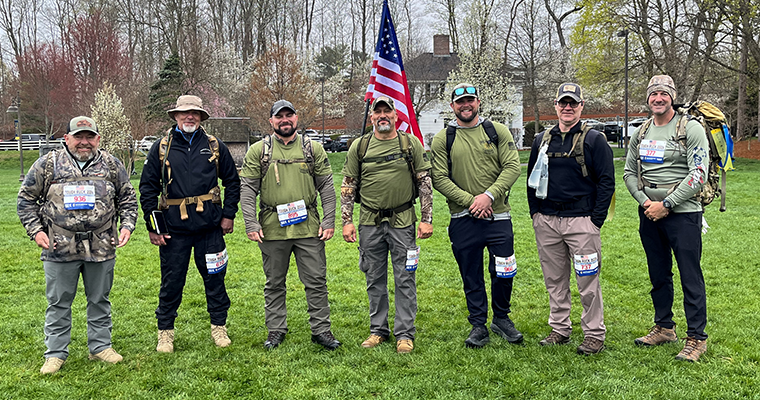
IBEW members from across the United States fanned out across the Metroplex for the organizing blitz and job fair.
Retention Is Vital
Making sure Local 20 and the IBEW retains those new members is key. Sauceda and Warwick both said organizers continue to reach out to them, seeing how they are adjusting to the job and if they are aware of all the benefits membership provides.
Those new members immediately see the increase in pay — often more than $15 per hour — but sometimes don’t grasp at first the quality of the health insurance or having access to a pension in retirement.
Another side benefit: Those IBEW members who traveled to Dallas from around the country got to sharpen their organizing skills. Many came from local unions with large market shares that have deep roots in their communities.
That’s not the case in most of Texas.
“We got screamed at,” said Sauceda, a Texas native and member of Houston Local 716. “We got cussed out. But that is a given when you are in the South.
“As organizers, we love that,” he added. “It’s motivating. Those guys from the high-density areas come down and say: ‘This is a fight. This is organizing at its roots. This is awesome.’”
Volunteers noted the cultural differences. If you’re from Ohio, knocking on doors with a union brother from Texas and another from Massachusetts is a bit of a culture shock.
But they loved it and look forward to doing it again.
“At the end of the day, our job is to talk to workers, no matter where they’re at or where they’re from, and have them join the IBEW,” said Fourth District Organizing Coordinator Donny Rutledge, a member of Newark, Ohio, Local 1105 and a volunteer during the blitz
“You talk to them, you’re friendly with them, and you get personal with them,” said Terry Short, an organizer for Toledo, Ohio, Local 8 who took part in the Dallas blitz. “You start talking to them about their wives, their families, where they come from, a little bit about their background.
“And then you find a way to take what we have and make it personal for them,” he added. “That’s how you really grab their attention.”
Wagner praised every IBEW member who traveled to Dallas for the blitz, adding that it was the Brotherhood at its best.
“Organizing is our lifeblood, and to see so many brothers and sisters take time away from their families and home locals was inspiring,” he said. “Their work, along with our members in Dallas, made this a complete success. I thank everyone at the International Office and the district and local levels for that.”
The Time Is Now
Sauceda and others involved in this type of organizing know there remains resistance to it.
Most journeyman wiremen went through the Brotherhood’s four- and five-year apprenticeship program, the best in the electrical industry. Many of those members still wonder why these new members are not required to do that.
Sauceda understands the question but notes that the IBEW and its local unions will lose bargaining power at the table, making it harder to protect those world-class benefits earned during the last 134 years, if they don’t meet job calls today.
The situation in Dallas made that clear.
“It’s our moment to organize hundreds of thousands of new members,” Cooper said. “Our moment to rebuild market share bigger than ever. Our moment to secure our leadership in this industry for generations to come.”
Bringing qualified workers into the Brotherhood is good for everyone, Sauceda said.
The new members get a chance at a better life. They can enhance their skills with the support of their new brothers and sisters and world-class training.
Sauceda encourages business managers to be open with members on why it is being done. The IBEW’s future is at stake. Even as membership continues to grow rapidly, the demand for skilled construction workers has only become more intense. Every step taken during a job blitz like the one in Dallas is to bring in workers who have proved they belong on a jobsite.
“As long as you’re transparent with your members, they’ll be behind you,” he said.
“That work is going to go nonunion if we don’t do everything in our power to fill those calls,” Sauceda added. “We need to do everything we can to get those workers to be IBEW members, get them referrals and get them out there with our team.”
Flynn said signatory contractors view it the same way. NECA President David Long, his boss, has called the problems in filling calls the biggest crisis faced by the unionized electrical construction industry. It must be answered with the urgency of programs like SWAT.
“Instead of calling it direct hire, I’d call it direct dispatch,” Flynn said. “Go out and find who you want to hire and get them dispatched. The way the IBEW helped people verify their work hours [in Dallas] was a crucial step. You can have them dispatched the night of the event.”
Business managers interested in having a SWAT program visit their local are encouraged to contact their district organizing coordinators.
Warwick, who saw it firsthand, highly recommends it.
“The support was invigorating,” he said. “It was a relief because we knew we were going to have to have some help and it was just really, really moving. It reminds us there is solidarity in the Brotherhood. We stand together, we work together, and we get the job done.”