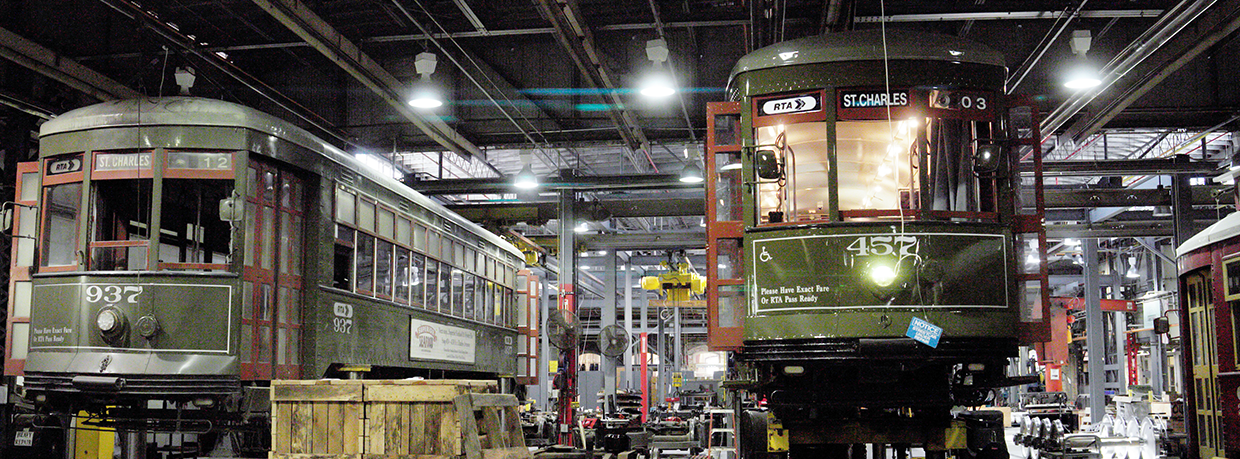
For nearly 50 years, the members of New Orleans Local 1700 have kept their city’s streetcars moving, providing safe and comfortable rides to millions of residents and tourists each year.
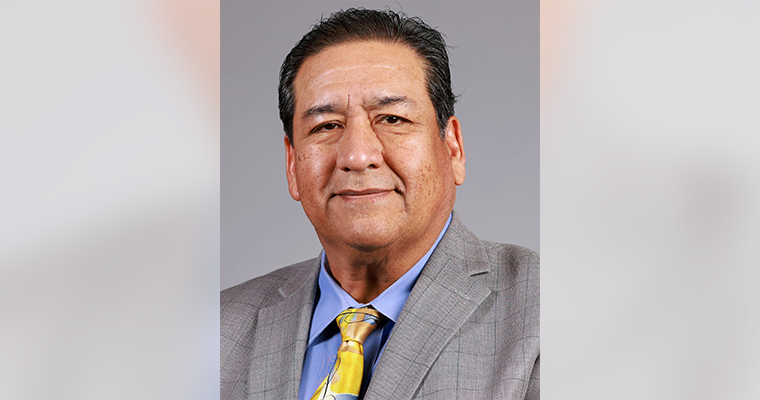
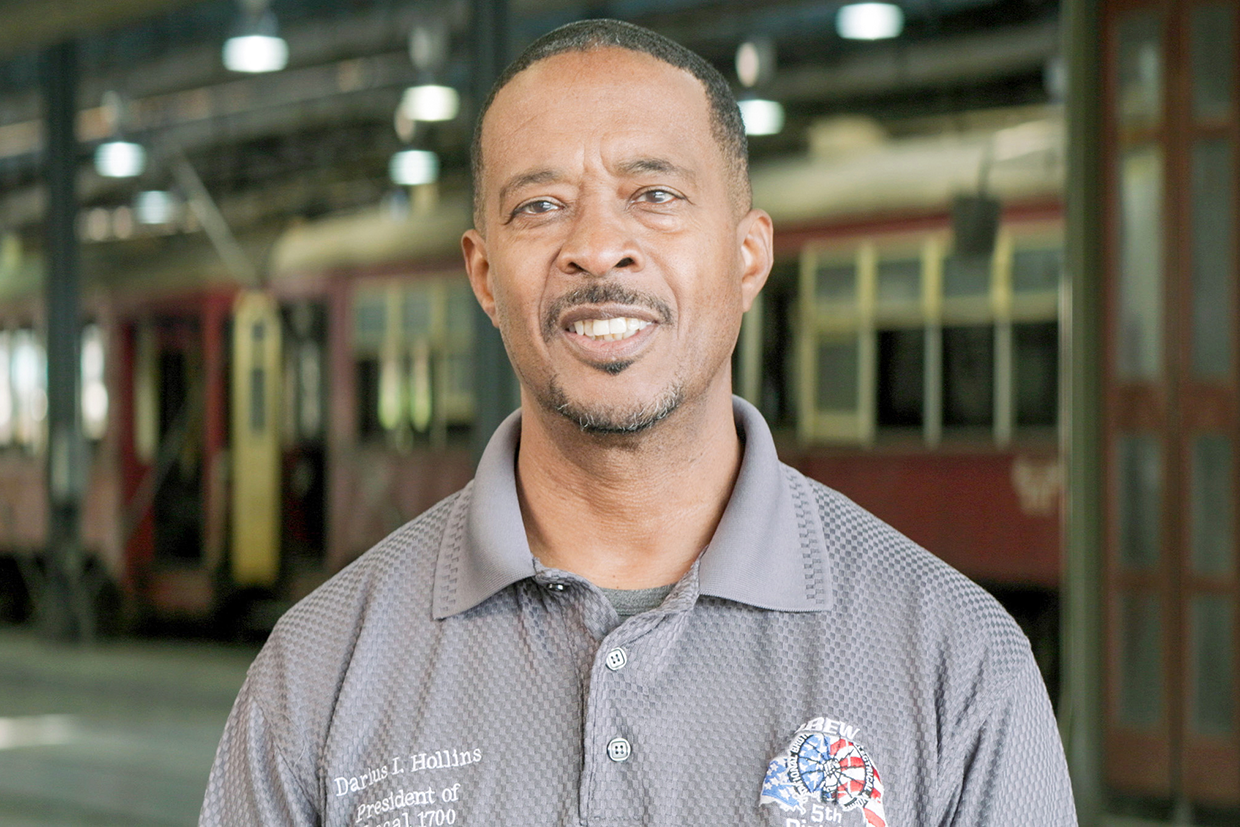
“We have tremendous craftsmen here who are able to maintain these cars,” said Darius Hollins, who has served as Local 1700’s business manager since 2019. “If anything is damaged, they’re usually able to repair it or refurbish it.”
Streetcars have served New Orleans since the 1835 opening of the St. Charles Line, considered the world’s longest continuously operating line. Running today on the city’s five fully electrified lines are scores of green-painted cars, in operation since the 1920s, alongside dozens of newer, red-sided cars constructed around the turn of the 21st century.
Local 1700 was chartered in 1977. Since then, members have filled a variety of streetcar-specific roles, including machinists, welders, parts department staffers and overhead catenary lineworkers.
“Our members can even fabricate metal so cars can go right back out,” said Hollins, who began his career with what’s now known as the New Orleans Regional Transit Authority in 1996, working through the ranks to become a switchman.
Thanks to their IBEW training, Hollins said, Local 1700 members can quickly determine whether something needs repair or replacement, from gears, springs and arcing plates to gaskets and pinions.
“Sometimes we bring back old members to teach the craft to our apprentices,” he said.
Members also can fix car doors, seats, fare boxes and wheels, and some occasionally make signs and decals.
For the nearly 135 members of Local 1700, working on New Orleans’ streetcars is more than a job, he said.
“It means a lot that they’re all able to give their families a decent living” thanks to membership in the IBEW, Hollins said. “This is something we’re keeping going out of love and respect for the craft.”