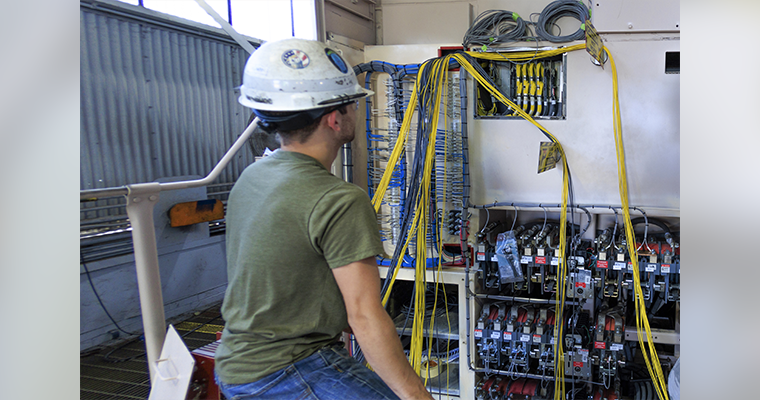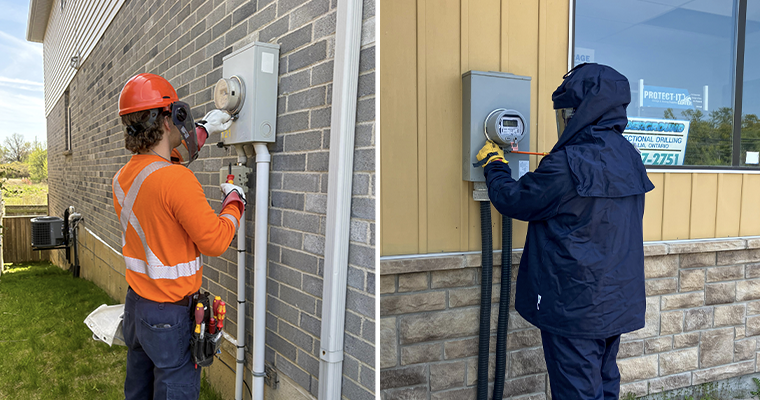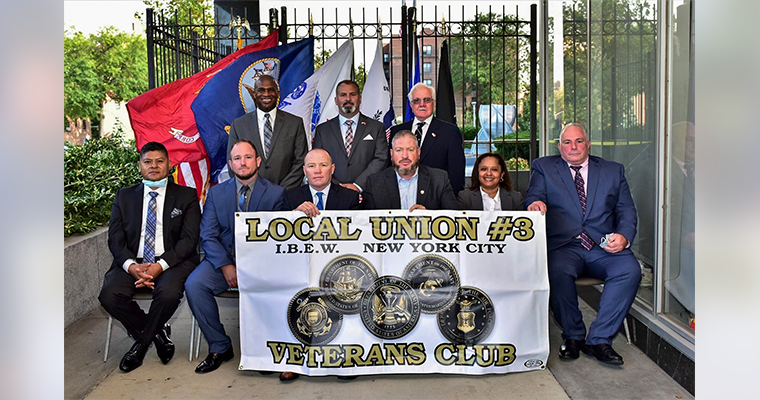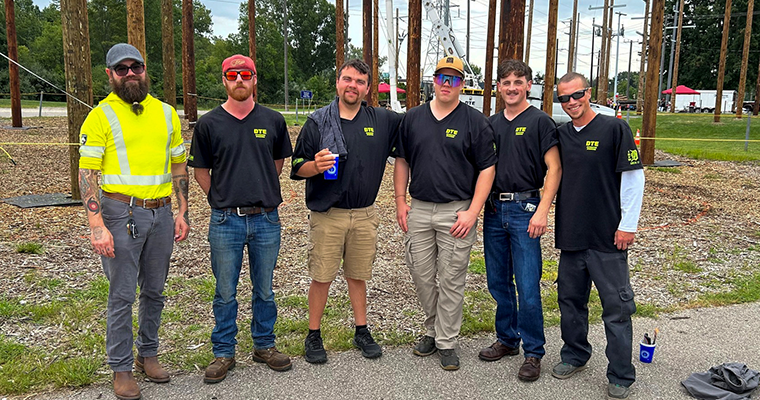
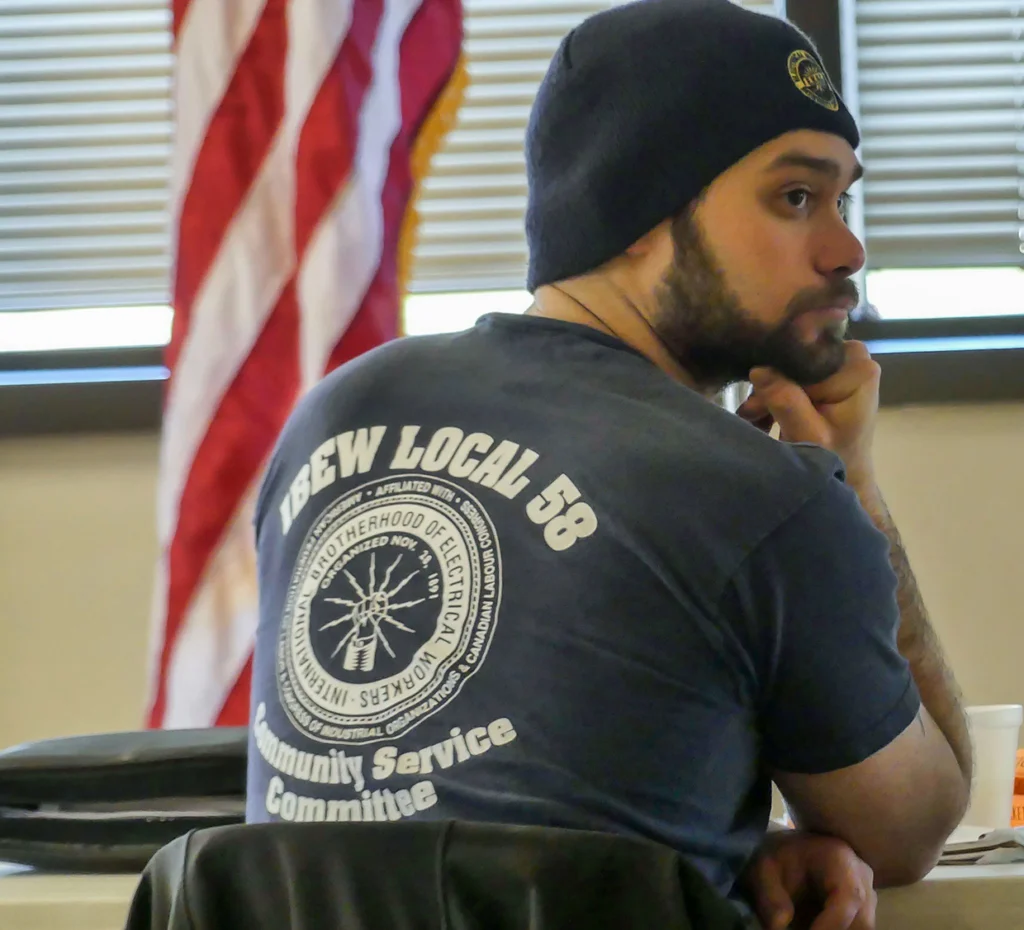
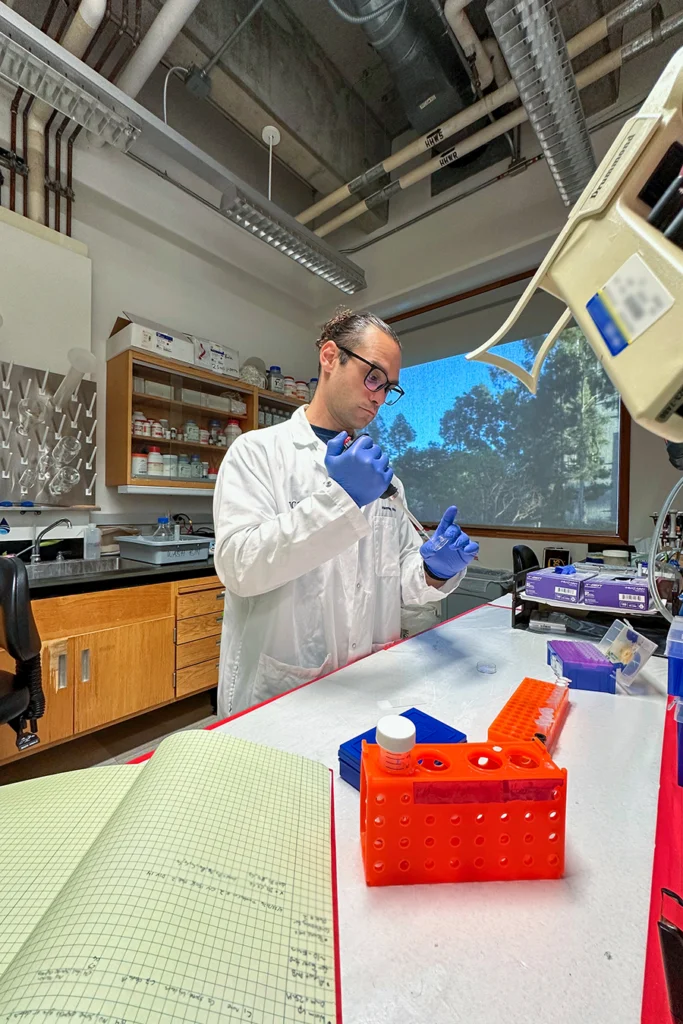
Detroit Local 58 member Onurkan Karabulut plans to conduct research that will improve the lives of IBEW brothers and sisters.
Onurkan Karabulut’s dream was to work in medical research. The journey to achieve it has been an unlikely one, however.
It went through a Detroit Local 58 apprenticeship and a career as a journeyman wireman.
It’s unusual. Yet it’s also an example of the power of IBEW membership.
“The opportunity didn’t present itself until after I was in the IBEW,” said Karabulut, a 2025 recipient of the Founders Scholarship who now is working toward a biomedical science degree at the University of California San Diego.
“Through that, I was able to be financially secure and build a network of unity that I was missing in my life. I was lost after my mother’s death. The IBEW saved me.”
The scholarship, named in honor of the wiremen and linemen who founded the Brotherhood in 1891, has been awarded annually since 1966 to members who continue their studies in areas beneficial to IBEW members.
Karabulut plans to take part in medical research that will aid in the treatment of chronic illnesses and substance use disorder, two issues that are important to address for construction workers, including electrical workers. The scholarship is worth up to $24,000 over an eight-year period.
“How amazing it must be to pick something up in your adult life and just charge after it like he does,” said fellow Local 58 member Mark Payton, who was Karabulut’s journeyman during his apprenticeship. “He’s always been diligent and impressive in every way.”
Karabulut, a first-generation American whose father was from Turkey and mother from Albania, grew up in the Detroit suburbs. Just after high school, he moved to California and planned to attend college there.
Life, however, threw him a curveball in 2010. A family situation led him to return home, and his mother died a year later. His parents were divorced, and with two younger siblings, he became head of the household.
College had to wait. He worked odd jobs and was hired to organize materials in the shop of an electrical contractor — which just happened to be an IBEW signatory.
His supervisor offered advice that changed his life.
“This is not going to get you anywhere,” he told him. “You should apply for a spot in the trades.”
With that, Karabulut applied for a Local 58 apprenticeship and was accepted on his first attempt, becoming a member in April 2013.
“That’s when I felt like it took a turn for the best,” he said. “It provided structure and a living wage to support my brother and sister with.
“Having guaranteed pay periods was a big boost in confidence,” he added. “I wasn’t having to argue with the boss about wages and had the protection of the union and its entire community to support me.”
Karabulut learned something else: He liked working with his hands, and he loved what Local 58 represented. Business Manager James Soosik remembers him “volunteering for everything we had.” He completed a two-year labor studies program at Detroit’s Wayne State University, which included courses on union history, effective leadership and communications, and employees’ rights in the workplace.
Brad Ballard, a since-deceased Local 58 member, encouraged him to participate in the local’s RENEW chapter, the IBEW initiative to get younger members more active in the union and community. He also was active in Local 58’s Electrical Workers Minority Caucus group and the Metro Detroit AFL-CIO.
All the while, he was excelling on the job.
“When I spoke to him, he was laser-focused,” Payton said. “He was zeroed in. You ever been around someone that when you asked a question, you know they are really listening? He was like that.”
Brian Mulligan, another Local 58 member, saw that same spirit when Mulligan was a foreman on a project to reopen a shuttered Ford transmission plant in Livonia, Mich., and Karabulut was assigned to work under him.
He called him “a ball of fire.”
“He was always active in the local,” Mulligan said. “Not just on the jobsite learning, but he picked up on unionism early on and really took it to heart.
“He could listen and anticipate what people would need,” Mulligan added. “He would ask questions on why things were done a certain way and he was always looking out for the older guys. That’s something you don’t often see from a young apprentice.”
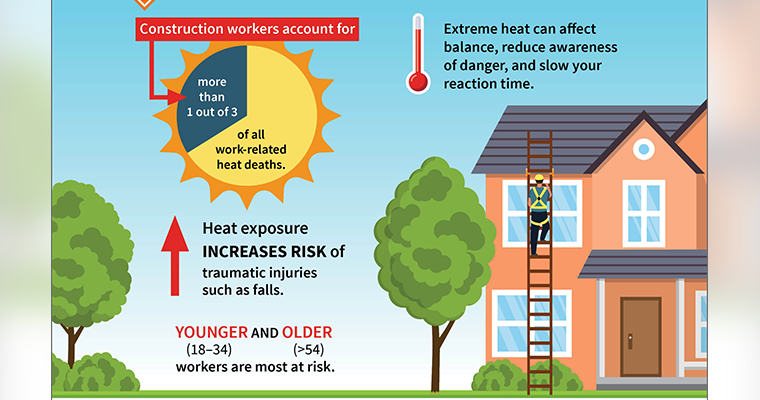
For instance, Karabulut and others on that job in Livonia worked without air conditioning and often without fans. Having plenty of water nearby was a necessity to avoid dangerous conditions.
Karabulut was the first to recognize when it was running low and tell his superiors and the first to throw a five-gallon cooler over his shoulder and transport it where it was needed, Mulligan said.
“It was his way of making sure people weren’t dropping like flies,” he said.
“I would hear similar stories from other guys in the crew about how he was doing things to make sure our basic needs were met.”
Despite the positive experiences back home, Karabulut yearned to be a traveler when he topped out in 2018. Local 58 is usually at full employment, and traveling is an option many members pursue, including his mentor, Payton.
He joined him on a job in Fort Worth, Texas, then headed with him to California. Karabulut remembers earning good wages while working on the Grand Hyatt hotel at San Francisco International Airport, where San Mateo Local 617 has jurisdiction. He used the compensation to support his siblings back in Michigan and pay for his father’s funeral in 2019.
Like Karabulut’s mother, he died due to heart failure. That only reinforced their son’s desire to work in research. He established legal residency in California and began taking classes at Berkeley City College in 2021 while continuing to work as a wireman. He later headed south to UC San Diego, where he’s now a full-time student and on track to graduate in June 2027.
“Growing up, I lost family members to various diseases and witnessed it in friends as well,” he said. “Those experiences took a toll on me emotionally and I saw the impact they had on others.
“I want to minimize that pain as much as I can by doing research and helping others, including my union brothers and sisters. I want them to live long and happy retirements.”
Mulligan said Karabulut’s concern for others is evident in the way he treats his former foreman today.
A back injury forced Mulligan into early retirement. Karabulut always visits him at his home in northern Michigan when he is back in the state. His one-time apprentice doesn’t work on a jobsite nearly as much as he once did, but Mulligan said he might do even bigger things for the Brotherhood in his new role.
“We’ve contributed to the making of such a good and intelligent person who might do so much for society,” he said. “If he can assist with some medical breakthrough that will help people across the world, there’s nothing better.
“He’s not doing it for personal gain,” Mulligan said. “He’s not doing it to make a profit. He’s doing it to further humanity.”
For his part, Karabulut said he will always remain part of the IBEW. He loves being a wireman and appreciates all the union has given him. He sees himself returning to the field occasionally, even if his medical research career is a successful one.
He reminds himself that he isn’t too far removed from when he had to return to the Detroit area. After his mother’s death, he didn’t have a car and sometimes got up at 3:30 a.m. to take a bus to work.
“It definitely made me humble and appreciate what I have and understand what other people are going through,” he said. “I really took on what a union represents.”