
Credit: Creative Commons / Flickr user Sarah Stierch
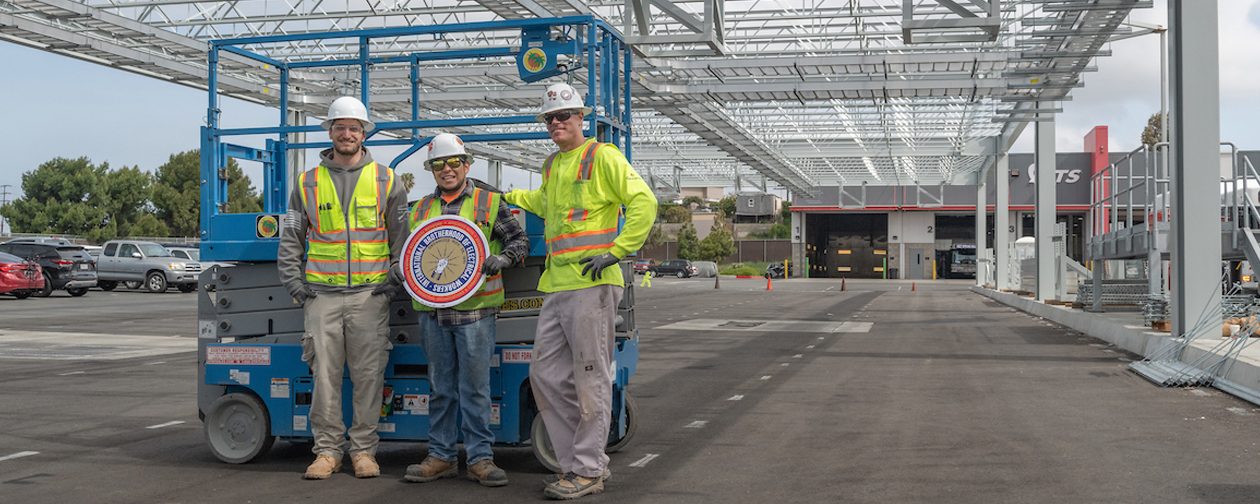
Local 569 members are playing an important role in the renovations at San Diego International Airport — where most delegates and guests attending this month’s International Convention will be flying into.
And much of it is due to a new and improved project labor agreement between the airport commission and the San Diego County Building and Construction Trades Council.
“We knew we had to fix things,” Business Manager Jeremy Abrams said. “We knew we had to get a PLA at the airport that covered everything and wasn’t just job-specific. We had to get rid of that three-bid language.”
The original PLA covering Phase 1 of the project, which included the renovation of Terminal 1 and a new airport administration building, was agreed to in 2019. It was generally seen as a strong agreement, but it left an opening for nonunion contractors to exploit.
A minimum of three bids were required on subcontract work before that portion of the project was subject to the PLA’s terms. Not all met that threshold. Some electrical portions received one or two bids from IBEW and union signatories, but not three.
Local 569 members missed out on about $100 million of electrical work when that portion did not receive the minimum three bids. A staunchly nonunion company was able to land that contract, Abrams said.
“If you didn’t have three bidders, [the airport commission] would put it back on the street to bid,” he said. “It wasn’t just the IBEW. The entire building trades wanted to make sure that doesn’t happen again.”
Earlier this year, they fixed it. The council and its member unions agreed to a new, programmatic PLA that will ensure that Local 569 and skilled construction trades are doing the work on a two-stage, $3.8 billion airport project, one of the largest in the city’s history. It covers all aspects of the project and eliminates minimum-bid provisions.
Credit: Creative Commons / Flickr user jgrande
“Everyone is covered, and going forward, there are no more problems for our contractors to deal with,” Abrams said.
Added Carol Kim, business manager of the building trades and a Local 569 member: “Having transparency in the eligibility requirements for our contractors, as well as getting rid of the three-bid threshold, is really crucial in getting that work in the future.”
Kim and her staff did their homework. They learned that two other major California airports — Los Angeles International and San Francisco International — did not have a three-bid project requirement and presented that to the commission.
“They couldn’t say this was the industry standard,” she said.
The commission considered the request and informed the Building Trades they would agree to drop the minimum-bid requirement for projects $2 million and larger, a $1 million increase over the previous PLA.
The trades accepted the compromise, and a new PLA covering the Terminal 2 renovation was signed in June.
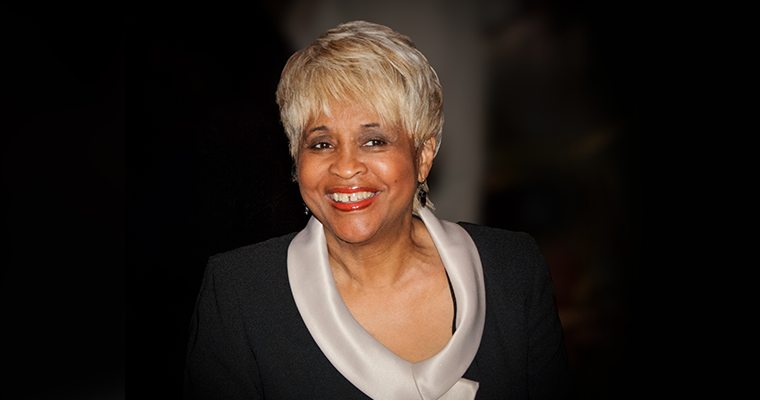
Abrams gives much of the credit to Kim and Gretchen Newsom, a Ninth District international representative for government affairs and another Local 569 member, for navigating the political dynamics on the way to an agreement.

Credit: Creative Commons / Flickr user San Diego International Airport
“I’m thrilled to see the evolution from our initial project labor agreement on the Terminal 1 project to this comprehensive programmatic PLA,” Newsom said. “It’s vital that civic boards and airport authorities reflect our community’s values and support unions.
“I serve as chair of the San Diego Regional Airport Authority Audit Committee, and I encourage our IBEW members to seek out and step into these important roles to strengthen our collective voice,” she added.
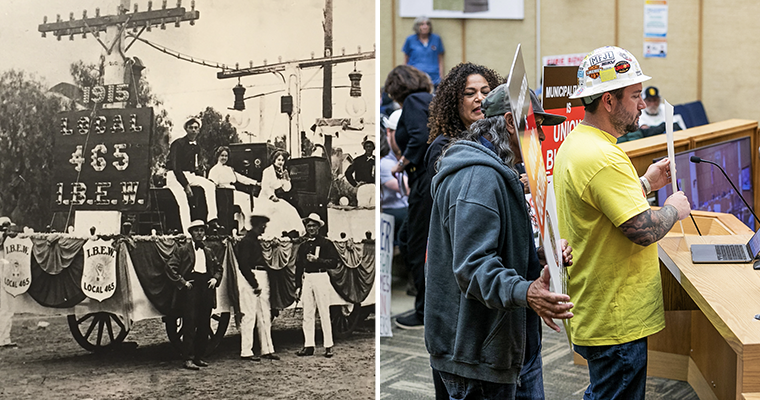
San Diego’s labor scene has been transformed in the last 40 years by the IBEW and other advocates for working families. It is now one of the most labor-friendly major North American cities.
But it wasn’t always that way. Abrams said the three-bid minimum on public projects is a remnant of a less-friendly era.
Getting rid of that on such a large project is a step forward for the city’s entire labor community, Kim said.
“It had been such an anti-union, anti-PLA place for so long that our standards were not as good or strong as they needed to be,” she said. “We started fighting back and winning, and this agreement is reflective of that.”
It is challenging work at the airport. San Diego International has a small footprint of 663 acres because it is hemmed in by San Diego Bay to the south, downtown and Interstate 5 to the east, the heavily trafficked Marine Corps recruit depot to the north and residential neighborhoods to the west. It is the largest single-runway airport in the United States.
The airport had been outdated, considering that it serves a city that had become a business and tourism hub and has long had a huge military presence, Abrams said. He admitted to some envy when he traveled to other parts of the country and saw more modern aviation facilities.

“The old terminal was so old and small and frankly embarrassing,” he said. “The first thing people experienced when they flew into San Diego was this crumbling terminal. There’s been incredible work put in to make it something we can be proud of.”
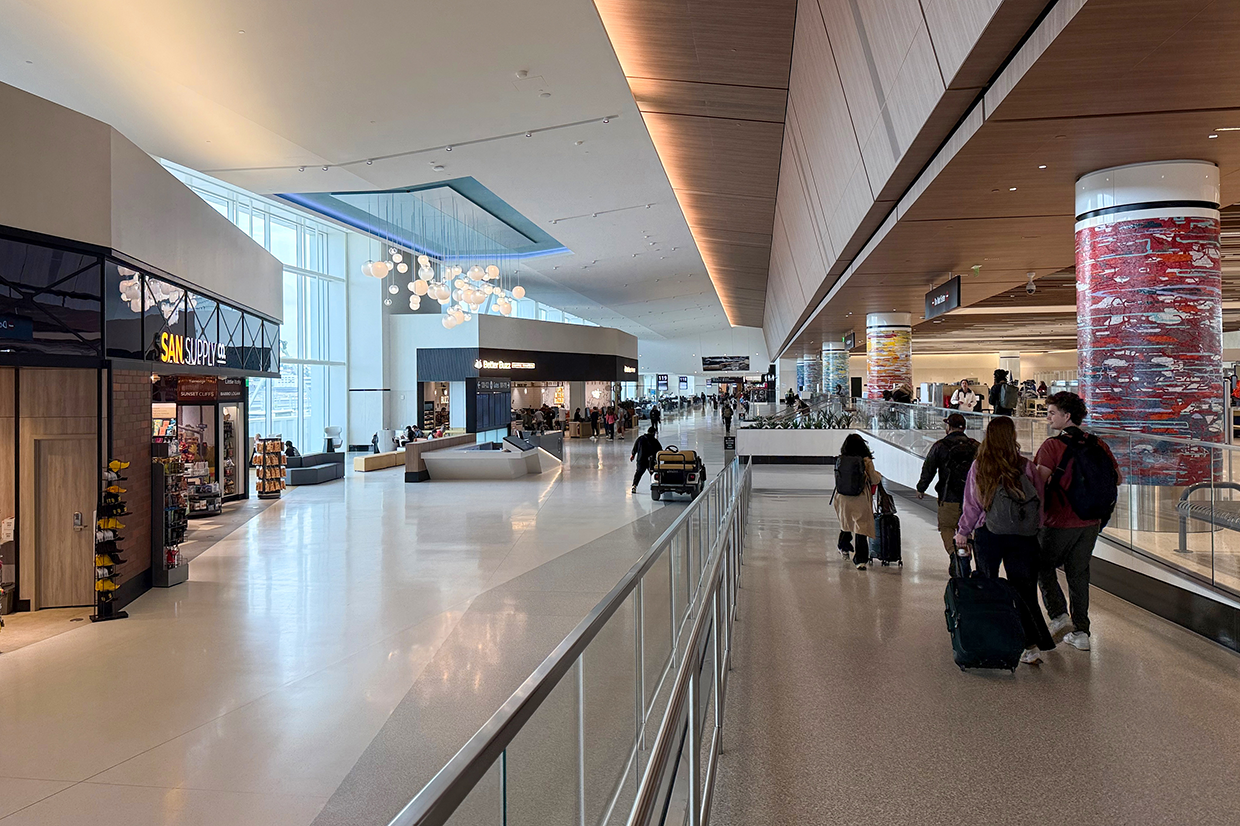
Convention attendees traveling through Terminal 1 will be greeted by an airy, spacious facility with ample space at gates and ticketing counters — a sharp contrast from years past.
“It’s going to be a really great experience for visitors coming in here and good for San Diegans who work at the airport,” Kim said.
PLAs set conditions on public projects before they begin. They serve the taxpayers because they provide more cost certainty, avoid work disruptions and assure that work is done on time and at the highest quality. They serve IBEW members and other workers because they provide good, family-sustaining wages and benefits.
“Congratulations to Local 569 on securing a programmatic project labor agreement at the San Diego airport,” Ninth District International Vice President Dave Reaves said. “This landmark achievement ensures that all capital improvement projects over $2 million will be performed by local union workers, creating a robust pipeline of over $3.8 billion in work for our members over the next five years. This is a significant step forward for our union and the community.”