
With an assist from Diamond Bar Local 47 and Vacaville Local 1245, the Justin Kropp Safety Act is now law in California, protecting lineworkers from the kind of accident that took the life of the bill’s namesake.
Kropp, a traveler out of Phoenix Local 266 who was working in the jurisdiction of Local 47, was fatally electrocuted in 2018. He was working at a site in the Mojave Desert when an error occurred involving an unlicensed crane operator who shifted the bucket Kropp was in and threw him forward. Kropp was working more than 75 feet above ground at the time.
The lines Kropp struck had been powered down, but they still had induced voltage. When Kropp hit them, it sent his heart into arrhythmia. The accident itself didn’t kill him, but the lack of access to emergency response made saving his life impossible. Had an automated external defibrillator, or AED, been available on site, Kropp’s life would have been saved, Joseph Brent, the Kropp family’s attorney, told The Signal, a local publication.
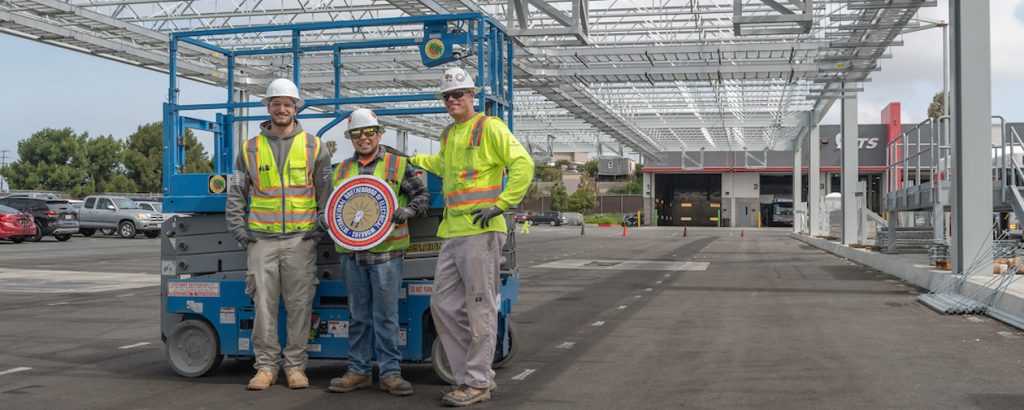
The law, which went into effect Jan. 1, requires each utility, independent contractor or subcontractor of the utility to have an AED available at every worksite where electrical utility workers are working on transmission or distribution lines of 601 volts or more.
“We mourn the loss of Brother Kropp and his tragic end. The work we do is inherently dangerous, but that doesn’t soften the blow you get from losing a union brother or sister,” Local 47 Business Manager Colin Lavin said. “We support any means of making our jobsites safer, and this bill is a simple yet incredibly effective way to do that. With this law, lineworkers, and the public, can get home safe to their families at night.”
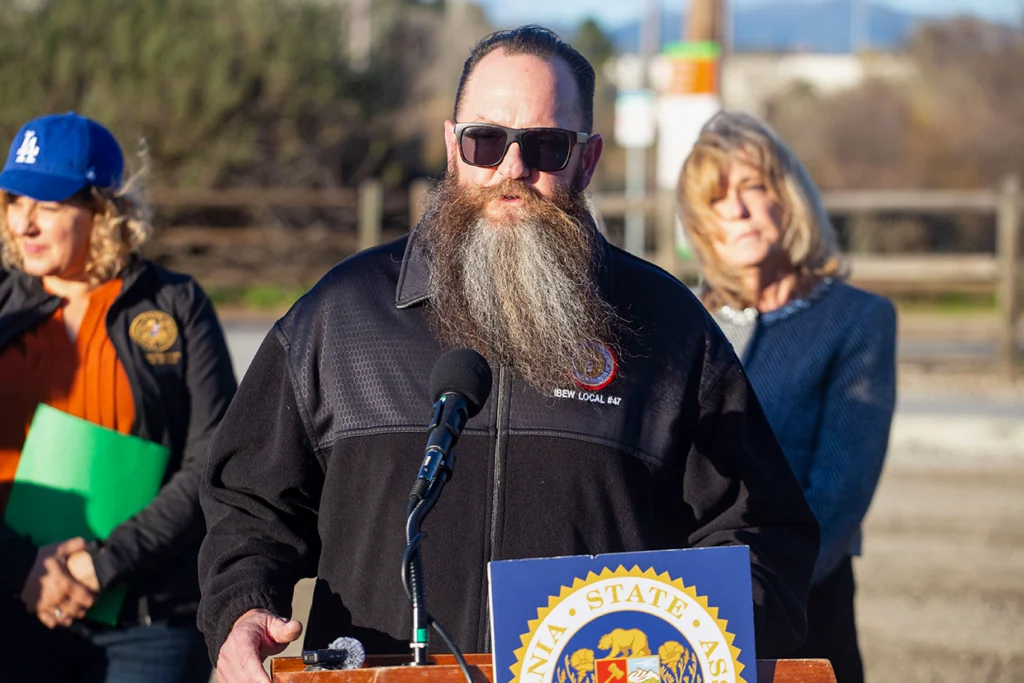
“The work we do is inherently dangerous, but that doesn’t soften the blow you get from losing a union brother or sister.”
– Local 47 Business Manager Colin Lavin
Some utilities and contractors have been providing AEDs already, Lavin said, but the Justin Kropp Safety Act’s requirements increase safety standards throughout the industry.
“This bill enhances utility workforce safety measures by requiring it through a law, so now there’s no choice,” he said. “Now they have to provide the safety devices.”
According to a Senate analysis of the bill, an average of 19.2 linemen per 100,000 are killed on the job every year nationwide, twice the fatality rate of police officers and firefighters. The main risk to lineworkers who have been electrocuted is sudden death due to cardiac arrhythmia, or irregular heart rhythms. Out-of-hospital cardiac arrest results in an 8% to 10% survival rate. The survival rate of out-of-hospital cardiac arrest, however, increases to 50% to 74% when an AED device is available and immediate defibrillation is performed.
The bill passed unanimously, a rare occurrence.
“The Justin Kropp Safety Act passed easily and with unanimous bipartisan support because it makes plain sense to protect electrical workers from death and electrocution,” said Ninth District International Representative Gretchen Newsom.
The California State Association of Electrical Workers and the Coalition of California Utility Employees, both IBEW-affiliated bodies, were on record in support of the legislation.
“Electrical lineworkers and utility employees perform inherently dangerous tasks, often in remote or high-risk environments,” a joint statement from the two groups said. “Sudden cardiac arrest can be a tragic consequence of electrical exposure, strenuous activity or unforeseen medical emergencies. The presence of an AED at these worksites can mean the difference between life and death. By ensuring that public utilities and their contractors comply with established safety standards and protocols for AED accessibility, this bill will provide essential protections for workers and the public alike.”
Assemblywoman Pilar Schiavo, who authored the bill, spoke at a news conference about her personal connection to the issue.
“As the daughter of an electrician, hearing stories around the dinner table, it’s not if but when you could get electrocuted,” she said. “This is such important equipment to make sure that we have at all these kinds of worksites, where it’s even more dangerous to do that work. And now we have a law that will make sure that not only are they available, but that the employees, that the contractors, that the subcontractors, are all trained to make sure that they know how to operate it.”
Justin Kropp’s father, Barry, also spoke at the event.
“It’s a big deal,” he said. “For those who don’t understand the industry, when you start things someplace in a state as big as California, it’s likely that maybe, over time, it could become a nationally recognized standard. And that’s where we want to try to go with this down the road.”