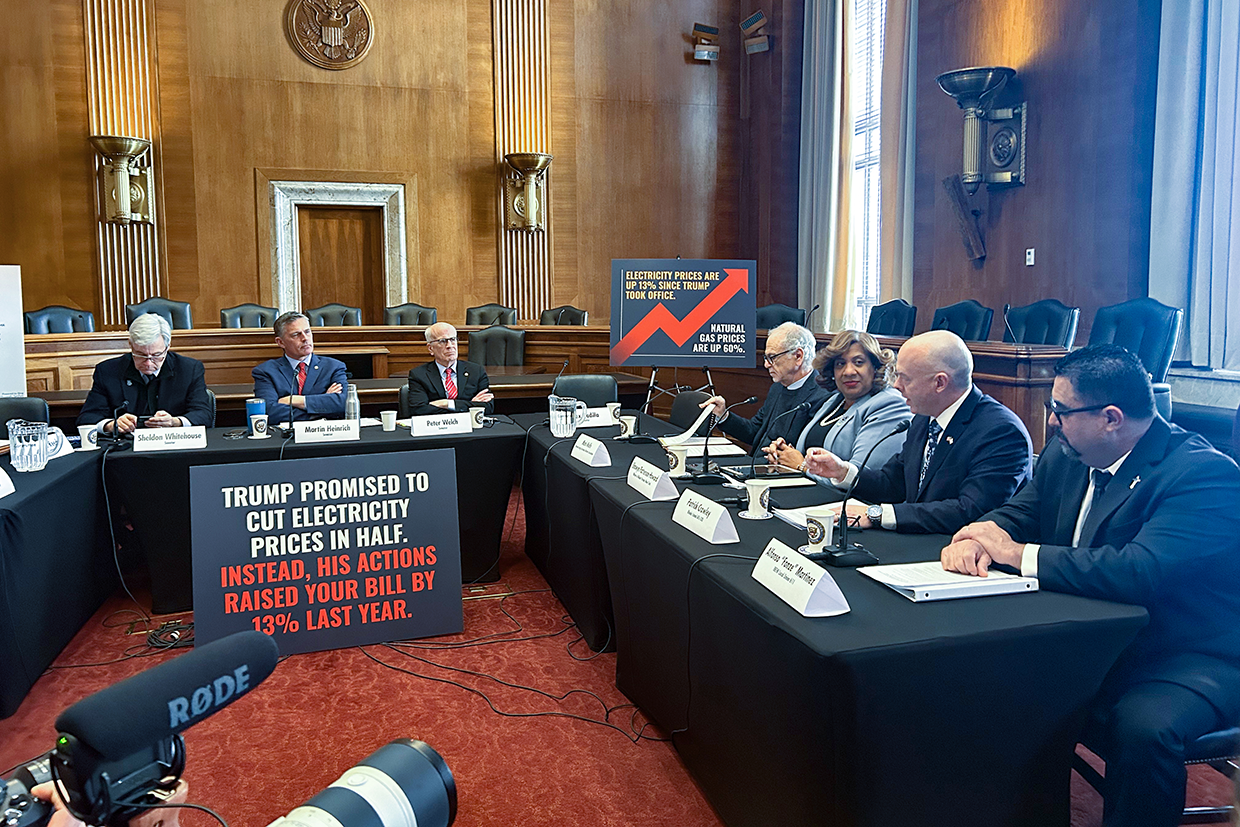
In a hearing room in Washington, a business manager from New Mexico explained to nearly a dozen senators how killing energy generation projects is sending utility bills through the roof while freezing out union workers.
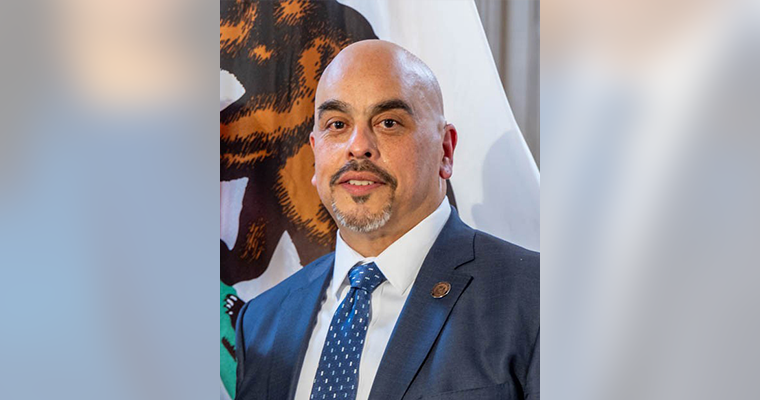
Albuquerque, N.M., Local 611’s Alfonso “Fonze” Martinez testified Jan. 29 as part of a Senate Energy and Natural Resources Committee roundtable on rising energy costs.
Of particular concern to Martinez is the more than 500 generation projects that have been stalled or killed by the Trump administration since it took office in 2025.
“Already, my local union has seen the Kit Carson battery storage project in Taos canceled by this administration’s Department of Energy, putting over 60 of my members out of work, as well as millions of dollars for the PNM virtual power plant project being frozen for purely political reasons,” he said. “I’m left asking, ‘For what? What are we killing these projects for?’”
For Martinez, the real damage isn’t just the lost new generation. It’s the loss of the labor protections that were built into the Inflation Reduction Act and then repealed by the president. Renewables projects are still being built. They are just going nonunion.
“With the president’s ‘big, beautiful bill’ rolling back clean energy tax credits and with the Trump administration canceling hundreds of billions in energy projects, the opportunities in these sectors will dry up for union members,” he said.
Martinez was joined in the roundtable by a small-town mayor from New York; the owner of a Maine heat pump installation company; energy efficiency advocates; and Patrick Crowley, president of the Rhode Island AFL-CIO.
“Killing new generation won’t stop the big energy users from growing.”
– Local 611 Business Manager Alfonso “Fonze” Martinez
While other people focused on the cost of power, Crowley, like Martinez, spoke for the lost jobs, specifically about the present and future jobs killed in the president’s inexplicable war on offshore wind.
President Donald Trump’s most recent effort to kill the Providence, R.I., Local 99 project Revolution Wind was once again defeated in court, but Crowley said the prolonged uncertainty is killing an industry and raising utility bills for customers.
“Trump put a ‘closed for business’ sign on the Northeast coast,” Crowley said. “These developers have opportunities in other parts of the world. By sowing confusion, it will force them to look elsewhere. That leaves us out in the cold.”
Martinez accepted that, like most of the IBEW, unemployment right now is low. But, he said, business managers don’t have the luxury of thinking that tomorrow will look just like today.
“What this means for our local, on top of putting folks directly out of work, is that a steady pipeline of highly skilled workers can’t be built without project certainty,” he said.
For Crowley, renewables generation offers an answer to one of the hardest questions faced by anyone recruiting new people into the trades.
“To have a job from January 1 to December 31 is a luxury. This is not common in our industry, especially in New England, where winter shutdowns are frequent. The renewable energy sector was providing long-term job stability,” Crowley said.
Proposals from the panel included requirements that data centers source energy by funding a massive, nationwide expansion of grid enhancements, mass residential solar, batteries and efficiency, siting reforms, time-of-day pricing, and virtual power plants.
What none suggested was continuing a policy where every generation project has to be approved personally by Interior Secretary Doug Burgum and where the richest companies in the world bid against working families for power.
“Killing new generation won’t stop the big energy users from growing. And we don’t want to stop growth,” Martinez said. “We want to build to meet that new demand. But if we don’t build more generation, the data centers have the money to pay higher rates. We won’t. Our neighbors won’t.”