When lawyers are involved in union matters, it’s usually to support or oppose the workers’ quest for representation. But for Indianapolis Local 481, the attorneys were the ones organizing for better wages and working conditions — and bumping up against the same anti-union management tactics that often occur when workers try to organize.
And they won.
“Management couldn’t wrap their heads around the idea that white-collar workers need a union, too,” Local 481 Business Manager Jeff Wheeler said. “But those workers voted overwhelmingly to join a union, proving that everyone should have a seat at the table when it comes to having a voice on the job.”
The bargaining unit comprises about 260 employees at the Marion County Public Defenders Agency, including lawyers, social workers, paralegals and administrative staff. And despite the unusual makeup of the workers, they were fighting for the same issues as any other worker: better wages and working conditions.
Nationwide, more and more attorneys are organizing, Local 481 Business Representative Lance Bradbury said, noting that a number of unions are taking them in. In this case, the public defenders chose the IBEW because of its reputation as a strong and successful union.
“They met with a lot of different unions but eventually decided to work with us,” Bradbury said. “The IBEW is regarded as the most respected and active in the community, and they knew they could get a good contract because the IBEW is more powerful.”
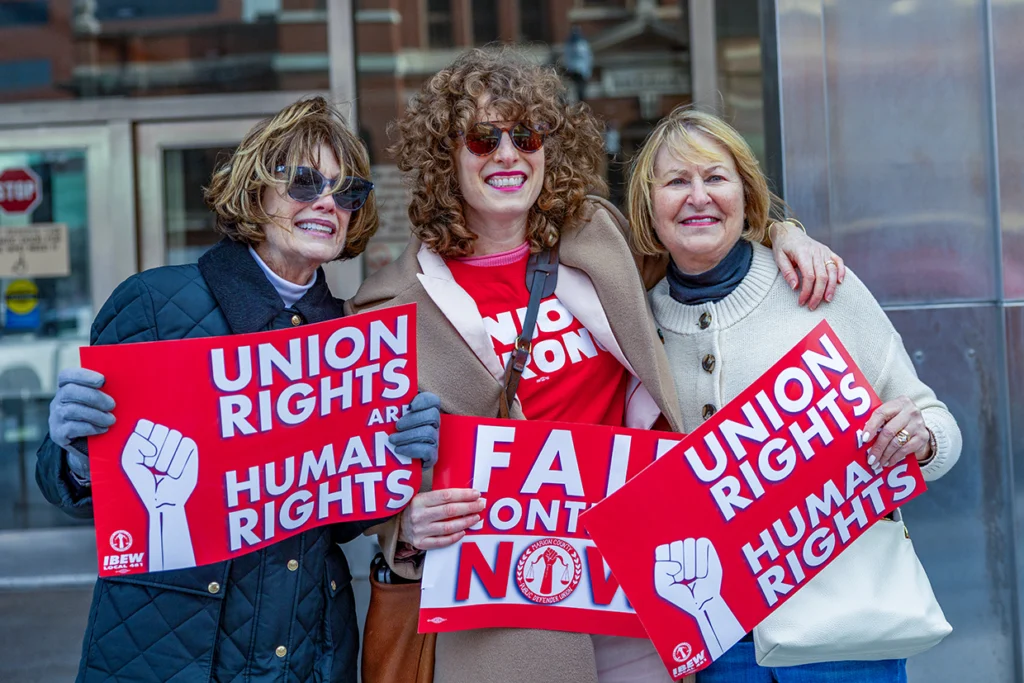
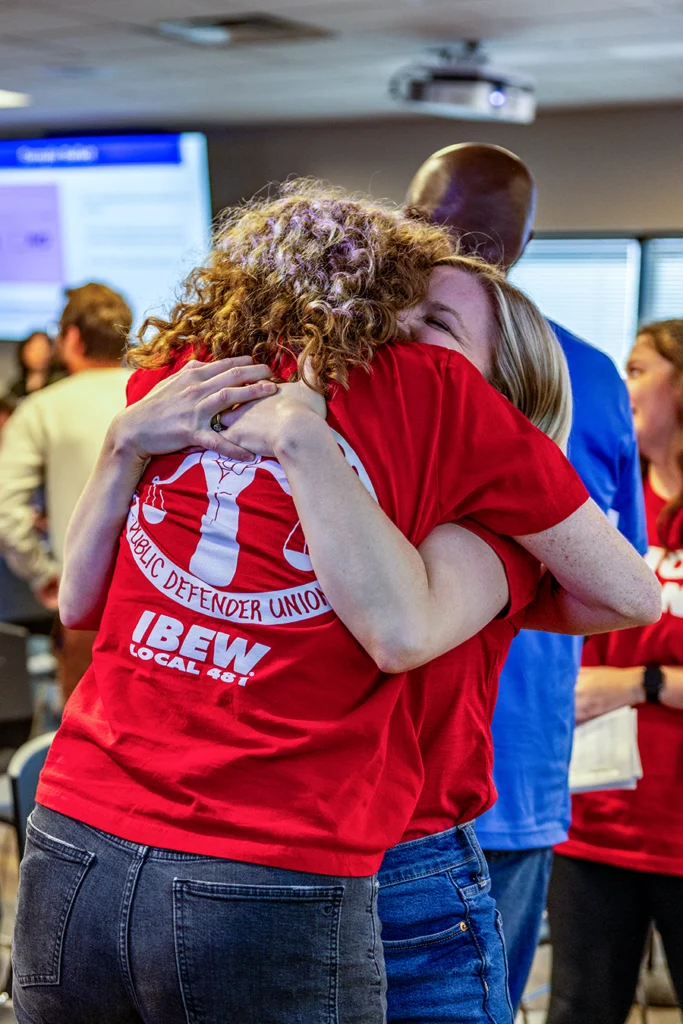
In this case, the lawyers were fighting for higher wages for the support staff. “They weren’t concerned about themselves. It was about their co-workers,” Wheeler said.
The attorneys got a small wage increase, but a larger raise went to the staff. It was something the lawyers were passionate about, Bradbury said.
“As a longtime, diehard union guy, that was great to see,” he said.
More than 70% of employees signed cards, and the city and county recognized them, but getting a first contract wasn’t nearly as easy.
Wheeler and Bradbury noted that the mayor and city council are largely made up of Democrats. “We were surprised at the pushback,” Wheeler said. “It created a very strange dynamic.”
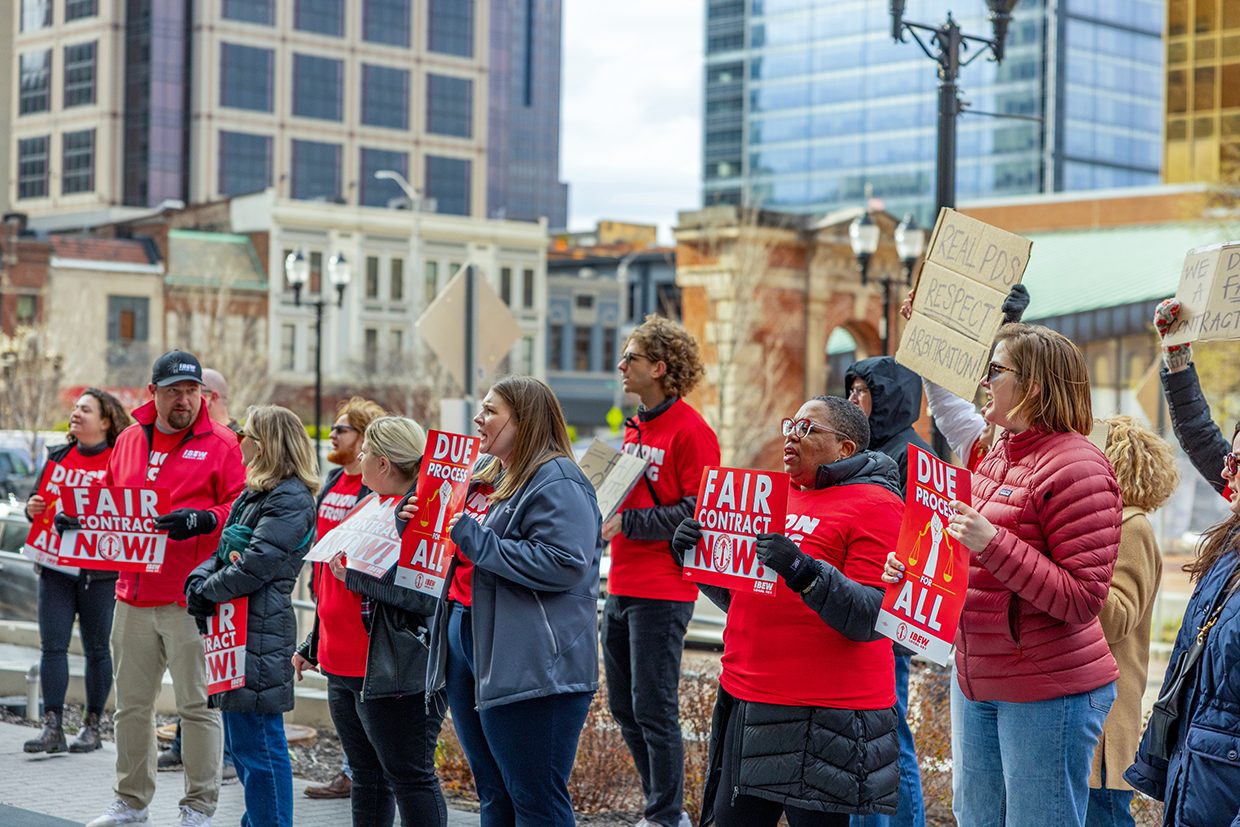
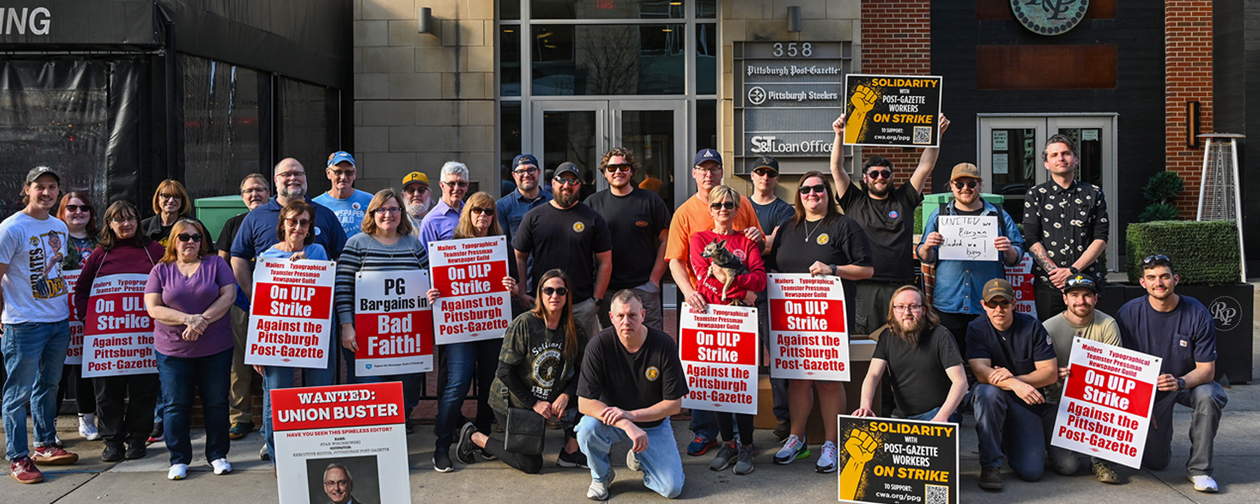
With negotiations stalled, the workers got together and held rallies outside the agency’s building. Wearing matching shirts, they got on the horn during their lunch break and made sure they could be heard outside the windows where their bosses were.
“It was pretty cool to see them, lawyers and social workers alike,” Bradbury said. “A lot of people want a union but aren’t willing to put in the work. This group put in the work.”
It paid off. The contract was ratified in October, two years after the organizing drive began.
Wheeler and Bradbury credited the successful outcome to the workers’ solidarity and dedication throughout the campaign. It was so successful, in fact, that employees who had quit were coming back because of the contract.
“The support staff won a life-changing amount of money,” Bradbury said. “Now they can afford to buy a house and have retirement security. That’s all any worker wants, regardless of their profession.”