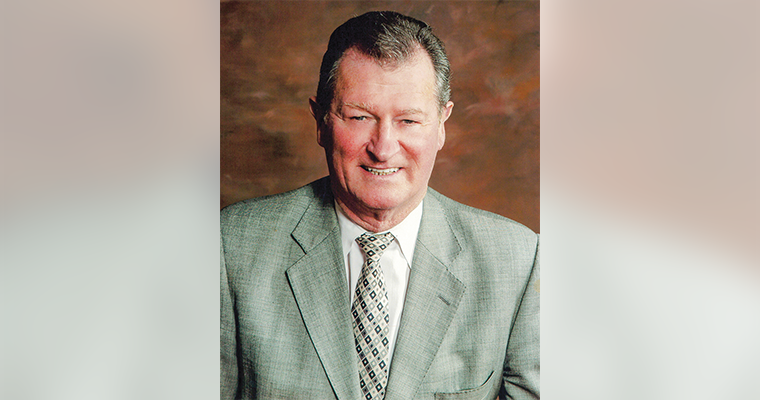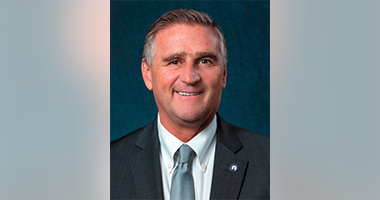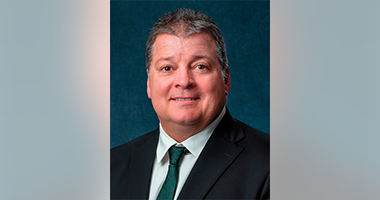

RETIRED — Wyatt Earp, Third District international representative and lead political organizer for the IBEW in New Jersey and Delaware, retired effective Dec. 15 after more than 45 years in the union.
Earp is a third-generation inside wireman. His grandfather Arthur and father Robert were members of New York Local 3, but it wasn’t certain that Earp would join the family trade while he was in high school.
On the one hand, Earp was in all Advanced Placement classes. He won a state law competition, then a regional one and competed in the national finals in California. The following year, he went to the state final of a computer competition.
“I was really at a crossroads. I couldn’t get enough of school and was thinking about going to college,” he said.
But Earp was also a gifted mechanic and loved working with his hands. Throughout high school, he had jobs in a body shop, fixing coin-operated laundry machines and as a handyman in a local hotel “fixing toilets.”
“Anything I did, I wanted to learn how it worked,” he said.
Joining the apprenticeship at Asbury Park Local 400 in 1979 allowed Earp to do both.
“I liked the classes. I liked working in the nuclear power plant. There was a lot of interesting stuff to do,” he said.
Earp also started night classes at Rutgers University, studying labor-management relations. After he finished his degree, he came back to teach as adjunct faculty.
“As a political operative for the IBEW, he’s done a great job. Our agenda moves in New Jersey, electorally and legislatively, and Wyatt is no small part of that.”
– Former Third District International Vice President Dennis Affinati
Even while he was an apprentice, Earp was already running jobs. Soon after topping out in 1983, he was a general superintendent and then general foreman for all trades at the Oyster Creek radioactive waste facility, where he was responsible for hundreds of IBEW members.
“Building a project or building relationships, it was all problem solving. That has always been my mindset: How do I make this, whatever this is, work better?” he said.
For years, Earp’s father had been Local 3’s director of employment, managing its team of referral agents. He was, Earp said, the model of service that Earp followed.
“My whole life, anyone who asked me to do something, I said yes. ‘Yes, I can do that.’ And it’s always taken me someplace interesting since that high school legal competition that got me a week in California for the nationals,” he said.
In 1989, James Gratton, then Local 400’s business manager, asked Earp to become the financial secretary and a business agent.
“For the most part as foreman, super or general foreman, you’re not spinning wrenches, but you are moving the whole day,” he said. “The biggest surprise was two weeks sitting in a chair makes your whole body sore.”
A year later, he got out of the chair when he was made a full-time organizer.
While not his biggest win, Earp’s favorite was an organizing drive he ran at a 25-man shop where five of the owner’s family members were in the unit.
“We won 23-2. The guy freaked out. He thought he knew who worked for him. He didn’t,” Earp said. “If I don’t know you well enough to sit at your kitchen table with your spouse, I’m not doing my job. They all had my address, my phone number and could talk to my family like I talked to theirs.”
By 1994, Gratton was ready to retire and asked Earp to run for business manager. And he said yes and won. In his tenure, the local added at least 100 new members, including several dozen service contract employees at the Army’s Fort Monmouth.
“That one was funny. The base tried to fight our organizing drive by telling the workers they would have to be drug-tested. Can you imagine that, though? We were straighter than the military!” he said. “So anyway, we lost the first election, but they broke all their promises, and we won the next round.”
Around 1997, the local’s service representative, John W. Varricchio, told Earp that an officer at Local 400 had sent a letter to International President J.J. Barry complaining that Earp was organizing too many people, Earp said.
“I asked if that was really a problem,” he recalled.
His answer was an invitation from Barry, a committed organizer, to come on staff at the Third District.
In the early 2000s, Earp transitioned from service rep to the political representative for New Jersey and Delaware, positions he held for almost a quarter-century.
In that time, the IBEW saw a congressman elected from its ranks, Rep. Donald Norcross, and New Jersey passed a prevailing-wage law for utility work.
Earp drove a repeal to a New Jersey law barring assistant district attorneys and public-sector managers from organizing. Once the law was changed, they joined the IBEW in the hundreds.
New Jersey is also home to the Labor Candidates Program, which provides formal training and support to union members running for office. Over more than 25 years, graduates of the program have won more than 1,100 election victories. It is a model that has been replicated across the nation.
Earp, whether he admits it or not, was a critical part of each of those achievements and many, many more, said recent Third District International Vice President Dennis Affinati.
“As a political operative for the IBEW, he’s done a great job. Our agenda moves in New Jersey, electorally and legislatively, and Wyatt is no small part of that,” said Affinati, who retired Nov. 1. “He is tied in really well to the politics of the state.”
For now, Earp said he expects that his retirement will be pretty familiar.
“You can never really turn it off, and I’m not sure I want to,” he said. “I’ll be staying in New jersey helping whoever I can, however I can.”
Please join the officers wishing Brother Earp a long and healthy retirement.