The first health and welfare plans offered by IBEW locals appeared in the 1950s. Locals soon established trustee boards to administer these plans, similar to how their pension funds had been managed since the 1920s.
However, for those members who decided to travel for work, a flaw was quickly exposed.
It took several months before a member could become eligible for a local’s H&W plan. Once vested, the plan would cover medical costs for the member and their family. But when a member chose to travel, they would lose access to their home local’s plan and have to restart the vesting process with their traveling local. This meant that for an extended period of time, members and their families were without health protection.
It was here that reciprocity plans began to fill the gap.
The first to arrive was the NECA-IBEW Health and Welfare Plan in 1955, followed by the Southern Electrical Welfare Trust in 1956 and the Eighth District Electrical Benefit Fund in 1961. In 1967, 10 locals in upstate New York established a pension reciprocity agreement, which was expanded to cover health and welfare in 1970. The same year, the Eleventh District launched its own reciprocal H&W plan.
Each of these plans was structured on the “money follows the man” concept. For the traveling member, any money deducted for H&W was transferred to the home local. The amount was determined by the benefit agreement of the local the member was traveling to. If the amount was less than the benefit provided by their home local, the home local would make up the difference. This arrangement allowed traveling members to maintain their H&W coverage for themselves and their families.
Soon, pressure built for a national solution. At the 31st International Convention in 1978, a resolution was submitted by Boston Local 103 and endorsed by 58 local unions calling for an “international reciprocity agreement for health and welfare.” It stated: “There is no doubt that the fairest method of providing our members equity in the various trust funds available would be for the money to follow the man throughout his working career to the end.”
The resolution passed. Following the convention, International President Charles Pillard assigned Wesley Taylor, chairman of the International Executive Council, to promote and implement reciprocity plans across the union.
Over the next four years, Taylor spoke at every district progress meeting to champion the benefits of a national reciprocity agreement. New plans followed, among them the Central California Trust in 1978, the Midwestern H&W Reciprocity Plan in 1979 and the New England Plan in 1980. By the next International Convention in 1982, the national plan had been adopted by 320 locals. Three years later, in April 1985, Pillard announced 100% participation from all electrical construction locals.
Under Pillard’s leadership, the IBEW had developed a system of portable “reciprocal” benefits that restored integrity to the Brotherhood’s traveling network and helped revive Henry Miller’s original dream of an organization that could span nations.
But there was one practical problem still to tackle. Reciprocity involved burdensome paperwork that made for delays and errors.
That was remedied not quite 20 years later when technology met tenacity in the form of International Secretary Treasurer Jerry O’Connor during the tenure of International President Ed Hill.
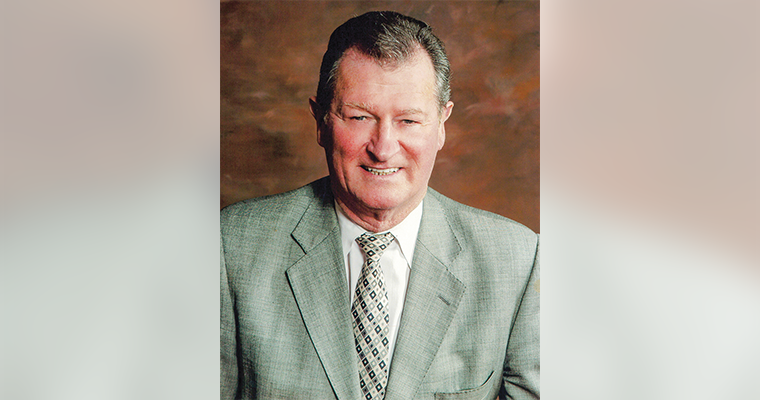
In 2003, O’Connor rolled out the Electric Reciprocal Transfer System, or ERTS, digitizing the transfer of benefits. It is one of the lasting accomplishments under O’Connor, who died in September at age 91. (See obituary in this issue.)
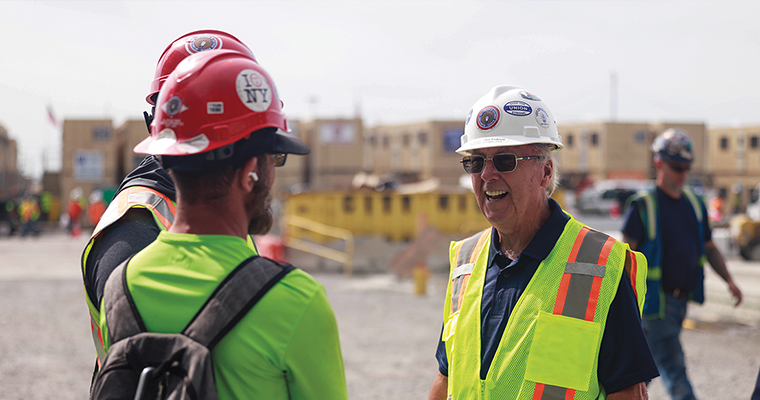
International Secretary-Treasurer Paul Noble remembers the impact ERTS had when he was business manager at West Frankfort, Ill., Local 702.
“Things happen in real time now, and that was an absolute game-changer,” Noble said. “Construction by nature is temporary work — you go where the jobs are. And knowing that you have continuity in your benefits gives you peace of mind.”

Visit nbew-ibewmuseum.org for more on how to support the IBEW’s preservation of its history. Have a an idea for this feature? Send it to [email protected].