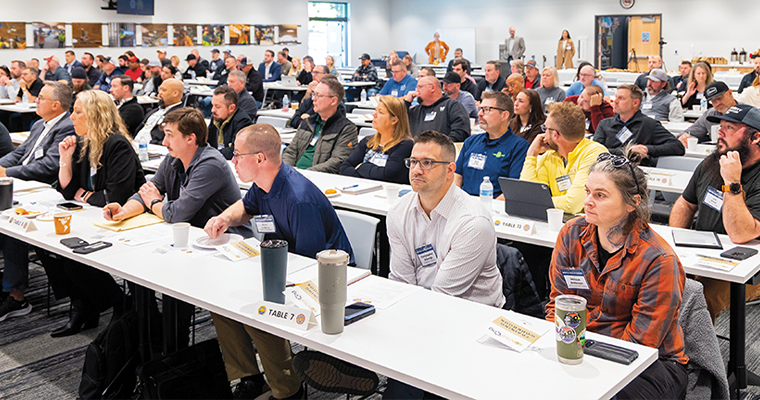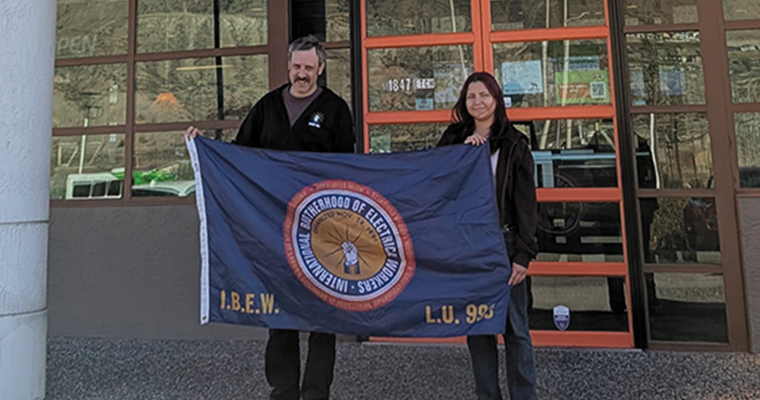
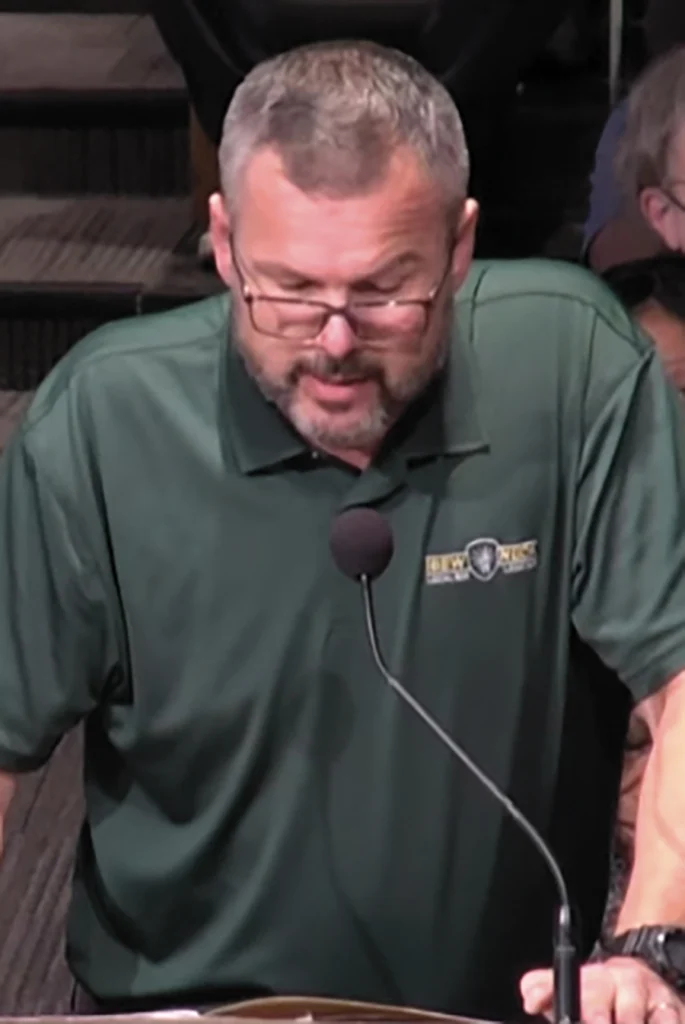

Lansing, Mich., Local 665 business manager Aaron Pangborn, left, and Assistant Business Manager Ken Kolp, right, testified in support of the “responsible bidder” ordinance.
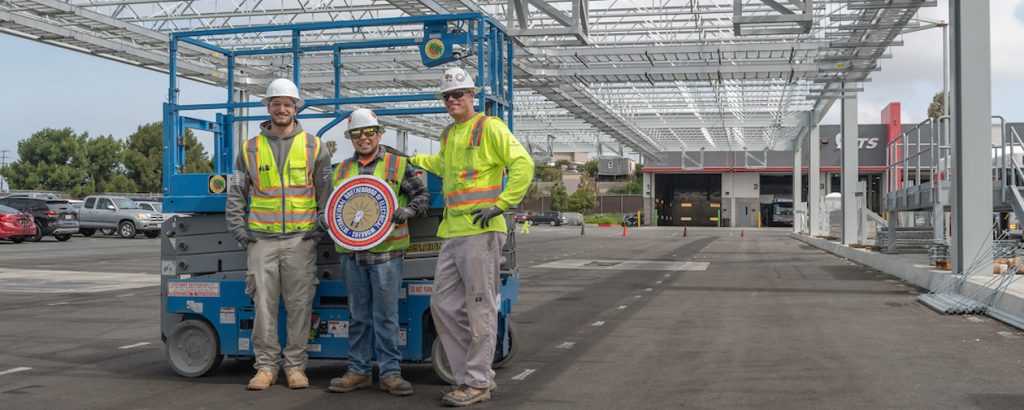
Lansing, Mich., Local 665 joined other unions and signatory contractors to get a local ordinance amendment passed that more comprehensively determines which contractors will be awarded local construction projects.
“Amending this ordinance is about making smart investments with public money, not just picking the lowest bidder and hoping for the best,” Local 665 Business Manager Aaron Pangborn said. “It’s about employing and retaining the best trained and qualified electrical workers that live and work in the city of Lansing.”
Prior to the amendment, publicly funded projects over $50,000 often went to the lowest bidder, which favored nonunion contractors that cut corners and consequently lowered the quality of work done. The amended ordinance, which went into effect in late August, now uses a weighted scoring system that takes into account a host of factors, only one of which is cost.
Now, for a bidder to be considered qualified, it has to meet a series of criteria that include participating in a Department of Labor-registered apprenticeship program, having a safety training program, offering employer-sponsored health care and structured retirement plans like a pension, and paying the prevailing wage.
“When you buy a vehicle, do you always purchase the cheapest car on the market, or do you find one that balances cost with desired features? We all recognize price isn’t the only factor — it’s about getting the best value,” wrote Jen Eyer in a column in the Lansing State Journal. Eyer serves as an Ann Arbor councilmember, where a similar ordinance was passed, and assisted the Lansing building trades in getting their amendment over the finish line.
Under the new rubric, non-monetary criteria account for a majority of the points, with just 40% of the score based on cost.
“The ordinance considers not only the bid amount, but several other factors that are core values to the IBEW,” Pangborn said.
Pangborn and other IBEW members, including Assistant Business Manager Ken Kolp, worked closely with members of the City Council and many of the other trades for several months to ensure that the amendment was fair and appropriate for Lansing.
“Local 665 was a key partner in the labor coalition that helped move this ordinance forward,” said Eyer, whose father is a retired Local 665 member. “They did a great job ensuring council had the facts they needed to feel confident in their vote.”
Pangborn credits the mayor and councilmembers, several of whom were endorsed by Local 665 in their electoral races, for overwhelmingly supporting the measure, which passed by a 7-1 vote.
“As we always say, elections have consequences, and when you have local legislators that are labor-friendly, it makes our jobs that much easier,” he said.
Kolp noted that the benefits of the ordinance extend beyond the building trades.
“We had three times the amount of letters from local businesses that supported this legislation than statewide groups that opposed it,” Kolp said. “There was a lot of community support around keeping Lansing tax money in the Lansing area.”
Kolp and Pangborn said that a number of signatory contractors also lobbied in favor of the amendment.
“Getting our signatory contractors to reach out and deliver letters of support was instrumental in passing the ordinance,” Kolp said.