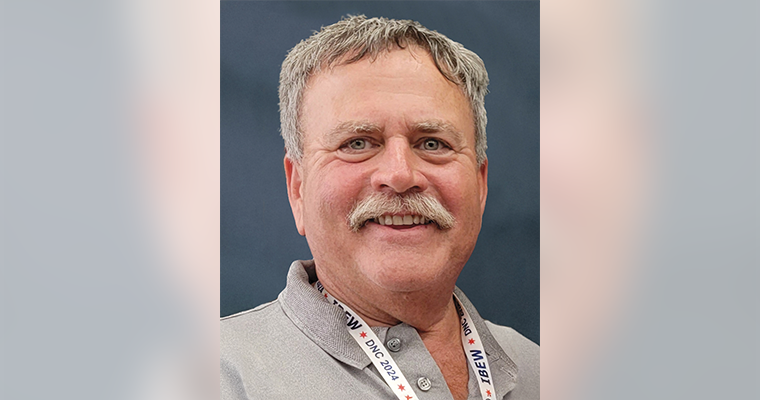
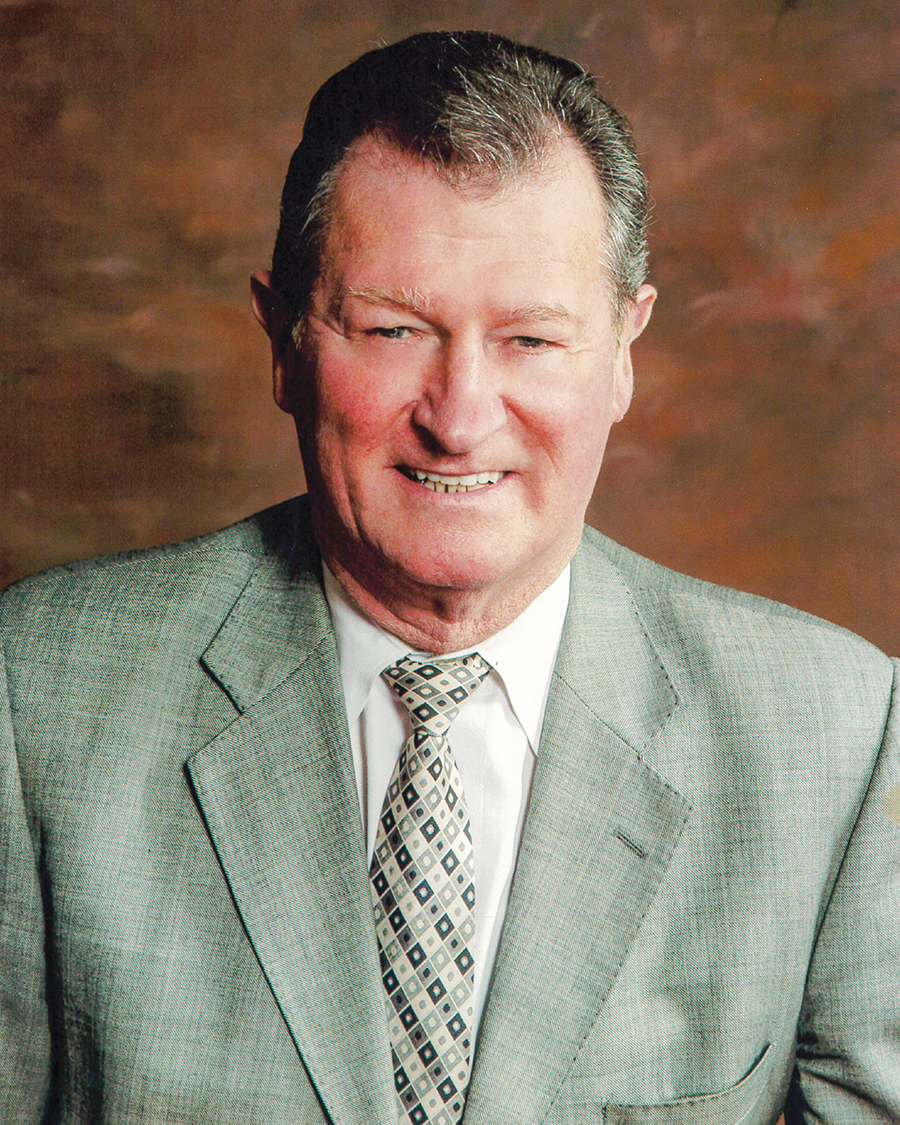
Jeremiah “Jerry” O’Connor, a born leader who captivated audiences from classrooms and union meetings to organizing drives, bargaining tables and ultimately convention stages as international secretary-treasurer, died Sept. 29. He was 91.
O’Connor retired in 2005, wrapping up a career that began as an apprentice wireman at Lisle, Ill., Local 701 in 1959.
“Even the pride I took on that day cannot compare with the feelings that surround me now as I stand before you,” he said when he was elected secretary-treasurer at the 36th International Convention in 2001 in San Francisco.
“Whatever I can do to advance our cause will be done. Whatever sacrifice I must make to move the IBEW forward, I will make it. I am Jerry O’Connor, your brother, one of you, and I rededicate myself to the pledge I made so many years ago in Illinois: You will never get anything less than my very best effort.”
As some of his closest union brothers affirm, he lived up to that promise every day.
“He was the epitome of a labor leader,” said International Secretary-Treasurer Paul Noble. “He believed in the mission, and he made you believe in it.”
Noble was first inspired by O’Connor while on staff at West Frankfort, Ill., Local 702. “He spoke from the heart. It was just telling the truth from his own life experience. It was something genuine,” he said. “For a young guy like me at the time, Jerry was the IBEW.”
Working closely with International President Edwin D. Hill, O’Connor forged a legacy that includes stronger IBEW pension funds, advancements to fight for members politically, and expanded training and organizing programs.
Whatever the subject, he was a powerful messenger.

“He impressed me from the very first time I heard him speak,” said International President Emeritus Lonnie R. Stephenson, recalling how O’Connor paced the dais at Local 701 meetings while delivering his reports as business manager.
“The way he walked back and forth, he was controlled. He had everyone’s attention,” he said.
Stephenson belonged to Rock Island, Ill., Local 145 but attended meetings at host locals when he traveled for work. Later, O’Connor serviced Local 145 as a Sixth District international representative while Stephenson was business manager, cementing their friendship.
He said O’Connor was a committed organizer and early proponent of what is now IBEW policy: a strategy to increase market share in the construction industry as demand for electricians grows.
“When he became [Sixth District] vice president, he made it very clear to us as business managers that our responsibility was to organize our jurisdictions,” Stephenson said. “He made no bones about it. He implemented a rule within the district that if somebody could document 10 years or more experience working the electrical trades, you were to recognize them as a journeyman.”
In recent years as retirees in Cape Coral, Fla., the pair met for breakfast twice a week along with Art Ludwig, a former Local 701 business manager whose bonds with O’Connor go back to his apprenticeship.
“Jerry was a union man from the bottom of his feet to the top of his head,” said Ludwig, who took O’Connor’s classes. “He preached it and he lived it. He was a firebrand. There was no doubt when you met him that you knew he was due for greater things.”
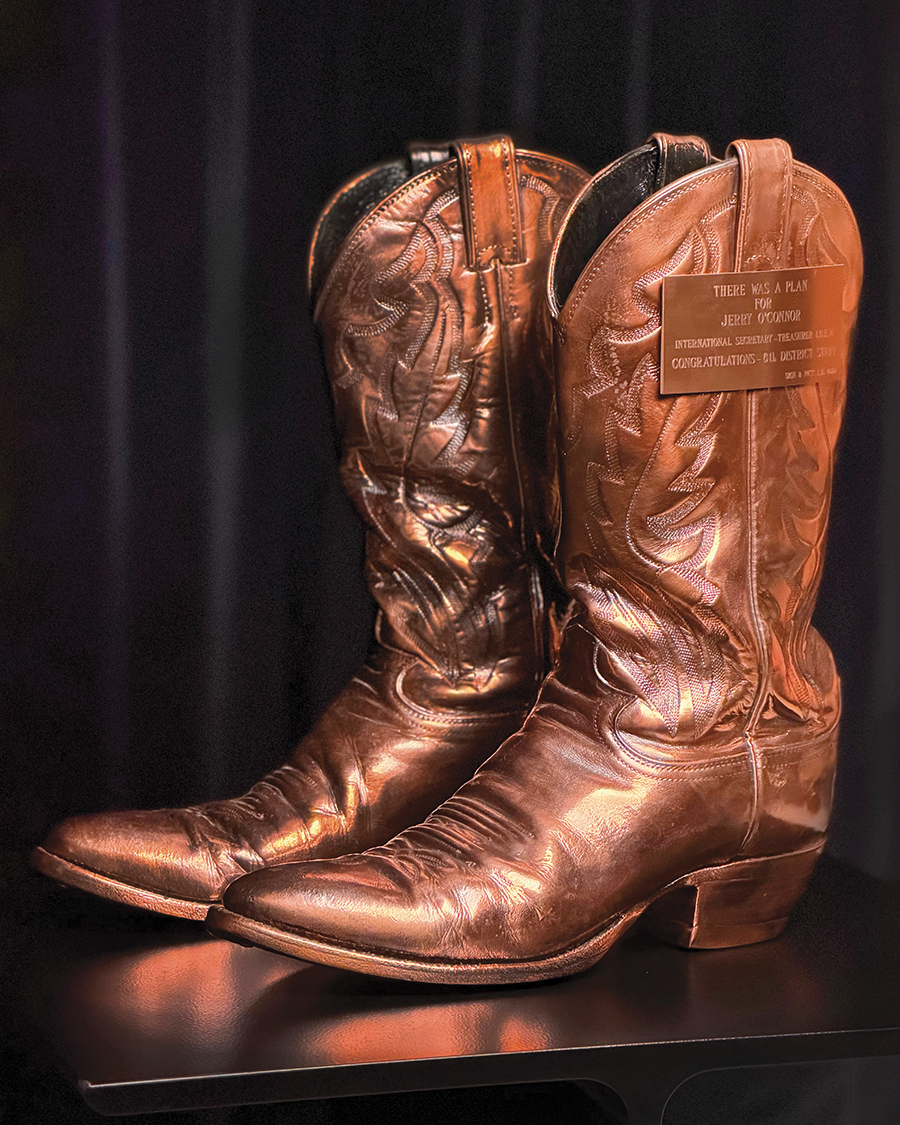
Born in Chicago in 1934, O’Connor grew up in nearby Lombard until moving with his family to Tucson, Ariz. There, as shared in his obituary, “he embraced the cowboy spirit,” riding broncos and competing in rodeos.
“Rumor has it — and Jerry never denied it — that he ran away to the rodeo and his father had to come get him,” Ludwig said. “He was that kind of spirited guy.”
O’Connor was drafted into the U.S. Army in 1953 and learned to be a surveyor, skills he brought back to Lombard two years later. But by spring 1959, he’d found a new calling as an apprentice wireman.
He dove into union committees and activities, immersing himself in matters of safety, bargaining, labor-management relations and political action. In the field, he quickly rose to be a foreman and general foreman.
He was hired as an assistant business manager in 1965 and concurrently taught at the JATC. He became business manager in 1978 and moved to the Sixth District staff as an international representative nine years later.
O’Connor serviced construction, utility, manufacturing and radio-TV broadcasting locals and, with his coveted speaking skills, led organizing, steward and leadership trainings.
“He was a phenomenal orator,” said past International Executive Council member Frank Furco, another retired Local 701 business manager who trained under O’Connor.
“He didn’t use a teleprompter, didn’t use notes,” Furco said. “He just got up there and talked. He commanded your attention without raising his voice. No matter what position he was in, when he got up to do a speech, everyone loved to hear Jerry.”
And no one could stump him. “He was so good on his feet,” Ludwig said. “He could answer any question with ease.”
Tall and energetic with a “wild Irish look in his eyes,” he said, O’Connor could be volatile — if he chose to be.
“He absolutely could control his emotions,” Ludwig said. “But if you picked a rough road against Jerry O’Connor, you’d have a hard time. Contractors learned that you didn’t want to fight with Jerry. You wanted to negotiate with him.”
His popularity was another factor. “He was so charismatic that he had the members 100% behind him,” Ludwig said. “Employers knew that with a wave of the hand, Jerry could get anything done.”
In Illinois, O’Connor also served as president of the DuPage County Building & Construction Trades Council and volunteered with the Red Cross, United Way and his local blood bank.
He was appointed Sixth District international vice president in 1995 and elected in 1996. In that role, he was lauded for major progress in education, training and organizing.
In January 2001, the IEC promoted him to fill an unexpired term as secretary-treasurer. He was elected by convention delegates in San Francisco on Sept. 10, 2001.
His deftness handling any situation was clear the next morning. As The Electrical Worker wrote when he retired: “Brother O’Connor’s admirable leadership qualities were on display as he, President Hill and fellow international officers guided convention proceedings forward in the wake of the September 11 terrorist attacks.”
O’Connor also made history as the first elected international secretary-treasurer, a job that had been two separate positions until a membership referendum between the 35th and 36th conventions. Instead of a secretary and a treasurer, members voted for a combined title and duties.
IBEW members still benefit from O’Connor’s record, which includes restructuring the union’s pension funds to protect against such things as a collapsing stock market, record-low interest rates and the 9/11 attacks.
He oversaw the union’s burgeoning multi-region health and welfare fund, which became today’s not-for-profit IBEW/NECA Family Medical Care Plan. He also called for research into lower-cost prescription drugs and within a year rolled out the Electrical Industry Sav-Rx program.
Noble said O’Connor strove “to take what our forefathers left us and make it better,” from the genesis of the FMCP to the Electronic Reciprocal Transfer System that debuted on his watch.
Critical to travelers, ERTS streamlined the transfer of pension and health benefits into members’ accounts at their home locals, replacing what had been a grueling paper trail marred by delays and errors.
“Things happen in real time now, and that was an absolute game-changer,” Noble said. “Construction by nature is temporary work — you go where the jobs are. And knowing that you have continuity in your benefits gives you peace of mind.”
Noble was among the IBEW visitors to Cape Coral who dropped in for breakfast with O’Connor, Stephenson and Ludwig. The trio met at the same diner every Tuesday and Saturday, a tradition that continues for the surviving brothers.
They’d noticed O’Connor becoming frailer in recent months but stressed that he was as sharp as ever as they talked politics and swapped stories from decades earlier.
Several weeks after he began missing breakfasts, O’Connor died at home of natural causes. His survivors include two daughters, Diane Lebreux of Joliet, Ill., and Debra Shultz of Naples, Fla.; five grandchildren; and nine great-grandchildren. His first wife, Annette, died in 2009, and his second wife, Nancy, died in 2022.
The IBEW sends its sincerest condolences to Brother O’Connor’s family and friends, including his tightknit circle from the Sixth District.
“We lost a good friend,” Stephenson said. “As you go along in your career, there are certain people who end up being mentors, and you strive to try to emulate them. Jerry was that person for me.”