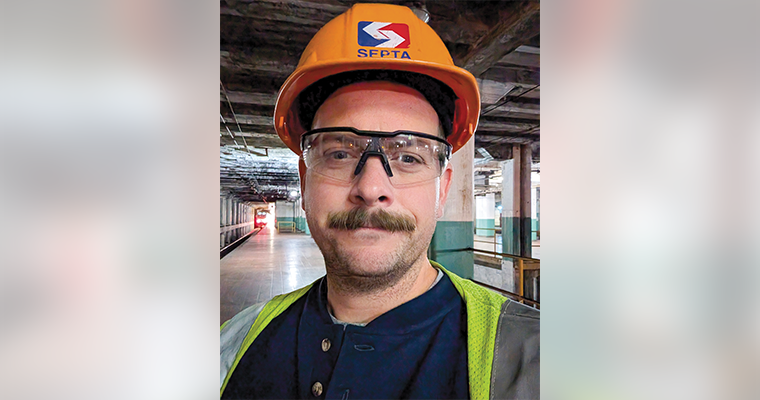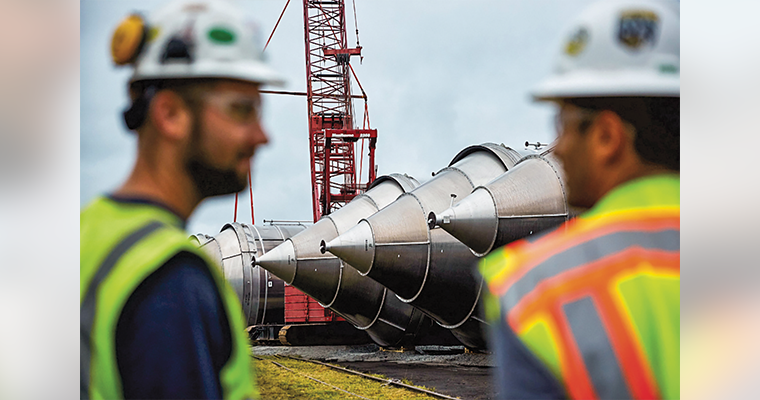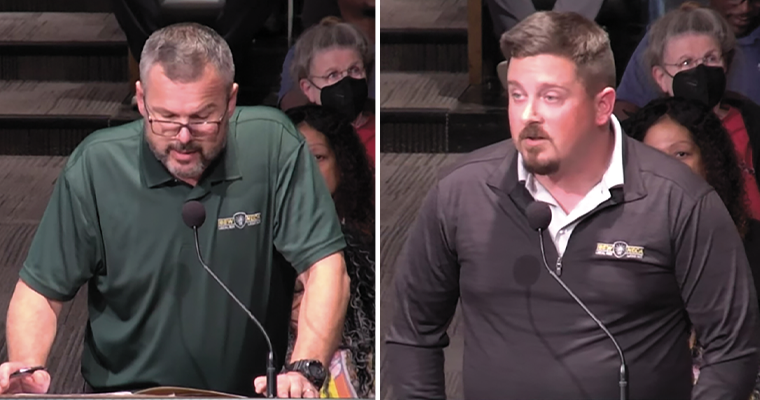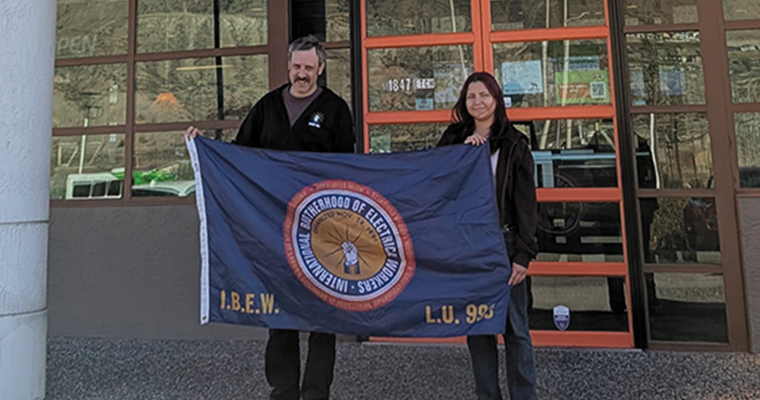
A new report from Canada’s Building Trades Unions examined the mental health of its members and offered recommendations for reducing stress by tapping into the solidarity inherent in unions.
The CBTU reported that Canadian tradespeople report similar levels of poor mental health as workers in other sectors, but the reasons behind their pain are often different. High stress, jobsite hazards and financial strain create unique mental health and substance use issues for tradespeople.
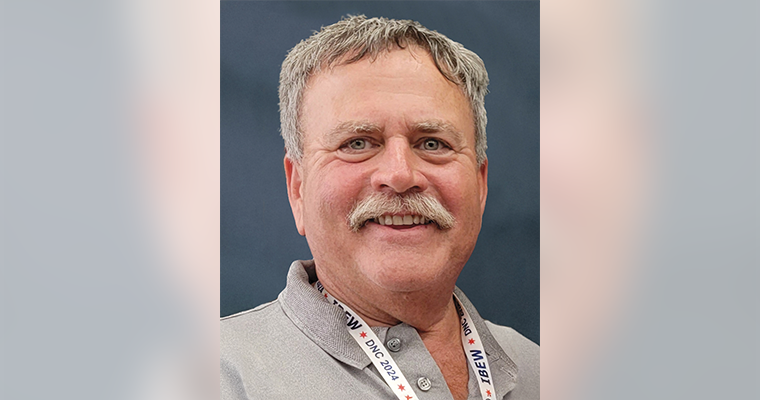
However, members of the IBEW and other building trades reported feeling strong support from their unions, said First District International Representative Travis Merrett.
Common Job-Related Mental Health Distresses
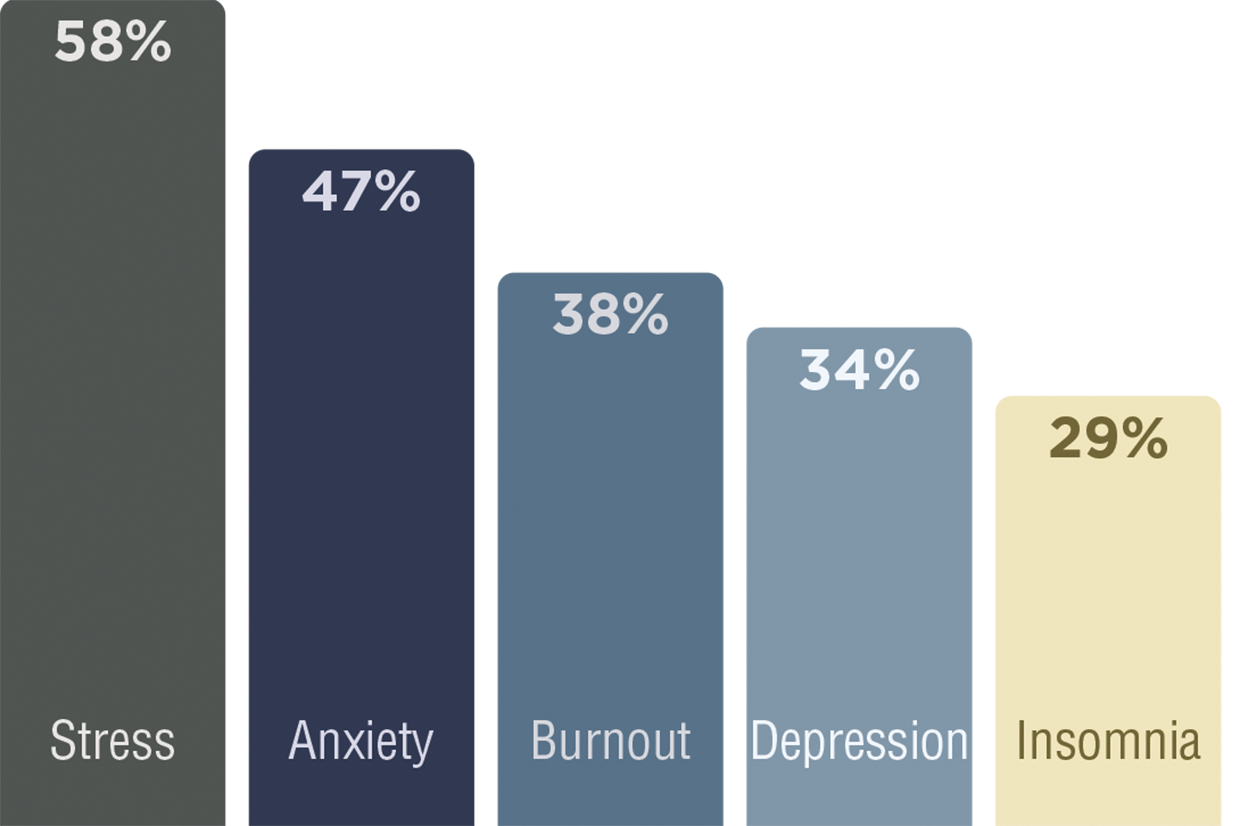
Source: Canada’s Building Trades Unions. Percentages above reflect the share of tradespeople in the survey who reported the respective distresses.
“That solidarity is a foundation we can build on,” he said.
The survey of just over 1,000 members of CBTU unions yielded similar results as that of mental health studies in the United States. The CBTU, of which IBEW Canada is a member, found that a substantial number of tradespeople reported having conditions like depression and anxiety and that those conditions are exacerbated by workplace factors such as stress, jobsite hazards, burnout and financial strain.
Merrett noted that while the challenges are serious and widespread, the IBEW and other unions already provide a unique structure of support that most workers in other sectors don’t have.
“The sense of belonging, of brotherhood and sisterhood and peer support that exists in the trades, are powerful tools,” he said. “We just need to make sure members know how and where to get help within their locals, and that they feel safe doing so.”
That hurdle of seeking the help that is available is significant. In the CBTU’s findings, 84% said their union offered necessary mental health support, and most are comfortable discussing mental health and substance use with their union. But only 10% reported ever accessing those union supports.
The survey also found that union members, more than workers in other sectors, feel a sense of belonging and support from their unions.
“That finding didn’t surprise me at all,” Merrett said. “In our trades, relationships are built on trust and shared experience. That connection can make a huge difference when someone is struggling.”
Merrett said the First District has been promoting awareness and educating members about mental health and addiction. They are a central theme at provincial and national conferences and leadership meetings. It’s also supporting locals to host trainings, distribute resources and partner with community organizations that specialize in support and recovery.
“Mental health is a part of workplace safety, not a separate entity,” Merrett said.
The report, which surveyed members from March to May 2024, included best practices for care, creating an environment where members feel supported and comfortable seeking the help they need.
Among those recommendations was the creation of a national Mental Health and Substance Use Committee comprising representatives from the building trades to take the CBTU’s findings and turn them into action.
“This report reinforces what we’ve long known in the trades: Solidarity saves lives,” said First District International Vice President Russ Shewchuk. “Behind every set of tools is a person who deserves to feel supported and safe. We stand with the CBTU and are committed to raising awareness so that every member understands that help is available.”
Merrett, who sits on the Committee representing IBEW Canada, said he wants members to know that the report isn’t just about statistics. It’s about their lived experiences.
“It validates what many have felt for years,” he said. “It’s helping guide real action and it shows that unions aren’t just about wages and working conditions, they’re about people.”
Merrett said members should know their mental and physical health is critical to the IBEW.
“Talking openly about mental health in the trades helps chip away at the stigma and reminds our members that strength also means knowing when to ask for help,” he said. “Members should never feel alone in this.”
Share your IBEW news!
IBEW Canada is seeking impactful stories from local unions and members. Please contact Shaina Hardie at [email protected] .