
Locals across the U.S. are reaching out and training workers in the native language, and it’s yielding promising results.
Roughly 30% of construction workers are Latino, and their numbers are increasing. And while not all Latinos speak Spanish, these locals are finding that offering training materials, outreach and retention efforts in Spanish is helping them tap into a part of the construction workforce that previously was beyond their reach.
Jon Rowe, training director for Riverside, Calif., Local 440 and San Bernadino, Calif., Local 477, said the engagement is a way to bring in more workers, especially construction wiremen working in solar, many of whom only speak Spanish.
“It gives us another avenue for recruitment,” Rowe said, noting that the membership is supportive. “They see the need out on their jobsites.”
Rowe said the locals are not just offering Spanish language services but also English lessons.
“The goal isn’t to make everything in Spanish but to help members be able to work in English since jobsites and other areas of the construction industry are English-speaking,” he said.
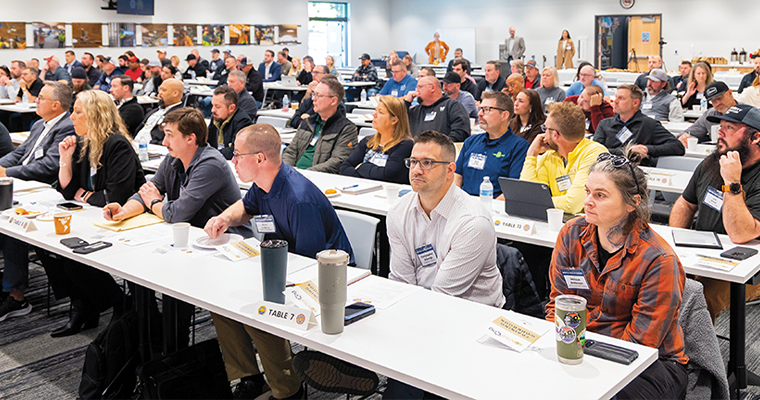
Richmond, Va., Local 666 also offers English classes and recently ran a bilingual salting training.
“We recognized the opportunity to engage and empower newly organized members, many of whom speak Spanish,” Local 666 Business Manger Charles Skelly said, noting that while the local is very busy now, a number of jobs are winding down, so it is likely to have a slowdown in calls.
“Member retention is key, and salting provides a way to keep members working while waiting on the next call,” Skelly said. “And the intel a salting member can provide about non-signatory contractors and their workers will help us grow even more once the calls pick back up.”
Skelly said the new members were appreciative of the opportunity to be heard and have their questions answered.
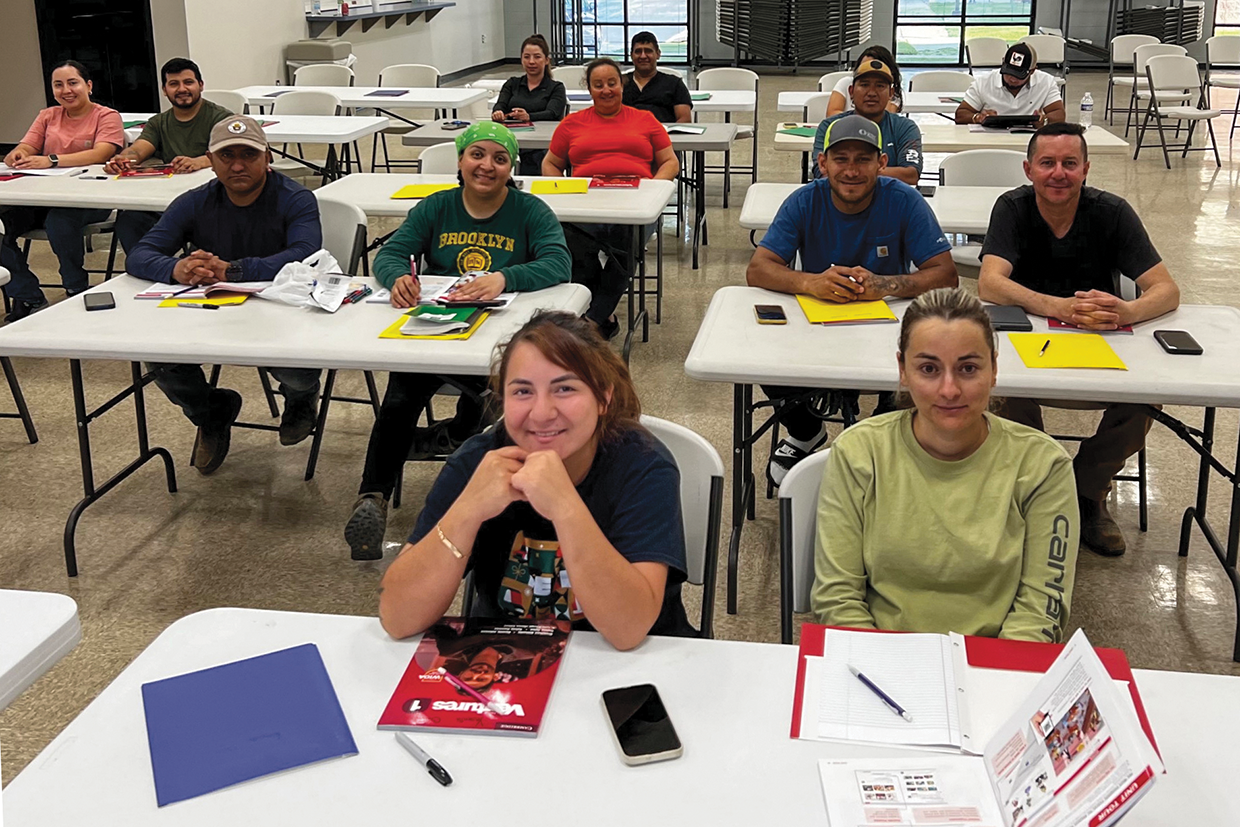
“This was a great opportunity to review some of the information from their new member orientation,” he said. “Most of them wanted to know if there would be more classes like this so they could invite their co-workers.”
Skelly noted that the class took just over an hour and the new members stayed for another hour discussing and learning the benefits of membership and what they can do to be more engaged.
“Our goal was member engagement, retention and organizing, and we hit that mark,” he said.
For Indianapolis Local 481, the Spanish speakers came to them, Business Manager Jeff Wheeler said.
“Our outreach so far has been word of mouth, and it’s been driving a huge number of workers to us,” Wheeler said.
There’s a lot of work in Local 481’s jurisdiction, and the new Latino electricians are helping meet the demand.
“We’re continuing to organize, have tripled the size of our apprenticeship and quite frankly were running out of other nonunion electricians in our pool of applicants.” Wheeler said.
The benefit for Local 481 is that it has a new group of people who previously had been an untapped resource in their area, Wheeler said. And for the new workers, they’re experiencing the benefits of being in a union.
“This is part of our future,” Wheeler said. “There have been some obstacles to overcome, but it’s been well worth the effort.”
The Electrical Training Alliance has also recognized the growing need for coursework in Spanish.
“Local demand drives everything, and with this particular topic, that demand reached the leadership of the IBEW and the National Electrical Contractors Association, which both expressed the need to create and deliver standardized software that’s equivalent to English,” ETA Executive Director Todd Stafford said.
Skelly and Rowe both said their jurisdictions likely have a higher-than-average number of Spanish speakers, so if they want to engage that workforce, they need to create a pathway for those workers.
“I want to change the number of people walking through the door,” Rowe said. “Besides, if we don’t get involved in the community, then what are we doing?”