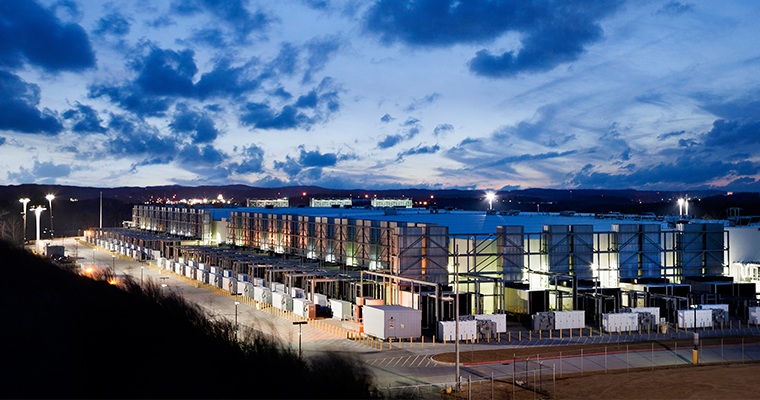
Workers at the largest cryptocurrency mining and power generation operation in the U.S. became members of the IBEW when they unanimously ratified their first contract late last year.
“I’m gray in the hair. The tech is beyond me, but it’s high voltage. It’s substations. It’s switchyards. The core of our industry is there, so we keep up with it,” said Roman Cefali, business manager of Johnson City, N.Y., Local 10, home to the new members. “Whose jurisdiction is it now? Don’t sit back and in 20 years say, ‘We should’ve done that.’”
The business model at Greenidge Generation is a unique creation only possible in the 21st century. When power prices are high, Greenidge sells up to 110 megawatts to the grid. When the grid price drops, operators spin down the generator and redirect up to 60 MW to hundreds of nearby servers that solve the complex mathematical puzzles that maintain the bitcoin chain of transactions.
The new members include operators who run the powerhouse and maintain the physical plant as well as a new classification for the IBEW, “hash rate techs” who run the bitcoin mining operation.
But as new as the business model is, the workers who run it found that they had problems that any member from the last 130 years of the IBEW would recognize.
Crypto Miners Need a Union
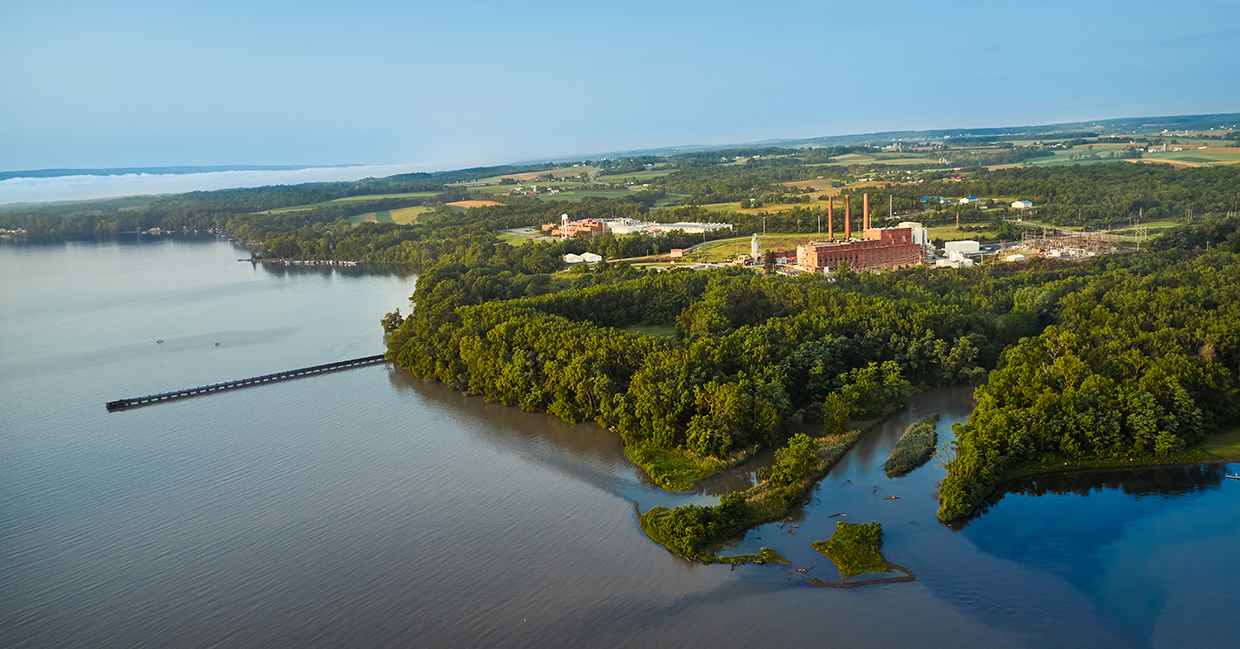
Local 10 represented everyone at the Torrey, N.Y., coal powerhouse from the day it opened until it closed in 2011.
Three years later, Greenidge Generation Holdings reopened it with the original 1940s General Electric turbine and a new gas burner. In 2020, it hitched its wagon to the modern-day gold rush, mining for bitcoin, the world’s most widely adopted cryptocurrency.
When Greenidge reopened, it didn’t just shed the coal. It skipped the union.
Ray Chelson had been a member of Geneva, N.Y., Local 249 when he worked at the plant. He was there until it closed, and he was one of the few who came back after it reopened.
Not having a union was hard for Chelson. He was glad to have the work. Torrey is in a rural part of New York where high-paying blue-collar jobs are rare. Nearby Seneca Lake brings tourists and their money in the summer, but the largest industry in the area is the vineyards. The coal powerhouse was paying double the median salary of the area.
But there were problems.
“We had pay scales all over the map. We had guys who could do everything making $8 less an hour than a guy who could do 50% of the job,” Chelson said.
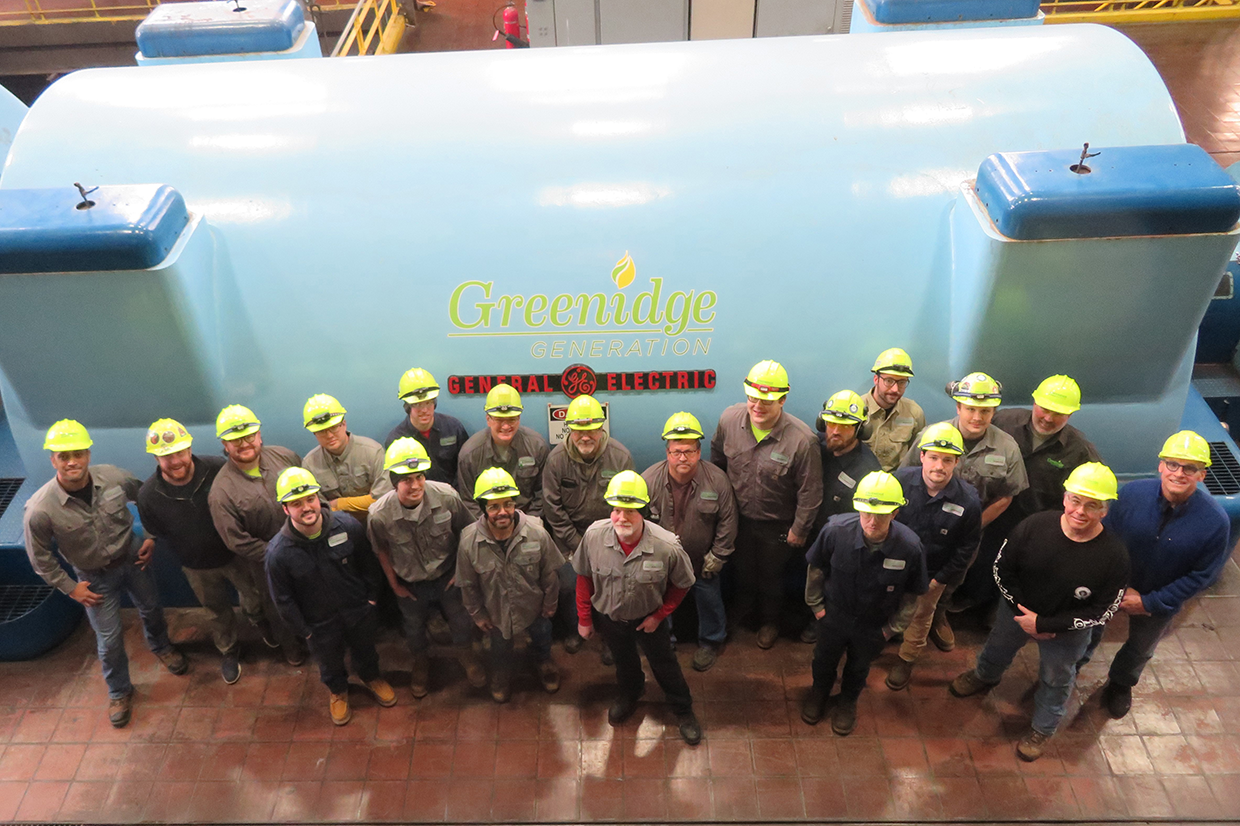
Solid workers were let go without cause and replaced by managers’ friends or family, Chelson said. Workers couldn’t get the training they wanted to advance internally.
About half of the unit does work hundreds of thousands of IBEW members would recognize. The others are the hash rate techs. Hash rate is a measurement of how many operations a computer can do. In crypto mining, hash rate is the name of the game. The higher the hash rate, the better your chances are of earning bitcoins.
“If we didn’t have bitcoin and were just a regular peaker plant, we would be offline, and it would take 12 to 24 hours to get back up to full capacity. But because of bitcoin, we can put 60 megawatts on the grid in an instant and add an additional megawatt every minute until we are at full capacity,” Chelson said.
Operators and hash rate techs started talking in the control room, at shift changes and on breaks. Most of the conversations were airing complaints, said hash rate tech John Lucas.
“We had about a year of conversations. Then we went to management: ‘We want more money. We want more holidays. We need training.’ It fell on deaf ears. It was always ‘It’ll be next month,’” Lucas said.
Chelson said he made sure a union was always part of the conversation.
“I kept saying, ‘This is the kind of thing a union helps with,’” Chelson said. “I never pretended it was perfect, but I saw a lot of good. If I didn’t get training I wanted, I could call the hall and say, ‘I’ve been in the pump job six months, I want to train.’ They could get me onto another shift or get me training. It wasn’t going to management with no one at your back when you need help.”
Not everyone was convinced at first, Lucas included.
“I have not been a part of a union, and I was not at all a union guy,” Lucas said. “But we worked with what we had for 10 years, and I could see the benefits of it versus sticking with what we had.”
After years of complaining to management, followed by a little more money and a lot more promises, a group of workers wrote a list of demands everyone could put their name on and, in the fall of 2024, said it’s either this or a union.
Management sent back a threat to double their health care contribution if they formed a union.
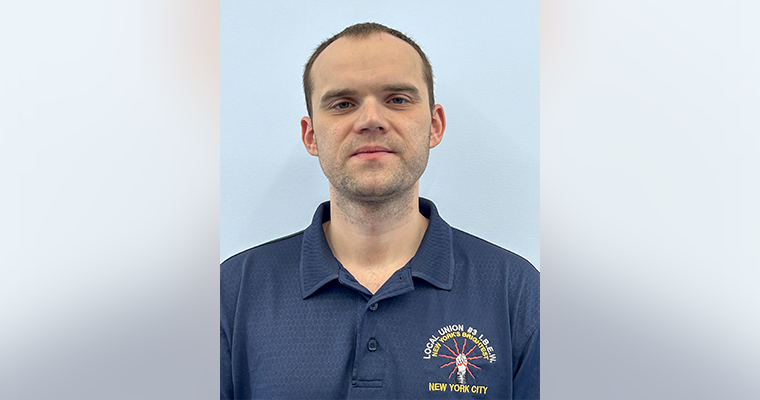
Dakota Webster, a hash rate tech, pulled the trigger and sent a request to IBEWYes.org, the union’s online organizing hub, in December 2024.
“We went with the IBEW because they did a good job,” Chelson said. “I witnessed them fight to get jobs back, they fought relentlessly about pay, and they fought to place people when the plant closed. They did care.”
The request came to Regional Organizing Coordinator Steve Rockafellow, and Third District Lead Organizer Mike McGee followed up with Webster. Within a month, the Greenidge workers had scheduled a meeting with Webster and a few others.
“They showed up with 10 cards,” Rockafellow said. “They wanted to move fast.”
More meetings with other members of the unit followed quickly, as did the captive-audience meetings at the plant.
There was solid support, but it wasn’t uniform, McGee said. “They were unhappy, but they don’t want to risk change.”
He said his job was to help them see what life with a contract actually looks like, but also to help them see how precarious life without one already is.
“I told them, ‘You are employed at the will of your employer, who can change that at any time. A supervisor’s kid graduates from high school, they can — and did — say, ‘Thanks for your years of service; my kid needs a job.’ And you’re gone,” he said. “When you say, ‘You don’t have to have that fear in a union,’ they start looking at you closer.”
Within a month, McGee had met most of the bargaining unit and had a majority of signed cards. There was some opposition from management, McGee said, with the same old messages of “We’re a family here” and “The union takes your money.” The company didn’t challenge the unit structure, no unfair labor practice charges were filed, and the vote wasn’t even close.
Turning Their Votes Into a Contract
Any organizer will tell you a campaign isn’t a success until you ratify a contract.
“This is the second first contract of my career, and they can be just awful and take forever,” McGee said.
But that didn’t happen here. In less than eight months, the negotiating team assisted by Local 10 Assistant Business Manager Tom Addy had an agreement for the unit to vote on.
“Even if we didn’t get every dollar we wanted, they knew we left no one behind,” Lucas said.
Second, they had managers who understood that labor-management partnership was possible. The senior leadership, President Dale Irwin and General Manager Jon Carpenter, were former members of Local 249.
By the time they were negotiating, Chelson and McGee said, management could see that most of the worker demands made sense.
And maybe most importantly, Greenidge needed political help.
The company’s emissions permit from the New York State Department of Environmental Conservation was up for renewal in 2025.
“If they don’t get the permit, they’re dead,” Cefali said.
In contract negotiations, Greenidge came to see that a happy union with a good contract and a powerful arm would be a good partner in the state Capitol.
“We offered to use our voice in Albany. And we did lobby to get the permit, and they got it and we got the contract,” Rockafellow said.
The result was a contract that every member of the unit voted for. Even the people who did not vote yes in the representation election said yes to the contract.
“We gained a lot and lost nothing,” Cefali said.