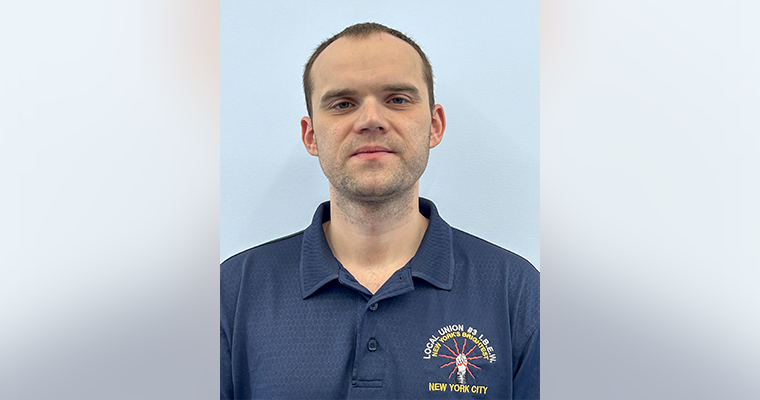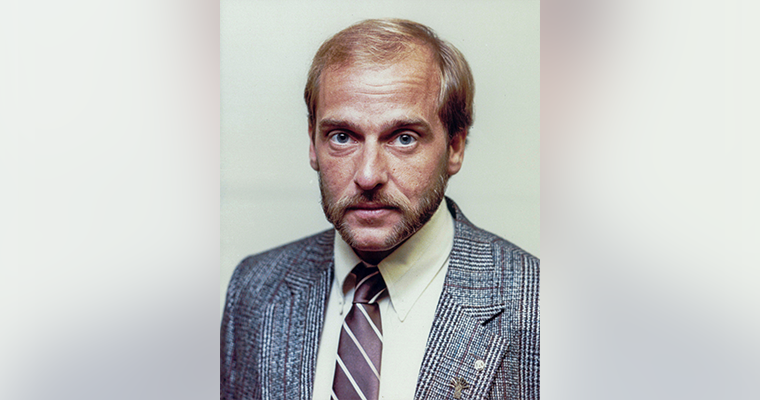
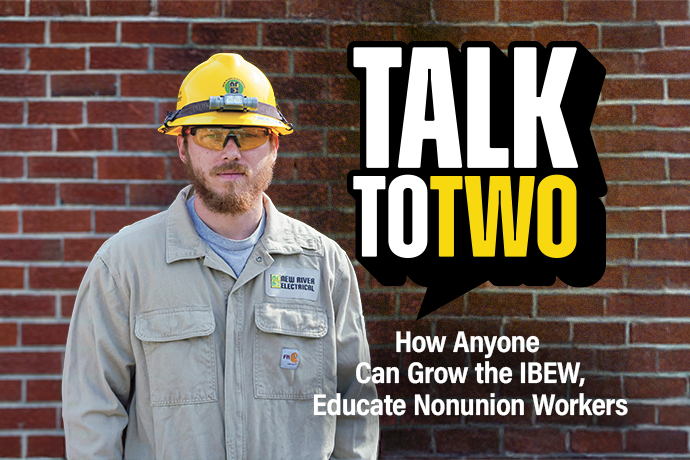
For more than eight years, Haywood Sorey made a pretty good living as a nonunion electrician, supporting his wife and family while working for contractors in the Hampton Roads region of southeastern Virginia.
Too often, though, he felt as if he was being paid for one job but doing two.
“I was also a commissioned worker,” he explained, “where it was all about them trying to push sales and make us work harder.”
His opinions of unions at the time “weren’t great,” he said. “I’d always heard different things about them, and it was never good.”
In 2024, Sorey was seriously injured in a motorcycle crash. “I broke every bone in my right leg,” he said.
The resulting surgeries and extended hospital stay threatened his family’s finances. “The insurance that I had didn’t cover anything,” said the now-30-year-old Sorey.
One bright part of his recovery was his talk with a friend and former co-worker who had recently joined the IBEW. Hearing more about union rights, better pay and solid benefits such as quality health care helped persuade Sorey to take another look at the Brotherhood.
Early last year, he was initiated as a journeyman inside wireman with Newport News Local 1340 and quickly put to work.
“I’m married, I’ve got five kids, and I’m doing a hundred times better than I was before I joined,” said Sorey. “Everything I heard about unions, compared to my firsthand experience, it was all lies.”
Personal conversations like the one that led to Sorey’s signing are the cornerstone of “Talk to Two,” an organizing strategy that has seen a resurgence in Virginia and the rest of the IBEW’s Fourth District since 2022.
“Talk to Two is where our members are asked to go out and try to talk to at least two nonunion workers about joining the Brotherhood every day,” explained Austin Keyser, the district’s international vice president.
Keyser described Talk to Two as a strategic and relational approach to organizing that is helping to boost the IBEW’s membership and market share across the Fourth District, which also covers Kentucky, Maryland, Ohio, West Virginia and the District of Columbia, bringing hundreds of people like Sorey into the fold.
While the strategy has a name in the Fourth District, it’s a tactic many members are using effectively across North America.
“When IBEW members talk with someone about their personal union story, the Brotherhood practically sells itself because they’re telling the truth,” said International President Kenneth W. Cooper. “Being in the union provides a way of life that everyone should have, and when our members talk with others about it, they want it, too.”
‘The Strongest Case’
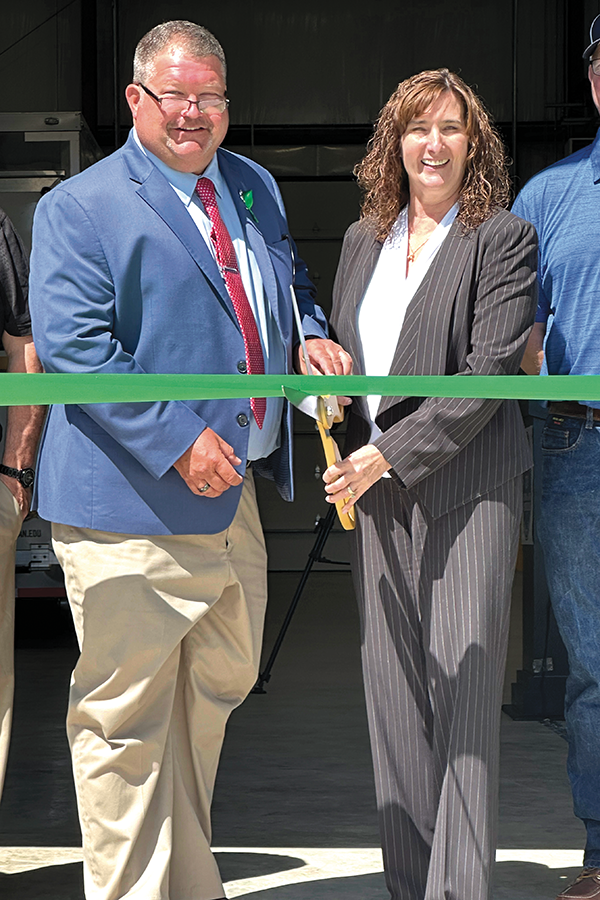
Talk to Two is one of many tools in the IBEW’s organizing toolbox, an easily deployable companion to apprenticeship recruitment and unionizing drives. “It can be a great way to help turn internal organizing into an external campaign,” Keyser said.
Keyser was appointed the Fourth District’s international vice president last year following Gina Cooper’s retirement, and he credits his predecessor with launching Talk to Two alongside other union-growing strategies that are continuing to pay off.
“Gina is a brilliant organizer,” he said. “She has a very logical way of tackling problems.”
When she was director of professional and industrial organizing for the IBEW’s Membership Development Department in the early 2010s, Cooper used Talk to Two as part of a national campaign to organize workers with cable conglomerate Comcast.
After becoming the Fourth District’s international vice president in 2020, Cooper was confident that Talk to Two would be perfect for implementation alongside an online campaign she developed with International Representative Bert McDermitt to target privately owned electric cooperatives that deliver electricity to many of the district’s rural areas.
“Either we bring new women and men … into the IBEW, or somebody else will come in and take work that should be ours.”
– Fourth District International Vice President Austin Keyser
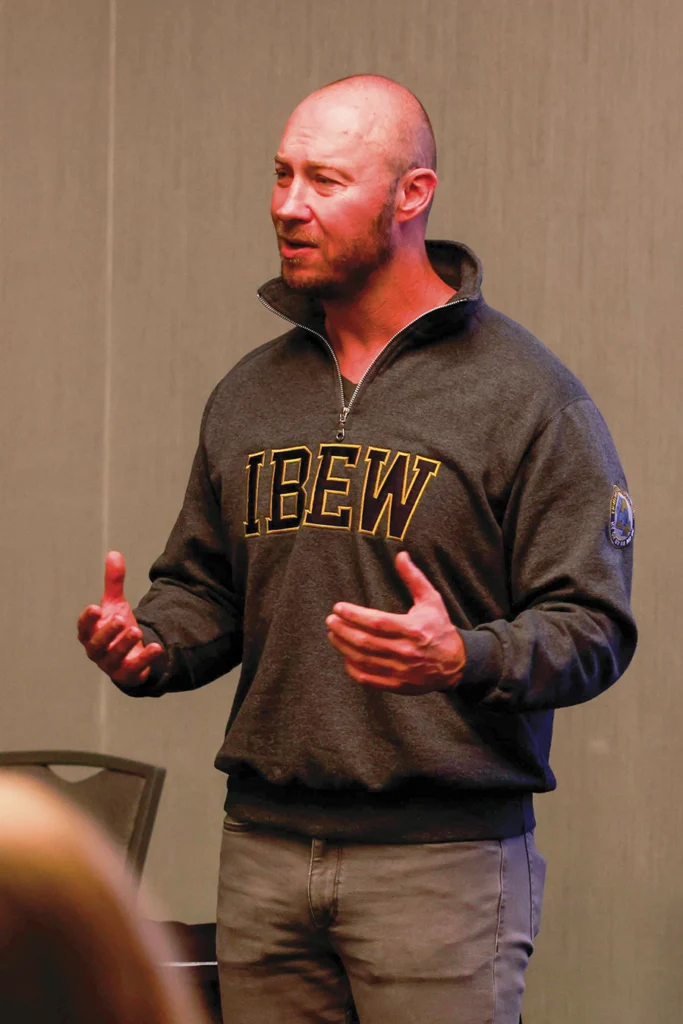
“A lot of our IBEW linemen work with co-op workers, and they have a direct, one-on-one ability to communicate with them,” she said. “If you can just talk with a worker about how your life has been changed because of joining the IBEW — with good wages, a good pension and good health care — you can’t beat that. It’s the strongest case you can make.”
Keyser noted that with many growing utilities in the Fourth District moving toward the co-op model, “a lot of them could turn into major organizing victories for the IBEW” because of Talk to Two.
Joe DiMichele, the IBEW’s director of P&I organizing, agreed. “Even when you build a voluntary organizing committee, their outreach can only go so far,” he said. “But if someone talks to two people, and they talk to two more, the next thing you know, you could have dozens of people out there talking to each other about the IBEW.”
When Talk to Two was launched in the Fourth District in 2022, “we put together some documents that explain the program and rolled it out through our organizers directly to local unions,” Cooper said. “We encouraged them to make it their own, and that was really the key.”
Fourth District Lead Organizer Alex Vibbert noted that the IBEW, thanks largely to Talk to Two, has brought most of Kentucky’s 26 electric cooperatives into the union.
“At one time, we had 16 that weren’t organized,” she said. “We’ve knocked that down to 12 in the last three years.”
Many of the co-op organizing drives resulted from Talk to Two conversations started by IBEW members while working mutual aid during storm recovery, she said.
“That’s a perfect hotbed for teaching nonunion workers how to fight for themselves,” said Vibbert, who led some of those campaigns during her tenure as business manager of Louisville, Ky., Local 2100.
The effects of such conversations aren’t always instant. During a storm recovery safety stand-up in 2023, Vibbert said, an IBEW-represented Owen Electric worker talked with a nonunion worker at Fleming Mason Energy, handing over business cards for Vibbert and Fourth District Regional Organizing Coordinator Andy Chapman.
Last year, workers at Fleming Mason voted to organize with Local 2100. “It took them about two and a half years, but it came directly from a Talk to Two conversation,” Vibbert said.
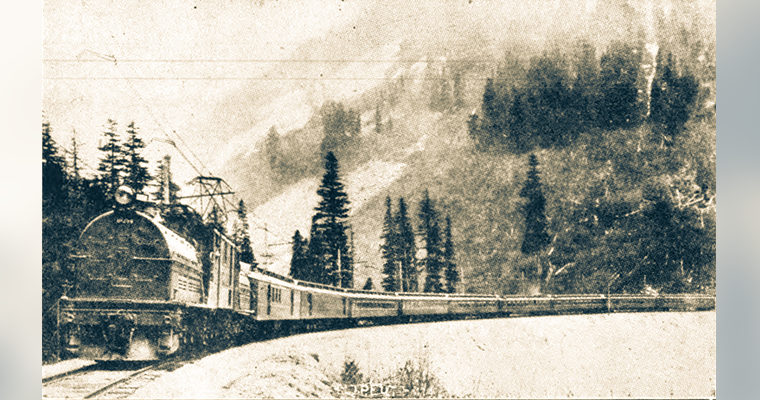
Chapman said Talk to Two embodies what IBEW founder Henry Miller practiced from the union’s beginnings in 1891.
“I’m sure he was using some form of it as he was traveling from city to city and train car to train car,” Chapman said. “Boots on the ground — our members going to work, being excited and generating conversations — is where real IBEW growth happens.”
Creating Relationships
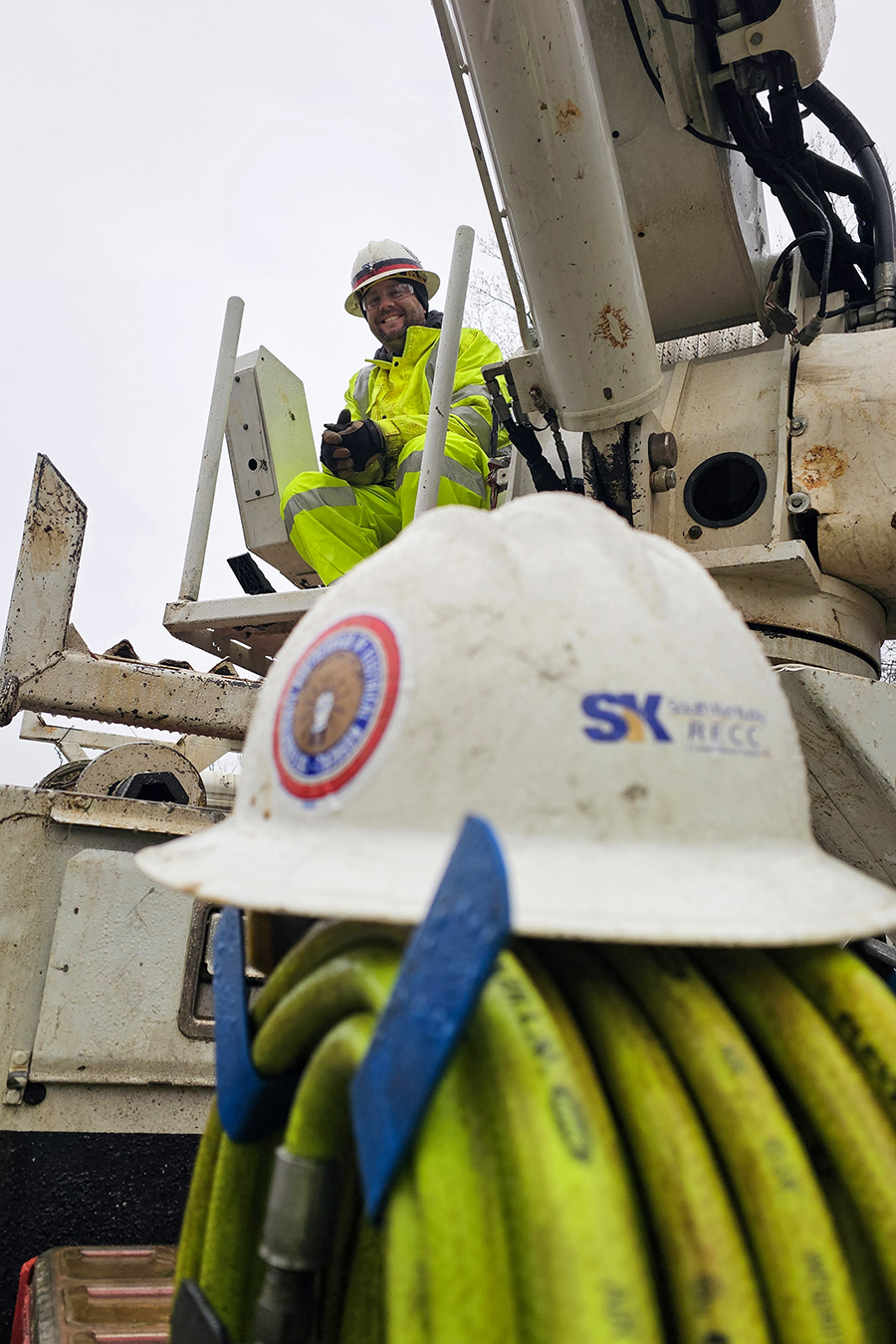
Talk to Two is often just the beginning of a future member’s organizing journey, said Local 1340 President Aaron Woodard.
“My job would be really easy if I could go out and tell somebody what they’re going to make and they immediately decide to join the IBEW” like Sorey did, Woodard said.
But members who use Talk to Two need to keep patience in their toolbelts, Woodard said.
“We’ve been creating relationships for years with electricians who aren’t ready to make the jump,” he said. “All it might take is one more phone call one day, saying, ‘I’ve got an opportunity for you here; it might be time for you to make your move.’”
At Local 1340, a portion of the 600-plus membership is helping build two highway tunnels connecting Hampton and Norfolk under the Chesapeake Bay, one of the largest infrastructure projects in the U.S. A healthy number of others are working under maintenance agreements with several of the area’s federal installations and military bases.
One of those contracts, noted Business Manager Jeff Rowe, was recently finalized thanks in part to Talk to Two.
“That introduction came because we already represent workers with that same company at a different facility,” Rowe said. “Some of our members were tasked with going over and helping out at this other base, and they were like, ‘How come you guys aren’t union?’ They just had that conversation.”
With Talk to Two, “we’re empowering our members with not just information but confidence, getting them involved in their communities to be advocates for the IBEW,” Rowe said.

TAKE THE PLEDGE
The “Talk to Two” organizing strategy simply means taking the time to talk to nonunion workers in your industry. It doesn’t have to be complicated. You already have a lot in common, and you might be surprised at how willing most are to share their thoughts on changes in the industry and how they are affecting their work.
Conversation Ideas
- Talk about the issues you both deal with.
- Talk about how being in the IBEW has benefited you and your family.
- Discuss how your contract has resolved some of the issues you discussed.
Follow Up With Next Steps
- Would you be interested in talking with someone from our Membership Development Department?
- Thank you for taking the time to talk with me. Someone from our union will be in touch with you.
Adapted from a Fourth District Talk to Two handout
The Need to Organize
“I’ve said over and over in my 40 years in the IBEW that I’ve watched how organizing not only changes lives for individuals, it also changes whole families’ lives and communities,” International President Cooper said. “It will just be better all across North America if we can organize everyone in our industry.”
In the Fourth District, Keyser said, “Talk to Two is helping us keep that mindset: that we need to be inviting everybody to join the Brotherhood, because it’s the way we will all have power.”
The opportunity for growth in the district looks bright, Keyser said. Thousands of new members will be needed in the coming years to handle the current workload while also building and staffing new power plants, data centers, microchip manufacturers and solar panel installations.
“Either we bring new women and men who can do that work into the IBEW, or somebody else will come in and take work that should be ours,” he said.
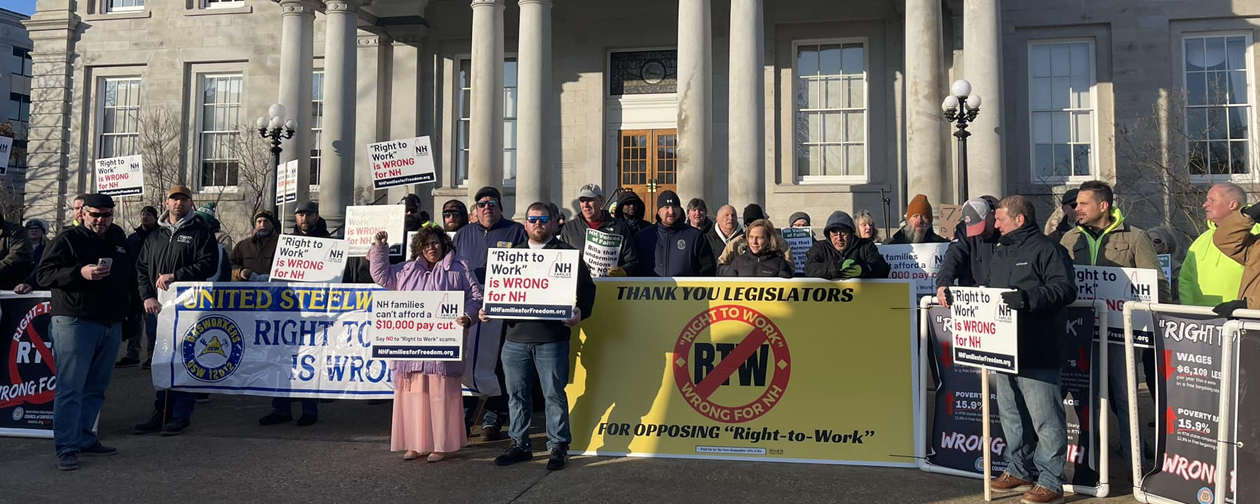
Organizing strategies like Talk to Two are paying off even in Kentucky, Virginia and West Virginia, despite those states’ so-called right-to-work laws that let workers enjoy the benefits of collective bargaining agreements without contributing to their cost.
“In fact, West Virginia has some of the IBEW’s highest market-share numbers,” said Keyser, who noted that union-friendly policies such as project labor agreements and prevailing wages are also prohibited by law in the state.
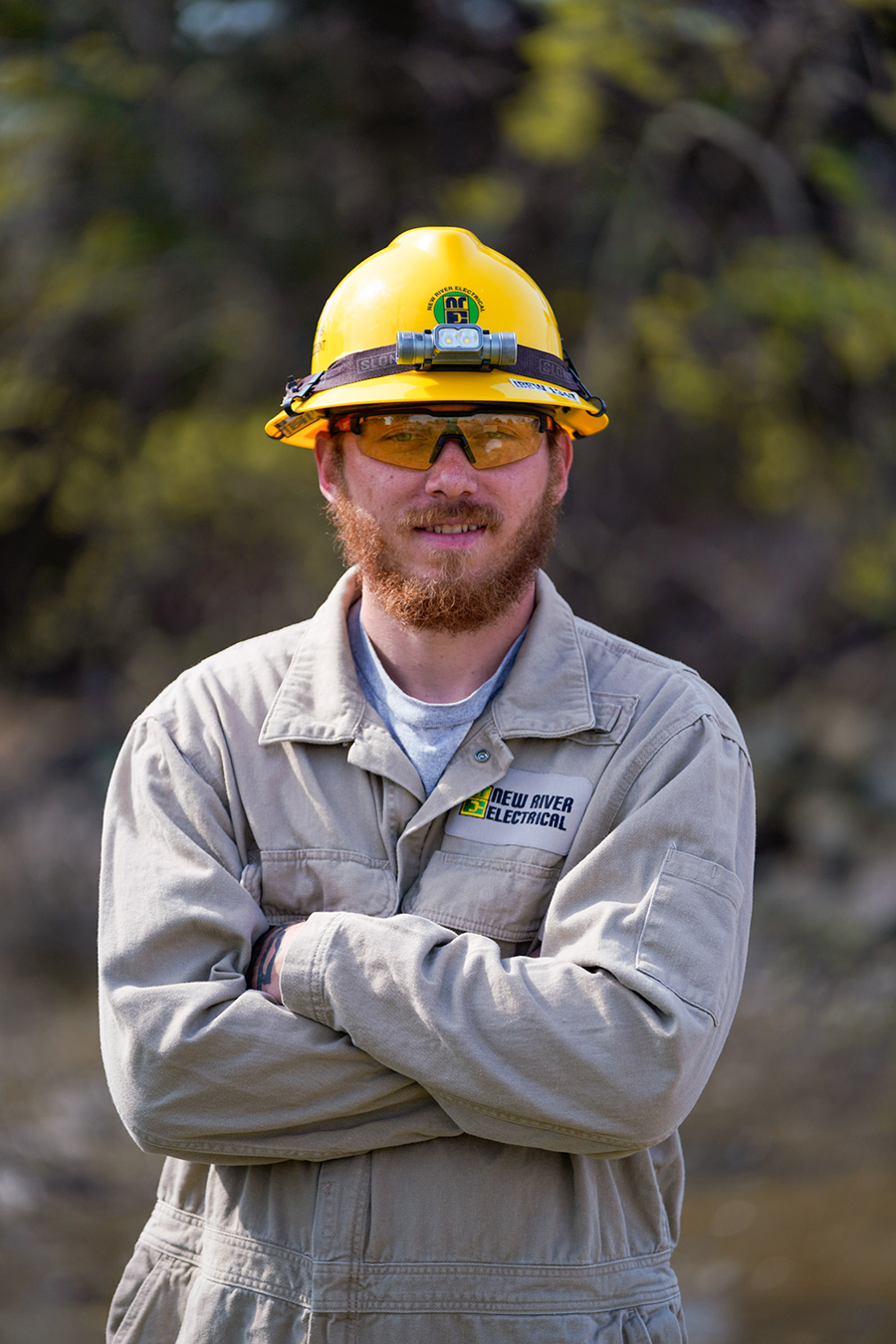
Chapman said Talk to Two is as much about organizing as it is about educating potential future members in every corner of North America about unions and the IBEW.
“Can we effectively educate people so that, even if they don’t choose the IBEW right away, they at least know what their rights are and in the future they’ll know who to call?” he said. “And if we can also educate our current membership to go out and be effective organizers, the sky is the limit.”
Everyone can benefit from Talk to Two conversations, retired Vice President Cooper said.
“As they talk about the IBEW, they get to share their union pride,” she said. “It brings it home to them that they’re better off because they’re a member of this union and proud to be a part of it.”
It doesn’t feel like a sales pitch, Keyser said, because it’s not one. “It’s our real stories,” he said. “They’re authentic and personal.”
Keyser admitted that for some, the hardest step in Talk to Two might be the first one: “getting out there every day, finding people working in another crew or for another company, and saying, ‘Let me tell you how the IBEW changed my life.’”
Sorey seems to have no such difficulty.
“Everywhere I go, I talk to people about the union,” he said. “I’ve got IBEW stickers on my motorcycles, on my truck — I’ve even got one on my phone.”
He estimates that, through Talk to Two, he’s brought nearly a dozen people into the IBEW, and counting.
“I’ve even recommended to guys not in our trade to go join the union in their own field,” he said.
Business Manager Rowe is impressed. “Haywood’s done an outstanding job of talking up opportunities with the IBEW,” he said. “He exemplifies the goals and ideals of the union, and he’s walking the walk assisting our organizing efforts.”
Sorey said he just does it because he wants to.
“I don’t have to deal with all the stress I used to have of having selling stuff on commission while trying to keep up with my jobs and everything else,” he said. “Now, I just come to work, they tell me what needs to be done, and I go do it.
“If I could go back now, I probably would go through the IBEW’s apprenticeship,” Sorey said. “I wish I would have done it.”