Delegates Approve Amendments to Make Organizing Easier, Clarify Language
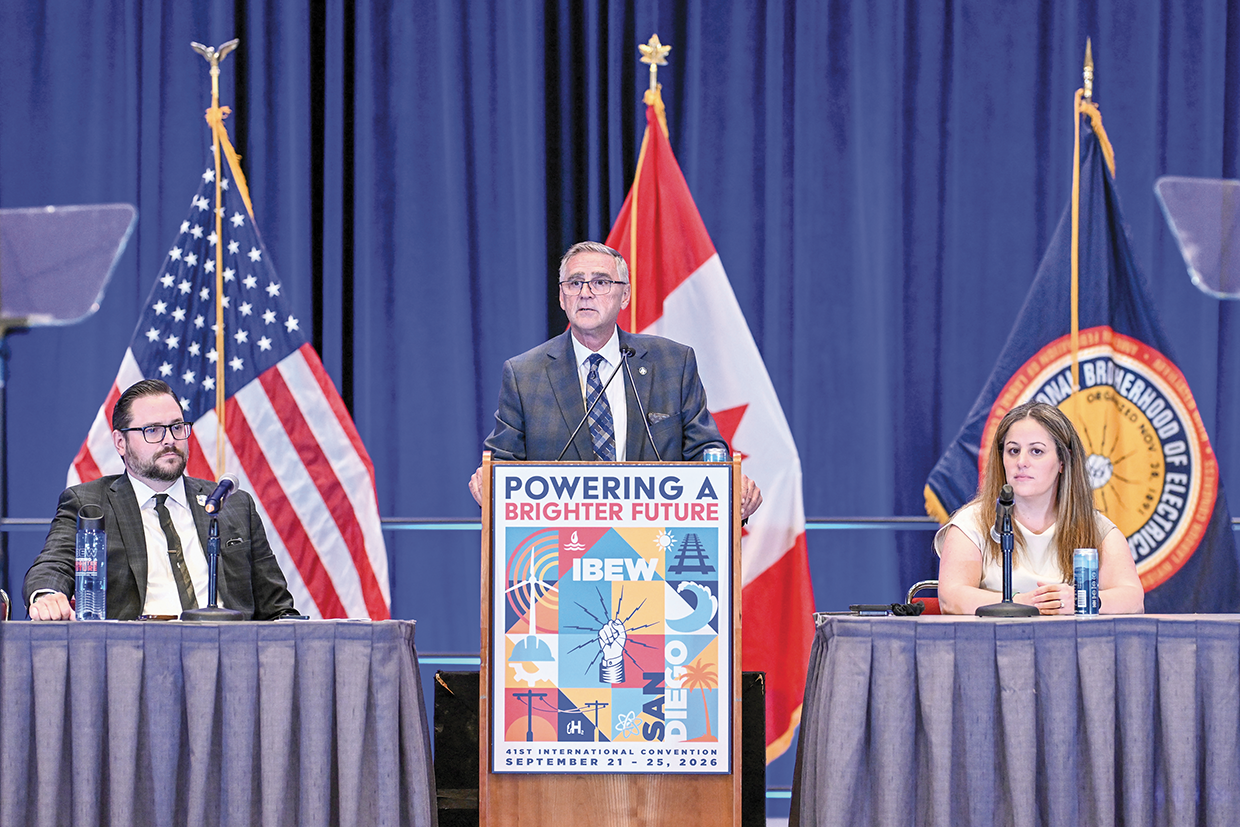
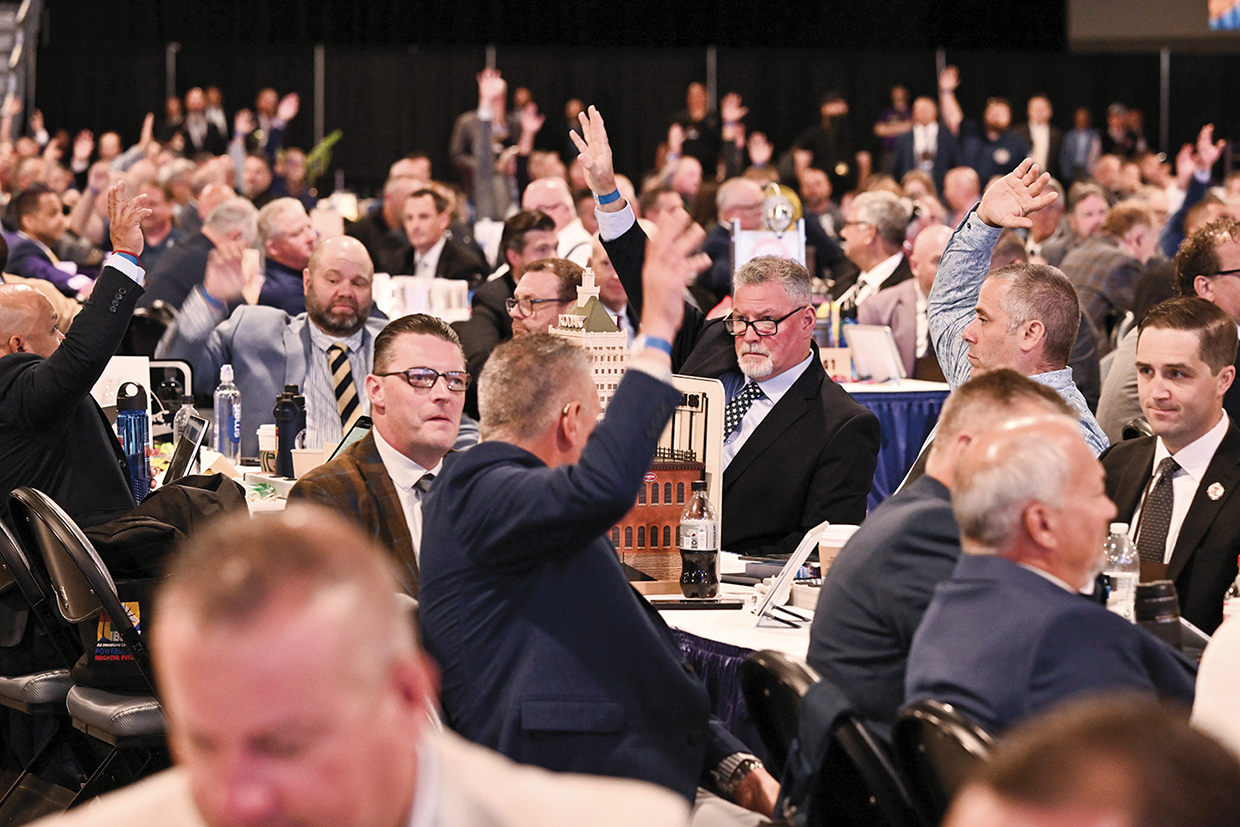
Delegates to the 41st IBEW International Convention considered more than 20 proposed amendments to the IBEW Constitution.
The amendments were introduced by Law Committee Chairman Bob Dean, business manager of Vacaville, Calif., Local 1245, and committee Secretary Mark Lynch, business manager of Philadelphia Local 98.
The first amendment would amend the second paragraph of Article 15, Section 14 of the Constitution to require a local union to offer membership and admittance to an apprentice as soon as possible after the apprentice has worked in the local’s jurisdiction.
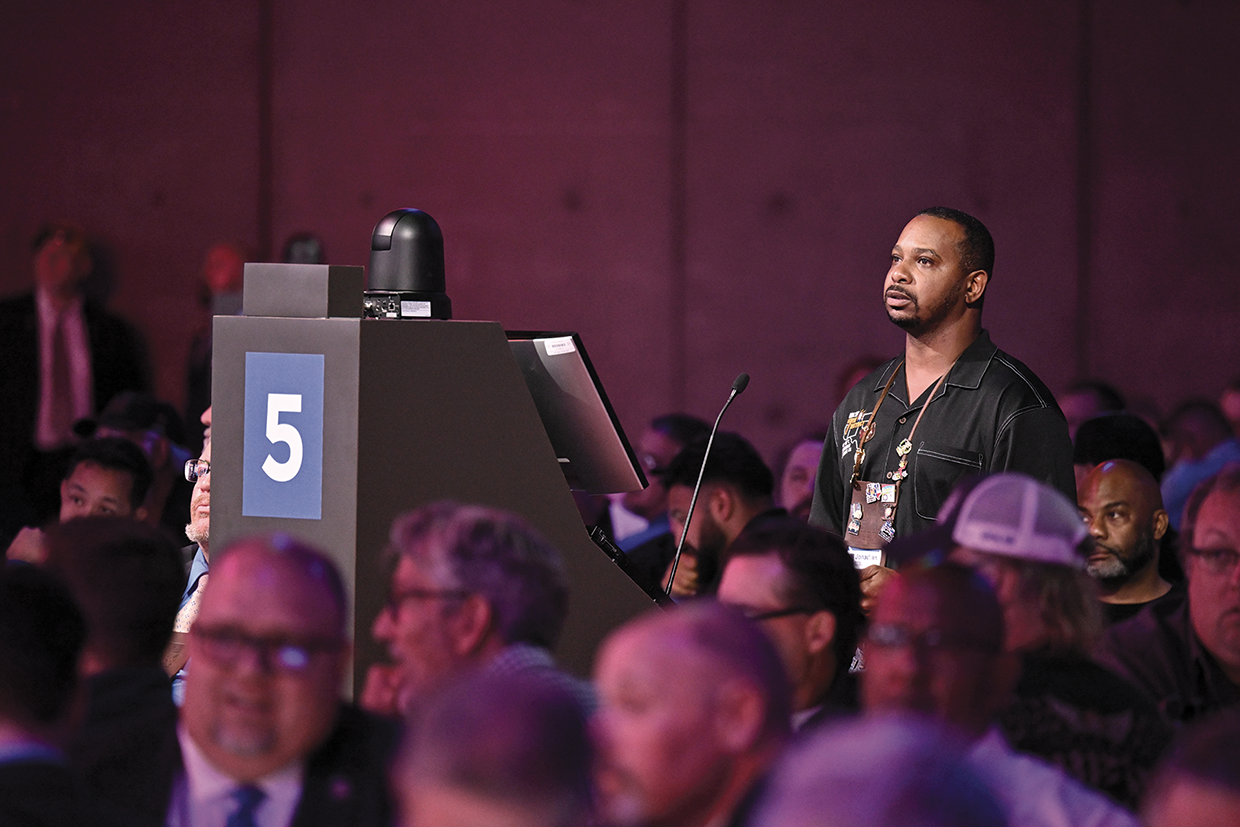
Shreveport, La., Local 194 Business Manager William Upchurch spoke in favor of the amendment.
“Yesterday, we removed the waiting period for PBF death benefits. Apprentices should have that benefit,” he said. “If apprentices are working, they should be members.” PBF death benefits are only available to members.
No one spoke against adoption, and delegates approved the amendment.
The delegates then voted on an amendment to clarify language in Article 15, Section 14 about apprentice eligibility for election to union office. Apprentices would still be ineligible for elected office, but they could be nominated for a position if the installation of officers occurred after they topped out of the apprenticeship.
Larry Roberts, business manager of Martin, Tenn., Local 1925, rose in support, and the amendment was approved.

Delegates also approved an amendment simplifying the constitutional section on good standing. The amendment changes Article 21, Sections 3 and 4, to clarify when a member is no longer in good standing because the member is in arrears on dues, per capita taxes or both.
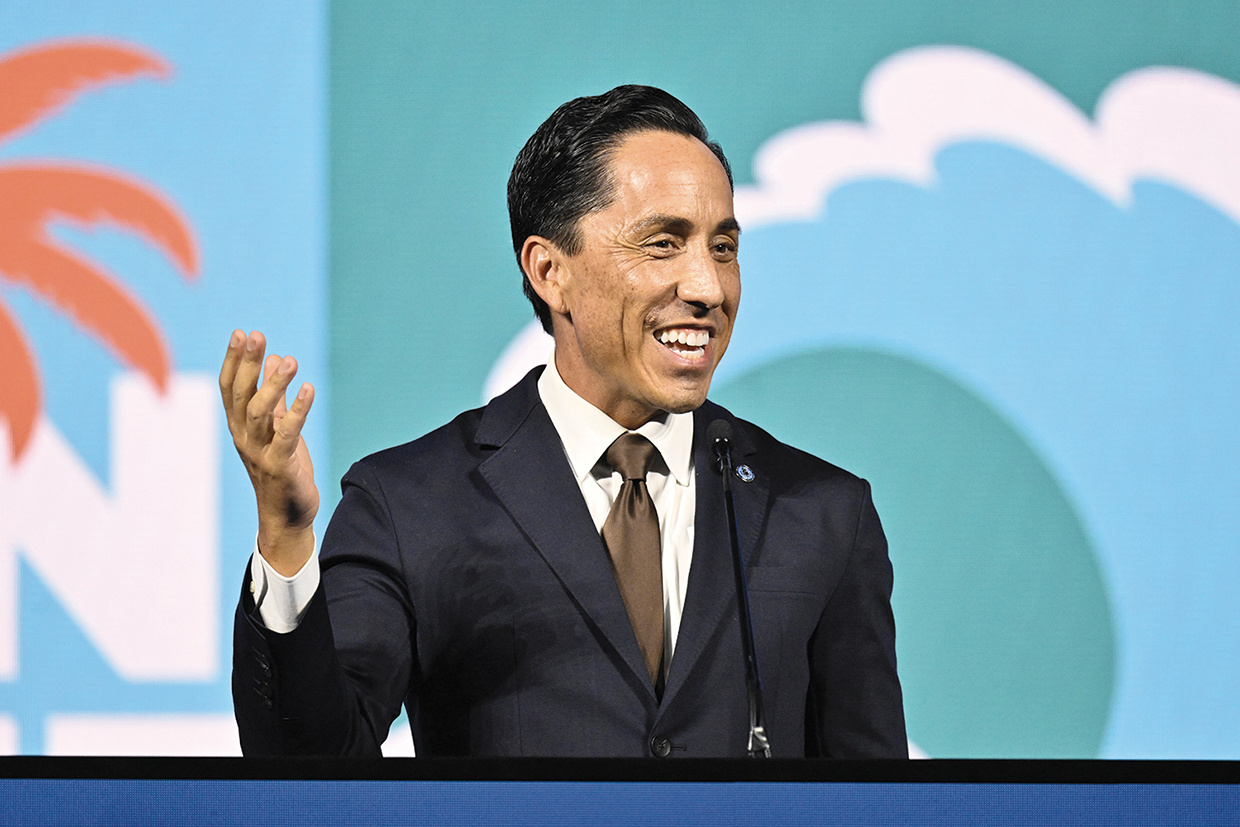
Orlando, Fla., Local 606 Business Manager Todd Provost spoke in support of the amendment.
“This aligns the constitution with common practice, removes confusing language and ensures ‘A’ and ‘BA’ members are the same,” he said.
No one spoke against the proposed amendment, and it was approved.
Delegates rejected three proposed amendments.
First, there was a proposal to add language to Article 25, Section 1, stating that a member could be disciplined for violating the Constitutional oath of obligation. The law committee recommended against adopting the amendment, because, it said, it was duplicative and could cause confusion.
Price Warwick of Dallas-Fort Worth Local 20 spoke in favor of rejecting the amendment, and the Law Committee’s recommendation of nonconcurrence passed.
The delegates then rejected a proposal from Detroit Local 58 to change the word “objects” to “objectives” on page iv of the IBEW Constitution. The law committee recommended against adopting the language change because the two words have the same meaning, and the IBEW Constitution has had an “objects” provision since the founding of the IBEW.
Rumford, Maine, Local 2144 Business Manager Dan Sweatt spoke in favor of nonconcurrence.
“This isn’t necessary,” he said.
Detroit Local 58 member Kevin Mack then spoke against the nonconcurrence.
“The proposal was not to be disrespectful. It was for clearing up the language we use today and the language they used then,” he said.
The delegates approved the Law Committee’s recommendation of nonconcurrence.
The last rejected proposed amendment came from Orlando Local 2222. The amendment proposed to Article 20, Section 12(a) to prohibit an ex-member who resigned their membership from being admitted to any other local union except the one from which they had resigned.
The law committee recommended nonconcurrence because the amendment was not aligned with the union’s many efforts to remove impediments to organizing. The amendment would make it nearly impossible to organize former members who had relocated since a local union can only admit an applicant that lives or works in its jurisdiction.
Milwaukee Local 494 Assistant Business Manager Nicholas Campbell spoke in favor of nonconcurrence.
“The first object is to organize all workers. We have a goal of 1 million members. If we want to reach it, we will need to organize new members, as well as bring back former members,” he said.
No one spoke in favor of adoption, and the nonconcurrence recommendation passed.
Two amendments passed to allow the use of modern technologies.
First up was an amendment to Article 15, Section 6 to allow the international president to implement a system for railroad locals and system councils to submit agreements and documents electronically. The amendment removes language that required railroad system councils to submit some documents “in duplicate.”
San Antonio, Texas, Local 1911 Business Manager Alex Avila spoke in support of the Law Committee’s recommendation of concurrence.
“It’s common sense. The days of submitting anything in duplicate are long gone,” he said.
The amendment was approved.
Finally, delegates approved an amendment to Article 6, Section 1g, removing the requirement that the international secretary-treasurer produce a physical local union directory. The Law Committee recommended supporting the amendment because physical “tramp guides” can be outdated before they are even published and an easily searchable version of the directory already exists online.
Santa Rosa, Calif., Local 551 Business Manager John McEntagart spoke in favor of the amendment.
“This is necessary to reflect modern times,” he said.
No one spoke against the Law Committee recommendation of concurrence, and the amendment was approved.
Delegate Action on Resolutions
The Resolutions Committee was chaired by Columbus, Ohio, Local 683 Business Manager Patrick Hook. Winston-Salem, N.C., Local 342 Business Manager Alvin Warwick was the committee’s secretary.
Resolutions are nonbinding, but they articulate the delegates’ beliefs on important issues and influence the Brotherhood’s policy going forward. Delegates began work on resolutions Sept. 22 and concluded Sept. 25.
Resolution No. 1: Reaffirmed the importance of organizing by calling on the International President to develop and implement organizing strategies in all branches. It was a reaffirmation of organizing resolutions passed during the three previous International Conventions.
Resolution No. 2: Calls for local unions to champion and encourage financial support of Electrical Workers Without Borders North America by members, utilities, signatory contractors and others. Like the first resolution, it passed by voice vote. EWWBNA is currently working on a multi-year project to bring electrical power to homes in the Navajo Nation in Arizona, New Mexico and Utah.
Resolution No. 3: Calling for local unions to make every effort through member education to nurture and maintain solidarity so the Brotherhood is in the best position to organize and negotiate the strongest collective bargaining agreements.
Resolution No. 4: Calling on local unions in the Construction Branch to continue to participate in local business development practices, encourage their members to support business development, and cooperate with contractors to meet or exceed customers’ expectations and create sustainable employment in all branches.
Resolution No. 5: Strongly encouraging each local to appoint at least one full- or part-time organizer who will assist in meeting its obligation to organize all workers in the electrical industry in the United States and Canada. All construction locals will continue to have at least one full-time organizer.
Resolution No. 6: Calling for all local unions to follow the IBEW’s organizing policies and implement a Day One membership policy for anyone working under one of the local union’s collective bargaining agreements.
Resolution No. 7: Recommitting to the Code of Excellence program and its core values of safety, professionalism, accountability, effective relationships and quality. Each local shall implement the COE program with training materials that provide consistency while also addressing the unique issues of each branch.
Resolution No. 8: Calling on the international president and secretary-treasurer to continue their efforts to increase the employer contribution rate to National Electrical Benefit Fund. They will also work to increase the multiplier payable for each NEBF pension credit earned.
Resolution No. 9: Continuing to foster and enhance the working relationship with the National Electrical Contractors Association, the IBEW’s working partner in the electrical construction industry.
Resolution No. 10: Encouraging local unions with NEBF language in their collective bargaining agreements to implement the optional National Electrical Individual Benefit language. This will allow members to receive an outstanding new benefit and enjoy the security of a comfortable retirement.
Resolution No. 11: Encouraging locals to use the Family Medical Care Plan to provide high-quality healthcare benefits to their members at a reasonable cost.
Resolution No. 12: Calling for local unions to continue to support the National Utility Industry Training Fund and encouraging non-construction local unions to explore and, where feasible, implement training and workforce development programs offered through NUITF.
Resolution No. 13: Encouraging local unions representing Manufacturing Branch members to promote the Clean Technology Training Trust to their signatory employers.
Resolution No. 14: Encouraging construction local unions to explore opportunities to implement the Electric Vehicle Infrastructure Training Program in their areas to ensure that the IBEW-trained skilled workers perform this work.
Resolution No. 15: Encouraging the IBEW to commit financial and political resources to encourage union-built data centers with strong labor standards. The IBEW opposes all data center moratoriums and other obstacles to responsible data center construction.
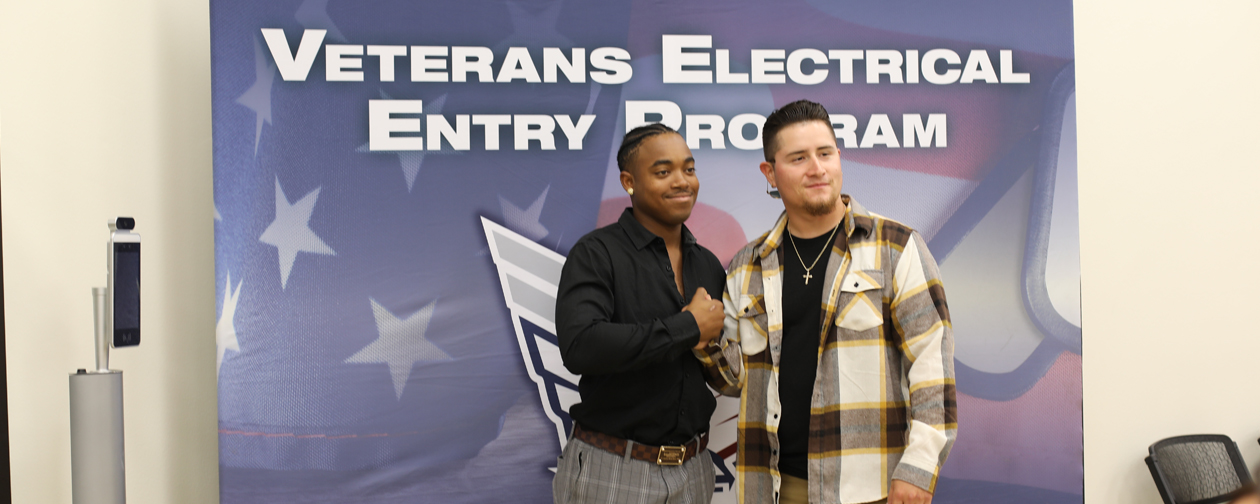
Resolution No. 16: Urging every local to appoint a veterans advocate and form a veterans committee to advance veterans’ issues and help newly organized veterans access IBEW training and employment opportunities.
Resolution No. 17: Calling on the IBEW, NECA and the Electrical Training Alliance to continue to promote and implement pathways for veterans to gain direct entry into apprenticeship programs. Apprenticeship programs are urged to take action to ensure placement of approved VEEP applicants into their programs.
Resolution No. 18: Calling for increased support and promotion from local unions in the U.S. and Canada for the Helmets to Hardhats program and its mission of placing former military servicemembers in the union building trades, which was adopted.
Resolution No. 19: Calling for recognition and support from the IBEW for VIPER Transitions, a program that assists transitioning military service members and veterans to careers in the electrical industry, which was adopted.
Resolution No. 20: The delegates adopted an amended version of Resolution No. 20, encouraging the international president to create full-time military and veteran’s affairs coordinator positions to assist veteran members and work with the Department of Defense, Department of Veterans’ Affairs and other transition programs for service members.
Resolution No. 21: Calling for all U.S.-based locals to recommit to supporting and protecting the Davis-Bacon and Related Acts and calling on all locals to participate in prevailing wage surveys within their jurisdictions, which was adopted.
Resolution No. 22: Calling for the IBEW to reaffirm its support and encourage every local to form Electrical Workers Minority Caucus, RENEW/NextGen, Women’s, Veterans, and Retiree committees, which was adopted.
Resolution No. 23: Calling for all members, including historically underrepresented workers, to have access to training and leadership opportunities and for the IBEW to reaffirm its support for IBEW Strong so all members learn the centrality of diversity to the labor movement generally and the IBEW specifically, which was adopted.
Resolution No. 24: Calling for the IBEW to reaffirm support for IBEW Women’s Committees, prioritize identifying and training women for leadership positions, and to support the efforts of the International Women’s Conference and International Women’s Committee, which was adopted.
Resolution No. 25: Calling for the IBEW to reaffirm support for the RENEW/NextGen initiative, strongly encourage every local union to establish and support RENEW/NextGen committees, and support young members establishing themselves in the IBEW, which was adopted.
Resolution No. 26: Calling for the IBEW to denounce all forms of workplace harassment, bullying, discrimination and violence; reaffirm its commitment to safe, respectful and inclusive workplaces; and encourage all locals to use every available tool so all members can work with dignity, safety and respect, which was adopted.
Resolutions Nos. 27 and 28: Calling for the IBEW and all local unions to support and defend immigrants and migrants, advocate for the creation of immigration systems that protect and value workers, and support all IBEW members impacted by the elimination of work authorization policies and programs. The delegates adopted a substitute resolution recommended by the Resolutions Committee.
Resolutions Nos. 29, 30, 31, 32 and 33: Calling for the IBEW to publish and make available Spanish translations of the IBEW Constitution, Basic Laws and Policies, Guide for IBEW Stewards and U.S. Pattern Bylaws and to encourage locals with significant numbers of monolingual Spanish speakers to provide translation services for their meetings. The delegates adopted Resolution No. 33, which provides for these actions, but did not adopt Resolution Nos. 29, 30, 31 and 32, which would have required additional actions.
Resolution No. 34: Calling for the IBEW to reaffirm its support for the Electrical Workers Minority Caucus and encourage all local union leaders to attend the EWMC annual leadership conference, which was adopted.
Resolution No. 35: Calling on all U.S. locals to commit to raising at least $15 per member per year for the IBEW PAC, by payroll deduction if possible. Discouraging locals from operating their own PACs and asks delegates to support use of the IBEW PAC. The delegates adopted an amendment to Resolution No. 35 calling on the IBEW PAC to lengthen its lookback period when considering requests from local unions, system councils and groups of local unions.
Resolution No. 37: Encouraging locals to use all available political tools provided by the AFL-CIO and IBEW International Office, which was adopted.
Resolution No. 38: Calling on locals to appoint an officer or member to complete a train-the-trainer course to become certified to conduct Politics, Activism and Livelihood training at the local, and to strive for at least 80% of their membership to receive PAL training, which was adopted.
Resolution No. 39: Encouraging local presidents to appoint, in addition to registrars, political education committees that mirror locals’ demographics, which was adopted.
Resolution No. 40: Encouraging all IBEW members in the U.S. in Canada to run for public office, and asking the IBEW to support IBEW candidates for public office by providing advice and, in accordance with campaign finance laws and at leaders’ discretion, resources and financial support, which was adopted.
Resolutions Nos. 41 and 42: Calling on the IBEW to take action to defend against the Carpenters’ encroachment on the IBEW’s electrical trade jurisdiction. The delegates did not adopt Resolution No. 41 as submitted but adopted an amendment to Resolution No. 42 calling on the IBEW to treat the defense against the Carpenters as a strategic priority, to establish a dedicated Electrical Jurisdiction Defense Fund or allocation, to work to prevent the Carpenters from benefiting from national agreements and to keep the membership informed of progress in this fight.
Resolution No. 43: Recognizing that placing tariffs on Canada hurts workers and calling on the IBEW to advocate for the U.S. and Canadian governments to address trade issues with countries having lower wage and labor standards using those standards to unfairly compete with businesses. Asking the entire IBEW to stand in solidarity to ensure that workers are protected as global trade policies are renegotiated, which was adopted.
Resolution No. 44: Encouraging the IBEW to work with stakeholders to revitalize and strengthen domestic commercial and defense shipbuilding, and to redouble efforts to train and support the industry’s workers. Calling on the union to support legislation and funding for such shipbuilding and to oppose efforts to move shipbuilding or repair work overseas. Asking the IBEW to amplify the global importance of revitalizing shipbuilding, ship repair and maritime industries, which was adopted.
Resolution No. 45: Encouraging the IBEW to oppose attempts to weaken or dismantle the Jones Act, which was adopted.
Resolutions Nos. 46 and 47: Prior to the convention, the Resolutions Committee combined its report on Resolutions Nos. 46 and 47, which expressed support for federal government workers in the U.S., but it recommended concurrence only on Resolution No. 47 because Resolution No. 46 was limited to a certain group of federal employees and directed IBEW officers, international representatives and others to act in a way that was inconsistent with the IBEW Constitution. Delegates adopted a version of Resolution No. 46 that was amended to reaffirm the right of federal workers in the U.S. to bargain collectively under continuing and enforceable statutory protections. Delegates adopted Resolution No. 47 as submitted.
Resolution No. 48: Encouraging locals to coordinate with their JATCs to market curricula, programs and facilities to help potential apprentices, customers and elected officials better understand the benefits of community-based electrical training, which was adopted.
Resolution No. 49: Urging the IBEW to continue supporting and promoting the National Training Institute and encouraging construction locals to fully participate in the NTI, which was adopted.
Resolution No. 50: Supporting the Union Sportsmen’s Alliance and urging all local unions and members to support the work of the alliance and to participate in its Boots on the Ground program and other education and conservation projects, which was adopted.
Resolution No. 51: Strongly encourage members to receive The Electrical Worker by electronic delivery, and that the international president implement a policy requiring that all new IBEW members receive The Electrical Worker by electronic delivery unless they opt to receive it by mail, which was adopted.
Resolution No. 52: Encouraging all local unions to support and contribute to the Electrical Workers Historical Society and its efforts to preserve our history for future generations, which was adopted.
Resolution No. 53: Maintaining and using the Unity Fund and encouraging all local unions to support and contribute, which was adopted.
Resolution No. 54: Continuing the IBEW’s commitment to health and safety, including mental health and safety, and working to eliminate the stigma around seeking help for mental health challenges. Additionally, all local union and international officers are strongly encouraged to take Mental Health First Aid at Work or similar training so that they are better able to recognize, understand, and respond to mental health challenges faced by any union sister or brother, which was adopted.
Resolution No. 55: Recognizing the importance of local unions participating in the Safety Caucus to continue our fight for safety and health provisions that benefit all working people, which was adopted.
Resolution No. 56: Reminding locals that the IBEW Constitution requires use of the union’s web-based accident reporting system to report to the International Office all serious lost-time accidents and fatalities, which was adopted.
Resolution No. 57: Urging the IBEW and its locals to continue their support and work with the National Safety Council and encouraging locals’ membership in the council and use of its resources, which was adopted.
Resolution No. 58: Calling on all IBEW locals to require newly elected officers participate in new officers training, which was adopted.
Resolution No. 59: Urging all IBEW locals to require election judges to participate in election judge training, which was adopted.
Resolution No. 60: Encouraging all IBEW locals and the Manufacturing Department to use, promote and maintain IBEWMade.com as a listing resource for products made and services offered by IBEW members, which was adopted.
Resolution No. 61: Calling on all IBEW locals and the Manufacturing Department to work with signatory employers to identify, label and promote products manufactured or assembled by IBEW-represented workers as “Union Made” or “Union Assembled,” and to educate employers on the benefits of using such labels, and urging the IBEW to reaffirm its commitment to promoting and recognizing Canadian and U.S. union members’ work. The resolution was adopted.