For six weeks, IBEW members at the Portsmouth Naval Shipyard worked without pay, all the while worrying how much longer the federal government shutdown would last and how many more bills would stack up.
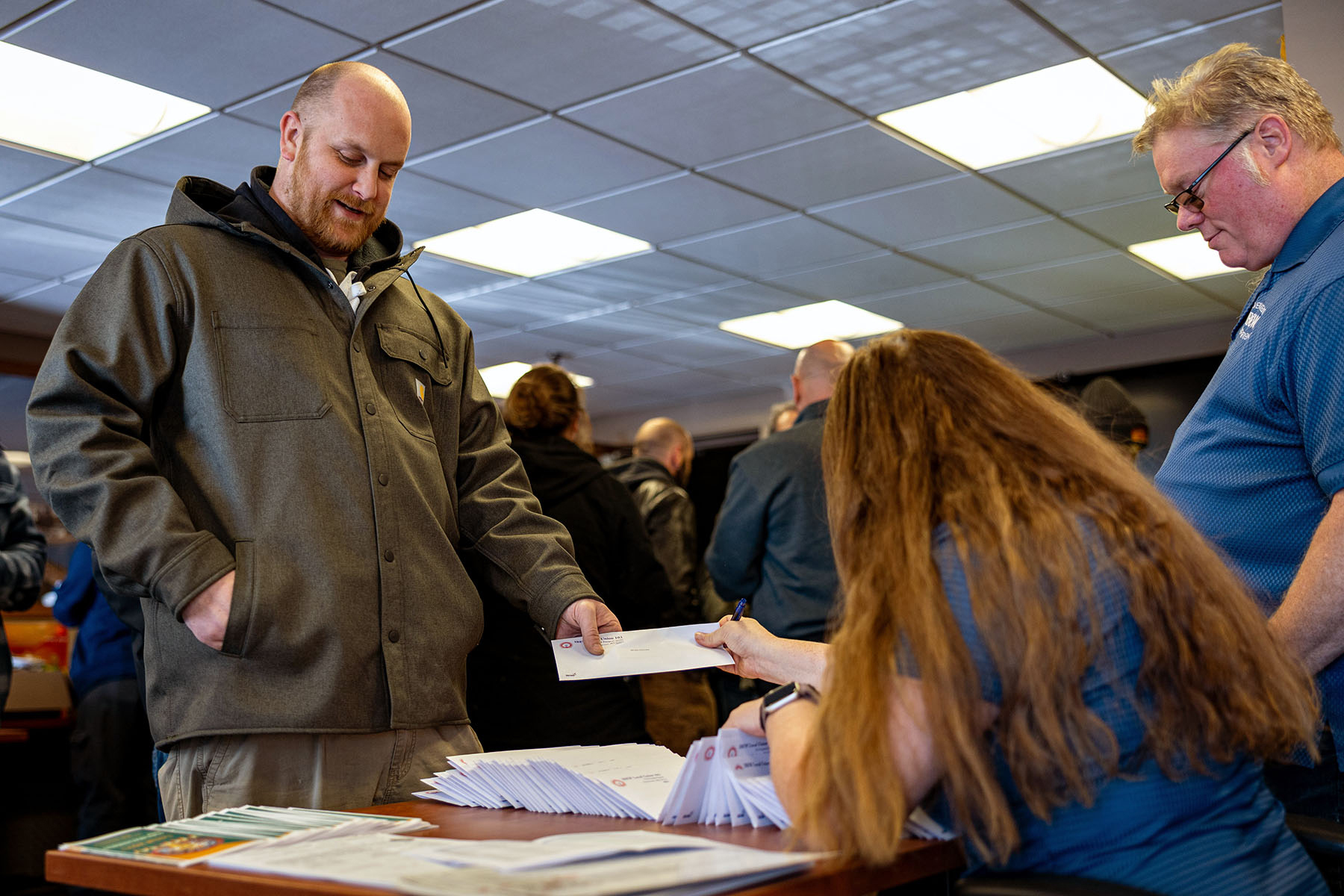
They had no idea they’d soon be summoned to the yard’s IBEW office and handed $1,000 each, gifts made possible by the generosity of Second District locals.
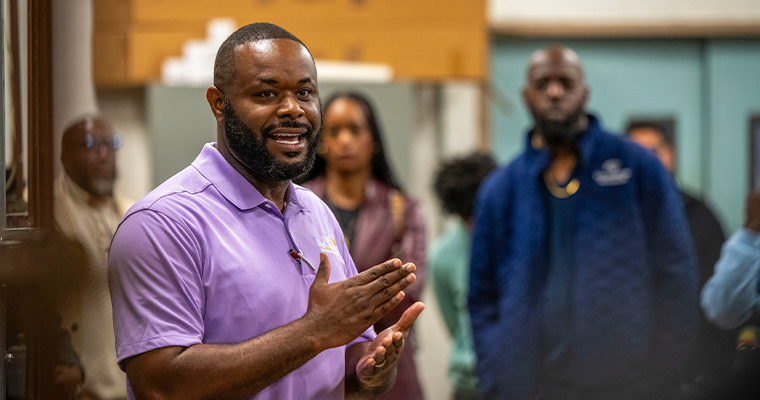
“The amazement on their faces, it was priceless. Their mouths dropped,” said Portsmouth, N.H., Local 2071 Business Manager Glen Sell, who’s worked at the shipyard for 24 years.
As is IBEW tradition, locals were driven to help brothers and sisters in a time of need. But there was another, unique motivation: rewarding members who rejoined Local 2071 after a White House executive order abruptly ended voluntary dues deductions from federal workers’ paychecks.
The union-busting edict was issued in late March 2025, the same month the local hit an all-time high of 329 dues-paying members.
“The next month, it was zero,” said Ed Starr, a Second District international representative. “The local faced an unprecedented challenge to sign people back up, and the money was a thank-you to those who did. Without them, we could have lost the local.”
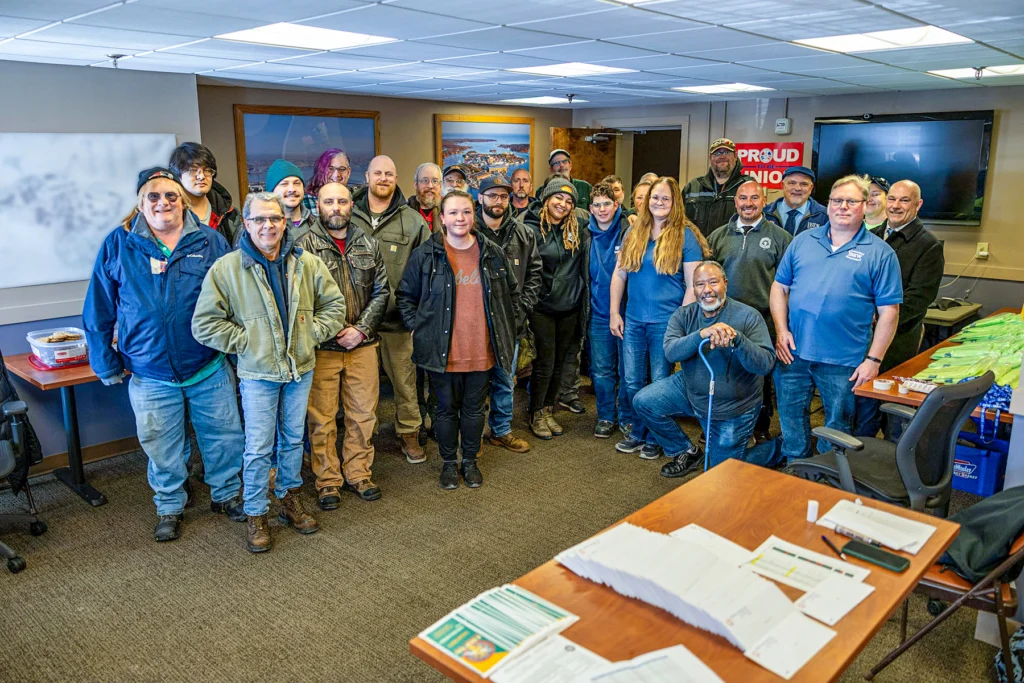
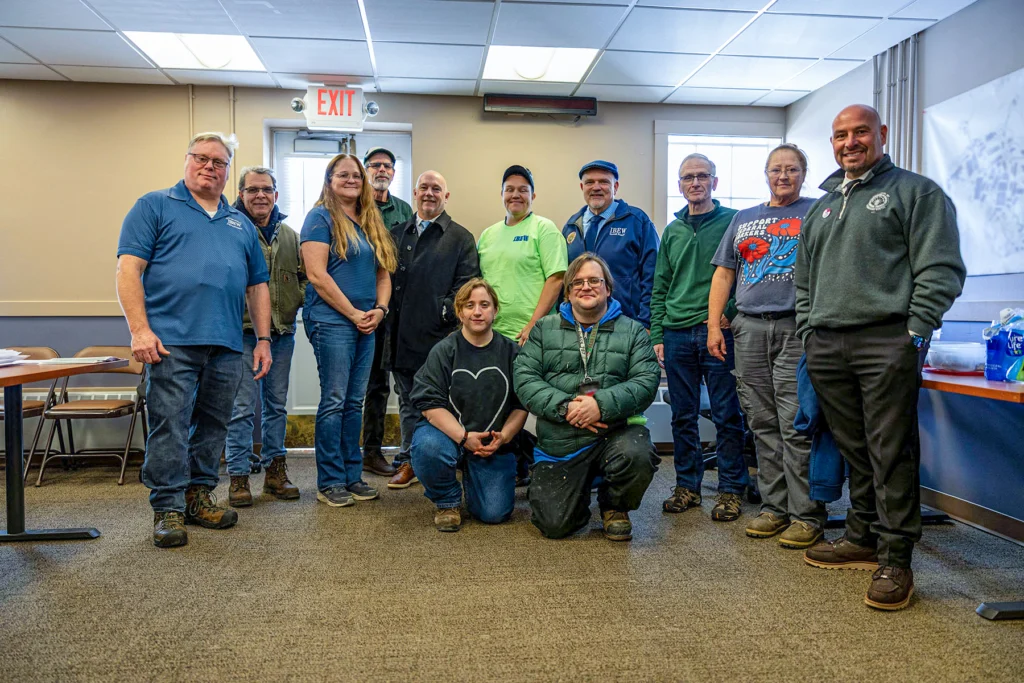
A robust postcard campaign and other outreach led 75 members had brought their dues up to date by the time the shutdown began Oct. 1. As of January, membership was nearing 100, growth spurred in part, Sell said, by a newfound understanding of what it means to be part of the IBEW family.
“They didn’t realize that’s what unions do,” he said. “That we watch out for each other, we help each other. That the union is their voice and has their back.”
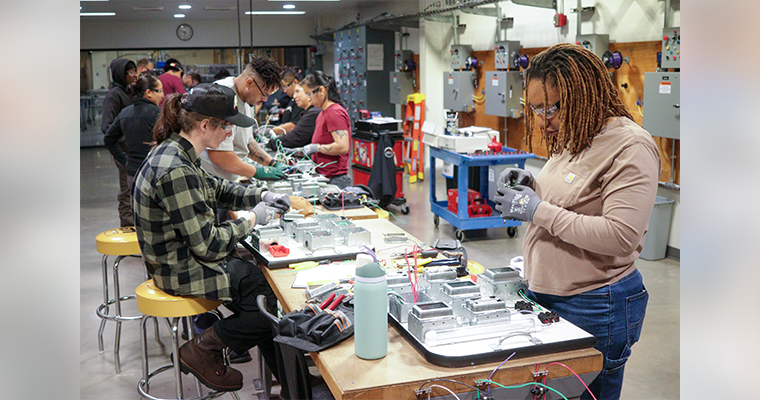
As often as he talks with members about the rewards of brotherhood, stoking it can be a challenge on the 300-acre shipyard, where two shifts of electricians and thousands of other trades workers repair and rebuild nuclear submarines. Sell, who served in the Navy, said most of them come in with military experience but little or none with unions.
“Now they know firsthand the power of union solidarity and what it means on a very personal level for them and their families,” Second District International Vice President Mike Monahan said. “I couldn’t be prouder of our locals. Even those with the tightest budgets jumped in to help without a moment’s hesitation.”
“I was completely floored, at a loss for words, at what the Second District locals, did for us. It was unity and solidarity at its finest.”
– Business Manager Glen Sell, Portsmouth, N.H., Local 2071
The project got underway in mid-October when Jim Golden, business manager at Manchester, N.H., Local 2320, called Starr and Sell to offer whatever assistance they needed. Earlier, in the wake of the executive order, his local paid to print and mail the postcards explaining how Local 2071 members could rejoin and pay dues.
“We’ve received so much generosity in the past,” Golden said, recalling the IBEW’s 19-week strike against FairPoint Communications a decade ago. “I’ll never forget those donations. The IBEW is full of fantastic, generous people, and helping each other is what we do.”
Within days, business managers from across the Second District were pledging their support on a Zoom call and taking requests to their executive boards, hoping to raise $500 for each of Local 2071’s 75 dues-paying members.
Contributions poured in from virtually all of the district’s 40 locals, ranging from a few hundred dollars to as much as $10,000.
Their enthusiasm more than doubled the original goal, allowing Local 2071 to give $1,000 to each active member and create a solidarity fund for future emergencies.
With shutdowns a concern for all IBEW locals representing federal workers, the Second District’s success is fueling wider contingency plans.
“It’s an incredible effort, and we’re going to be using it to model how we can support government employees across the different districts,” said Corrie Weiss of the Railroad and Government Employees Department.
Weiss, a former federal prosecutor who joined the IBEW staff last March, was one of three international representatives outside New England who sat in on the fundraising call.
“I’ve seen a lot of great things since I’ve been here, but that was one of the most moving,” she said. “I saw what unity really looks like. People were pitching in, every local — ‘Put me down for $5,000. Put me down for $7,500.’”
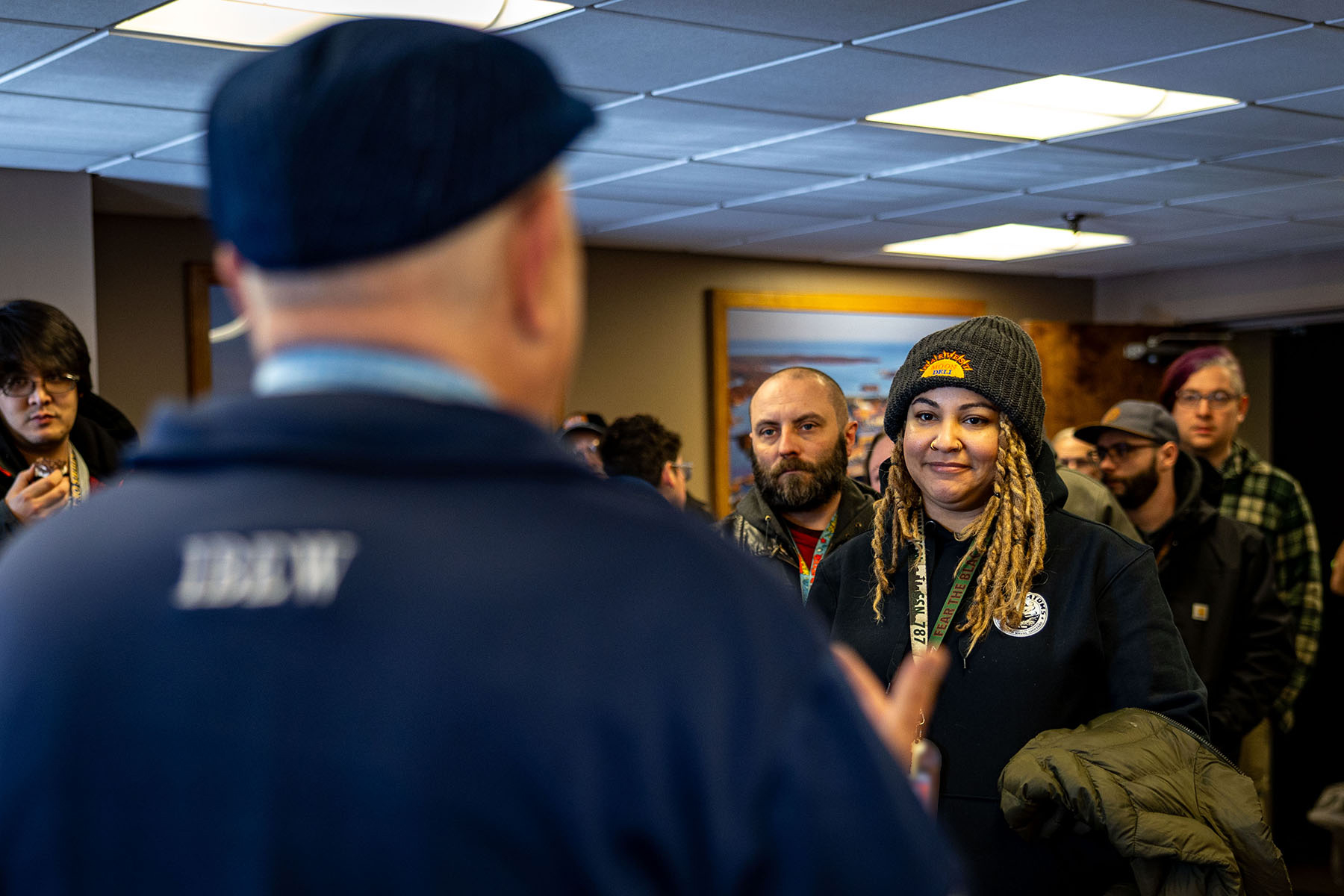
From phone calls with Sell, Starr and others, Weiss knew the unpaid Local 2071 members were struggling. “Some of them said they didn’t even have gas money to get to work,” she said. “People’s lives and mortgages and everything else were in jeopardy.”
The pressure led many of them to use credit to stay afloat, accruing new debt and additional interest and fees, among other financial setbacks.
As swiftly as fellow locals acted, funds were still coming in when the shutdown ended Nov. 12. Several weeks later, Sell nudged members to drop by the local’s shipyard office at lunchtime.
They suspected something was up, maybe $50 for groceries or a meal out, he said, but didn’t dream they were about to open envelopes containing five $200 American Express gift cards — each imprinted with “IBEW Strong” and the union’s logo.
“They never knew something like that could happen,” said Tina Shaw, the local’s financial secretary and past steward, noting how grateful members were at Thanksgiving when the AFL-CIO donated harvest boxes.
“And now the district is coming in with a thousand dollars,” she said. “Our members were overwhelmed with thankfulness.”
Amid all the happiness, local leaders had some difficult moments as former members asked where their money was, some saying they didn’t know their membership had lapsed. Hearing that was especially frustrating for Shaw, who has aggressively managed the fallout from the executive order on union dues.
“We had to scramble to find alternate means of getting our members to pay, and we tried so hard to get the message out,” she said. “Some of them said they never got word, but how could they not notice that dues weren’t coming out of their paychecks anymore?”
They appealed to everyone, stressing that the future of the local was at stake. “There was a lot of uncertainty,” Shaw said. “It wasn’t just dues. It was whether we were going to have representation at all.”
While federal workers’ hourly wages and health benefits are set by the government, unions are able to negotiate working conditions, overtime, travel pay, safety and other issues, along with representing members in disciplinary matters.
In 2025, Local 2071 and the shipyard’s other Metal Council unions succeeded in a years-long fight to get higher locality pay for their expensive region. About an hour north of Boston, the yard lies at the mouth of the Piscataqua River between Maine and New Hampshire.
Sell chats daily with workers, sharing those kinds of victories and the many other ways the IBEW fights for their rights, safety and livelihoods. Now he has the granddaddy of examples.
“I was completely floored, at a loss for words, at what the Second District, what all the locals, did for us,” he said. “It was unity and solidarity at its finest.”