“During the Great Recession, I decided to go to graduate school because I couldn’t find a job. I’d applied to many entry-level jobs after getting my bachelor’s degree, but I didn’t get any of them. So I took out loans for a graduate degree in museum studies.
With my graduate degree, I managed guest services for a museum in D.C. It was very stressful in ways I don’t think I was cut out for. What I really enjoyed was going behind the scenes and learning how to build the mounts and plinths for the artifacts and putting together signage. This work was where I got the most satisfaction: If you did your job right, no one knew; if you did your job wrong, everybody noticed. The job is done right when everything looks like it’s supposed to be there, when everything belongs.
A few years into the job, COVID happened, and all salaries were reduced at the museum. It became increasingly hard to make ends meet. I moved cross-country to Bend, Ore., to work at another museum, but there were a lot of the same institutional issues there. The job market was poor, and I still had to work two jobs.
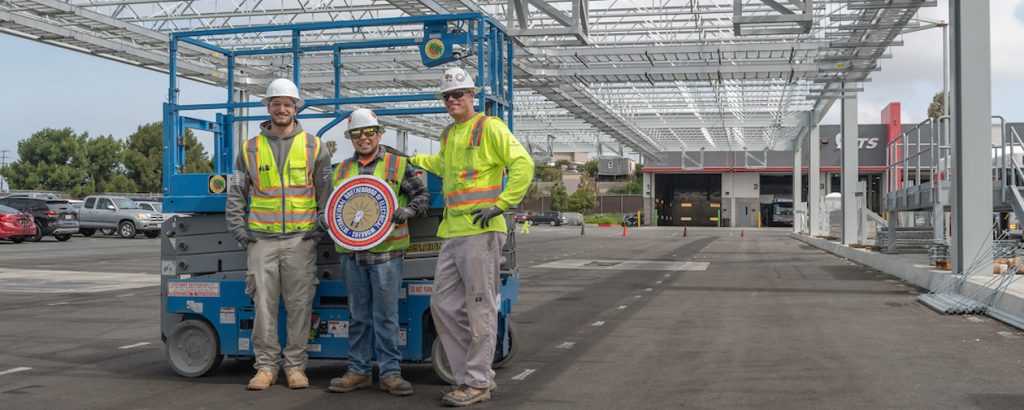
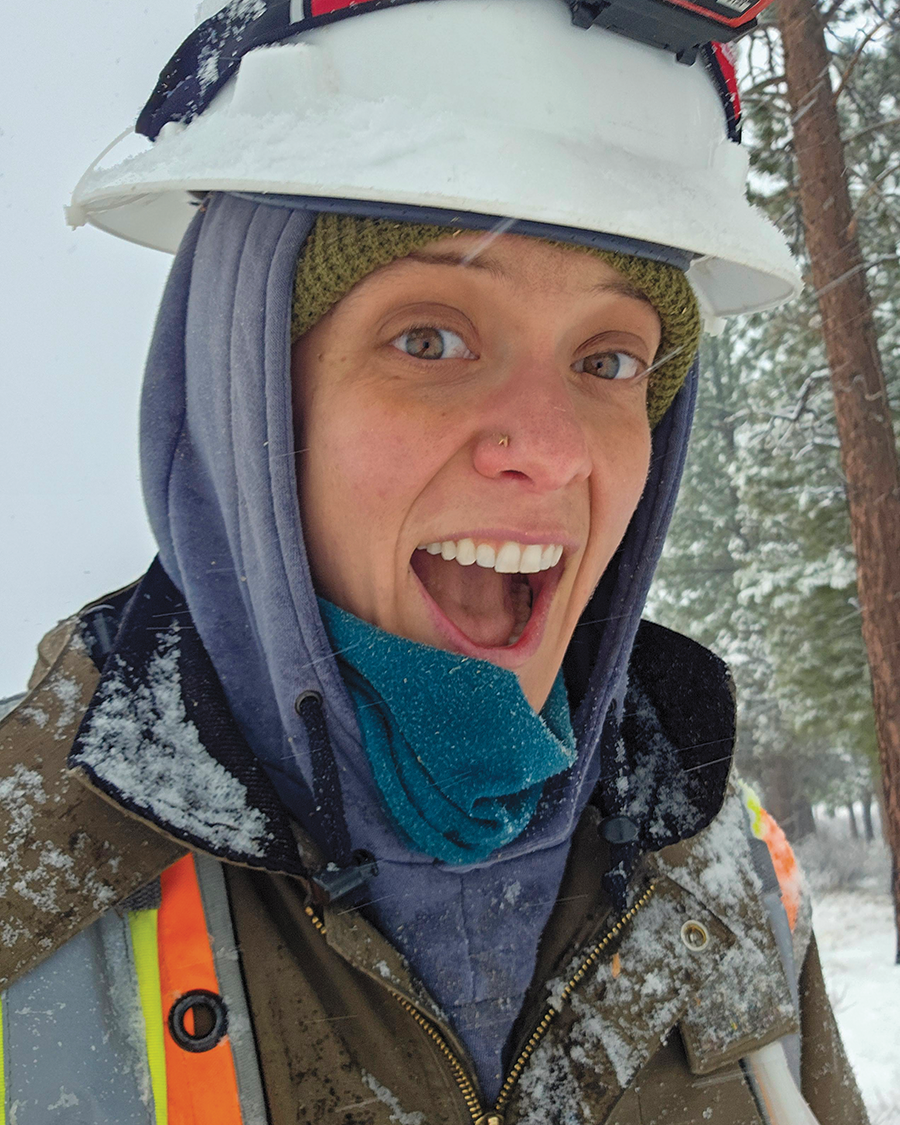
One day, I was driving around Bend and I heard a radio ad for the IBEW. It said, ‘Are you tired of making less than you’re worth?’ As I was driving around in the snow, not being able to afford a better car, I thought, ‘Yeah, I think I am!’
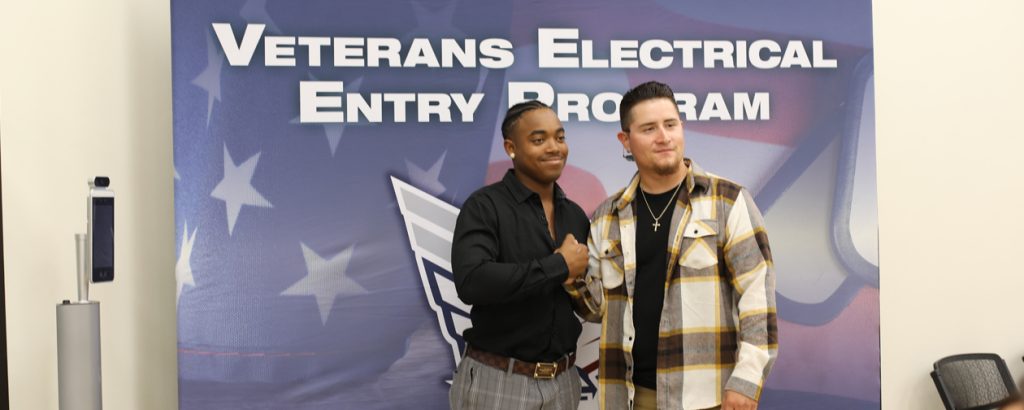
Around this time, I was doing some trim carpentry for my now brother-in-law, and he asked me, ‘Have you ever thought about an apprenticeship?’ I told him, ‘I’d love to do that, but I don’t think I’d get in. I’m too old.’ And he said, ‘You should think about an electrical apprenticeship — the union, I hear, is really great. You should look into it.’ I did, and I got in.
Now, almost through my apprenticeship, I understand how single- and three-phase electrical systems work, and I’ve gotten really good at lighting. The trade makes you find confidence in yourself. Fifty percent of the work is planning, and you’ve got to get it done. I’ve realized through this experience that I’m an intelligent person and I’m very resourceful. If I don’t have the answers myself, I know where to get them, and that really comes in handy on jobsites where communication is not always the first-level goal.
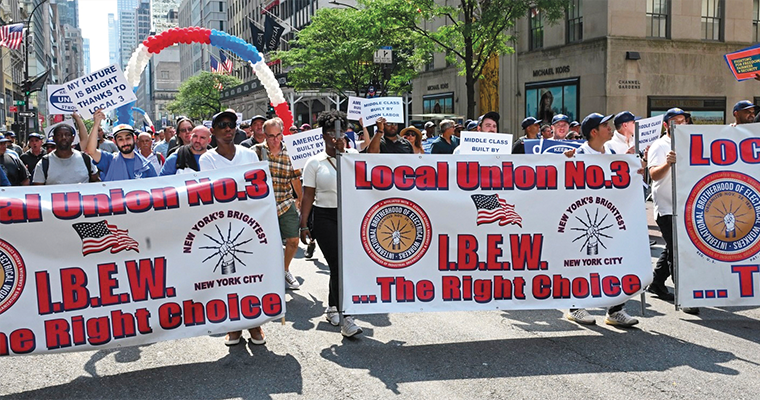
The IBEW has changed my life for the better financially, and, in terms of my mental health, I feel like I can breathe a little bit easier. It’s given me a sense of purpose, seeing what the labor movement can do for American workers. If more people knew what being in a union was like, more people would want to be in a union, and that makes me want to get out there and help more people find the union.
I don’t know that I pictured this life for myself, but now I can’t picture anything else. I love it all — the union, the culture, the job.”