
From the first light poles to nuclear power to data centers, the IBEW has always been at the cutting edge, with members quickly mastering new technologies to help drive the North American economy forward.
In 1945, there were fewer than 15,000 television sets in the U.S. By 1950, there were over 5 million. Such a meteoric rise was made possible by the IBEW manufacturing workers at the Radio Corporation of America, better known as RCA. But with that many sets now distributed across the country, an entirely new industry emerged: the television serviceman.
This was such a cutting age profession that The Electrical Worker profiled it in the November 1950 issue. To celebrate the 75th anniversary of that article, here are some excerpts from a bygone era.
Delicate Instruments
“Postwar television sets emerged with pictures that were big and bright, clear and steady. Each receiver, however, is a delicate electronic instrument composed of more than 1,000 elements assembled with approximately 450 connectors. It was imperative that these postwar sets be expertly installed, maintained and serviced by qualified technicians so that the public’s confidence in the medium would be won and held. For this reason, RCA launched an ambitious program to establish television service branches nation-wide.”
Training Program
“To accomplish this, the RCA Service Company developed a training program, second to none in the country. Jointly with the IBEW, an apprenticeship program was adopted. Finally, a training center was set up at the RCA home office at Camden, New Jersey, and hundreds of men were brought in to further their knowledge of television servicing.”
“It was fully realized that the great number of technicians that were needed could not be trained overnight. There were times when the backlog of service calls reached 10,000 and it was necessary to fly men from one part of the country to another to keep the customers satisfied. It was during this rapid period of expansion that the television technicians, numbering some 3,000, were organized by the IBEW. This was in addition to the 10,000 workers already represented by the IBEW at the RCA manufacturing plants.”
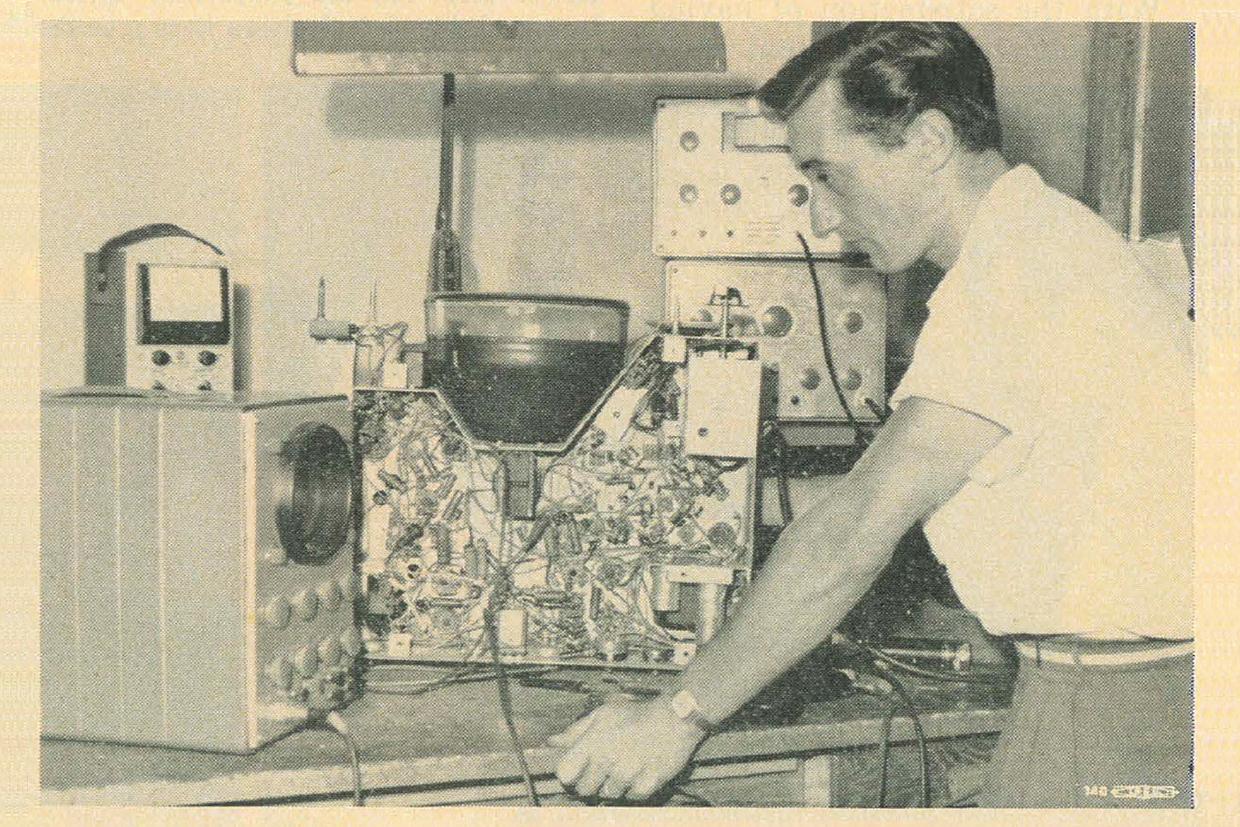
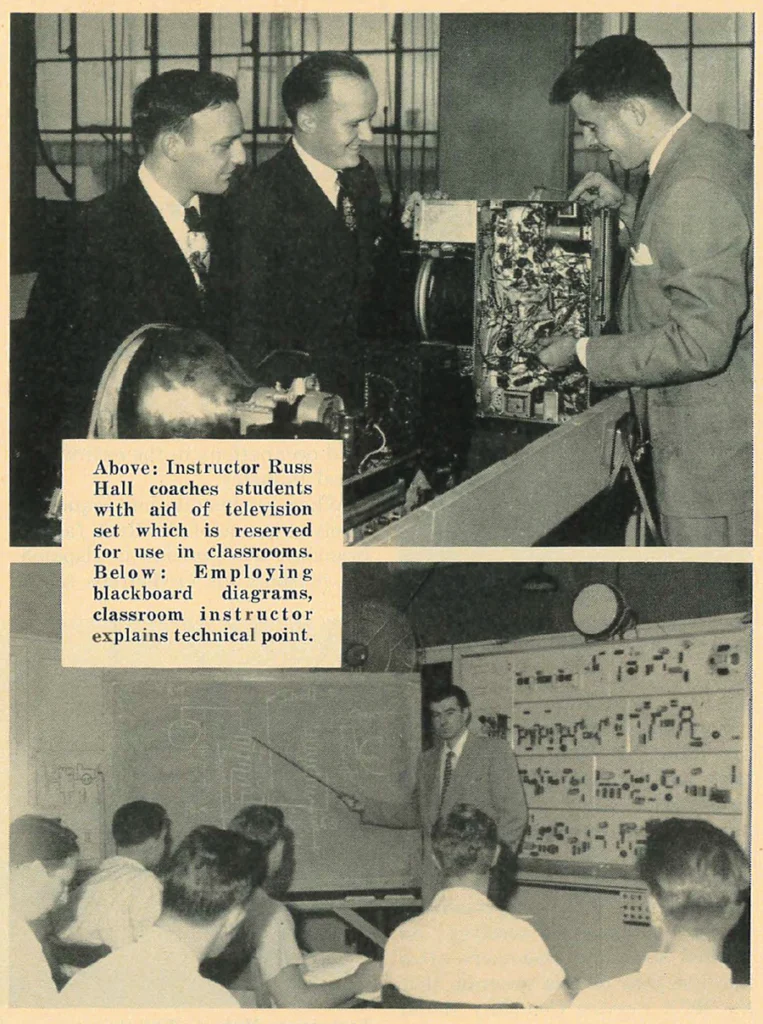
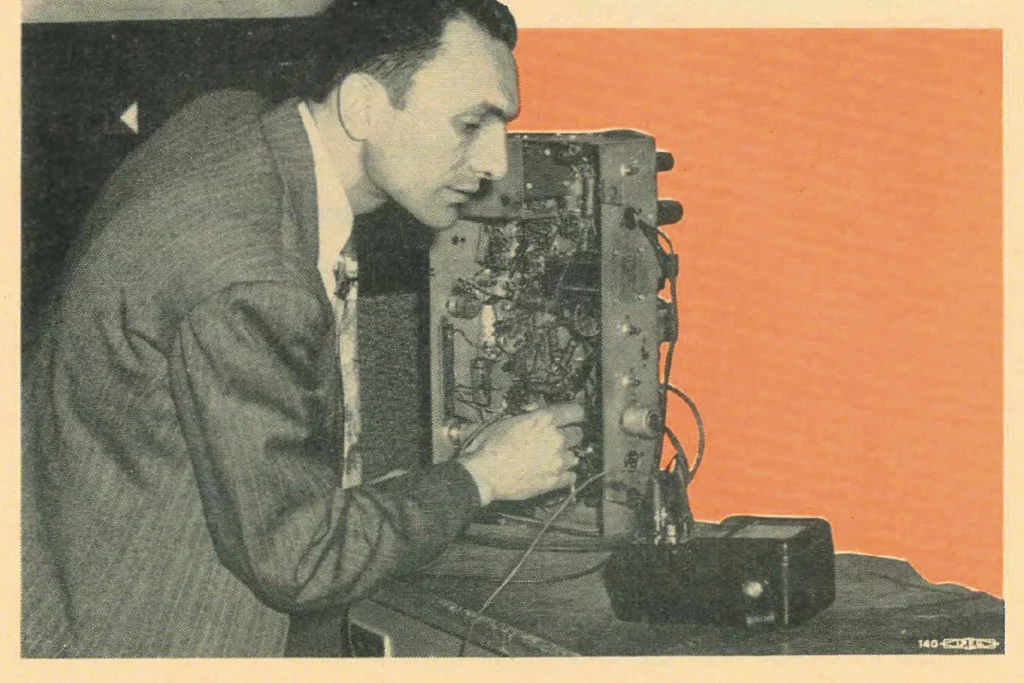
The new, and newly organized, position of television serviceman was profiled in the November 1950 Electrical Worker.
Standard Procedures
“The television servicemen were taught standardized procedures for installing antennas, fundamentals of television operation, and the very intricate details of servicing all models of RCA Victor sets. With the satisfaction of having well-trained and competent men, the RCA Service Company offered to each set owner a one-year service contract providing expert installation, replacement of parts, and any needed servicing by IBEW technicians specializing in their make and model of receiver.”
100 Branches
“Today the RCA Service Company is a national servicing organization having 100 branches located in every television city, thousands of factory-trained IBEW technicians in the field, and a fleet of 2,500 vehicles equipped to service the millions of receivers in customers’ homes. In performing this important function, television service has emerged as an important industry in itself. It has already become one of the better paid occupations in the entire electrical industry.”
Quick Repairs
“When an installation request is received in one of the RCA factory branches, an IBEW technician is dispatched to the set owner, makes a careful on-the-spot check of the receiver, and installs the type of antenna the owner wishes, either the indoor antenna or one of the several types of outdoor antennas. The set owner is then instructed in the proper operation of the receiver. Should the owner have any difficulty with the receiver later, he can call the RCA Service branch and an expert technician will be dispatched to his home. The technician’s service car is equipped with a wide assortment of replacement parts. Thus, the service can be done in home on the vast majority of calls.”
Customer Service
“The RCA Service Company technicians have been commended for their courtesy, honesty and ability. It is a tribute to any company to have employees such as these and to any union to have members such as these. The IBEW takes pride for the part it has taken in developing the men who have made such an outstanding reputation among television customers.”
Visit nbew-ibewmuseum.org for more on how to support the IBEW’s preservation of its history. Have a an idea for this feature? Send it to [email protected].