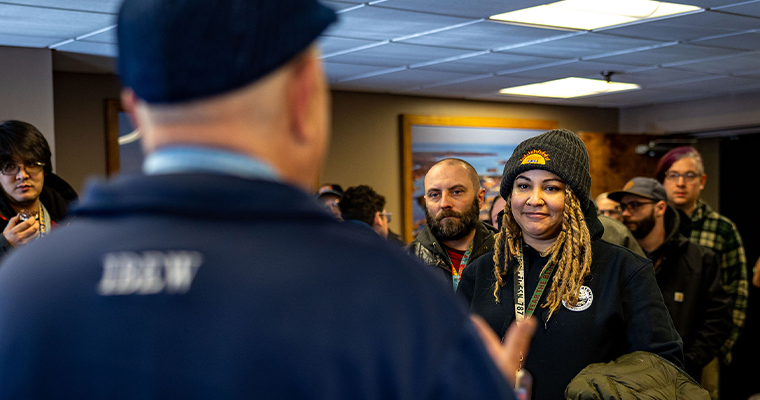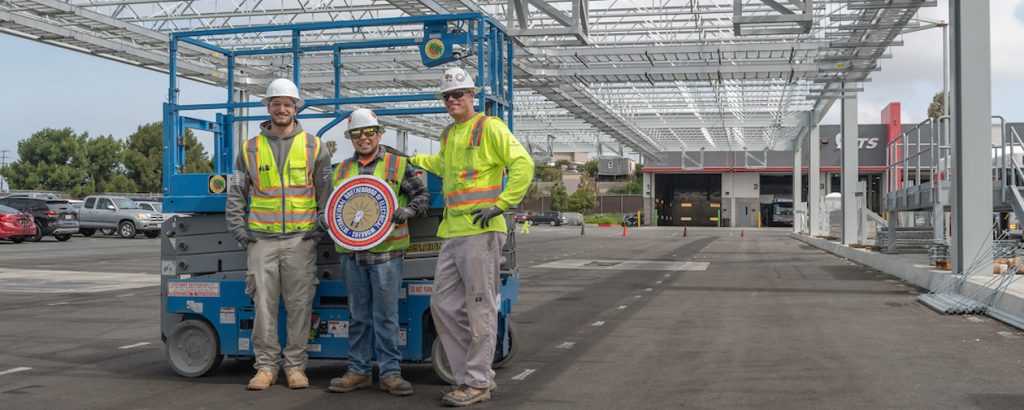
Los Angeles Local 11 has tapped into a new way to recruit more military veterans: hosting a program designed for servicewomen.
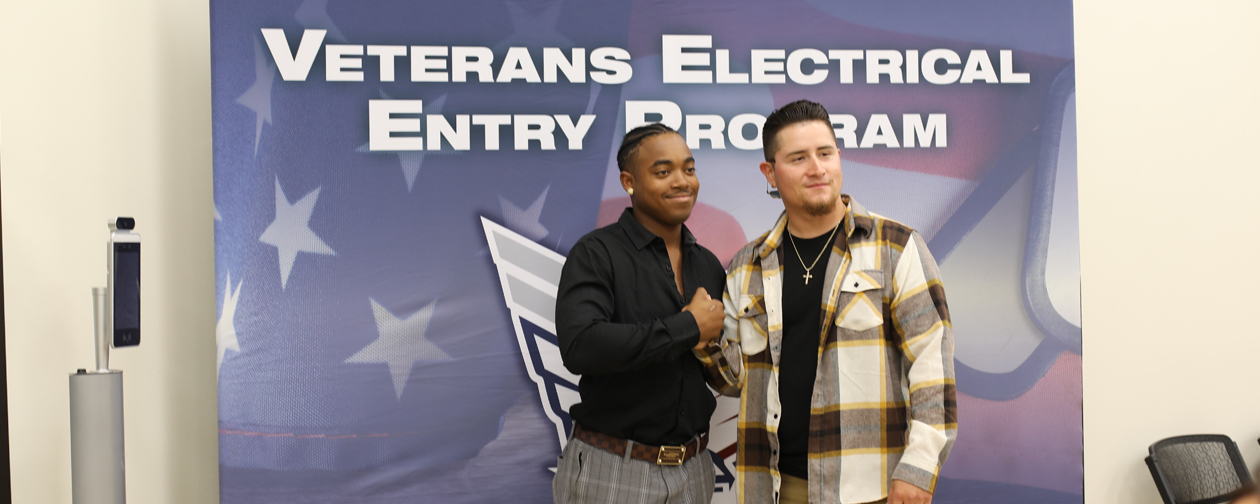
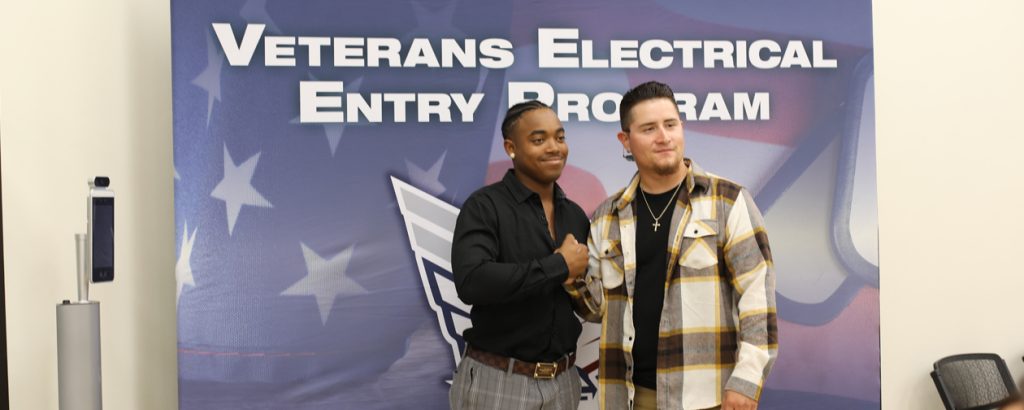
The pre-apprenticeship, which ran from October to December, was run by Local 11 alongside the Electrical Training Alliance and the Veterans Electrical Entry Program, or VEEP.
Military veterans can be excellent candidates for an IBEW apprenticeship. They’re disciplined, know how to follow a structured process and accustomed to working as a team. And many are looking for meaningful work.
“The VEEP program gives veterans the opportunity to transition into careers after serving their country,” said Mike Kufchak, director of veterans affairs for Local 11. “Some servicemembers have no aspirations of going to college and being saddled with financial debt. We’re the alternative that provides them with a skilled trade they’ll have for the rest of their life and allows their families to flourish.”

Local 11 has run VEEP classes before, but only a handful of women participated, so they looked into how they could change those numbers and bring more women in.
Research has shown that creating women-centered educational environments increases the odds of women entering a trade. Women are also less likely to know about trades careers. Offering classes tailored to women servicemembers creates a safe space for them to learn and build up their confidence along with their skill set.
“The program reinforces the fact that women can not only survive in this environment but they can execute the work and know that there are a lot of opportunities within the IBEW for growth,” said Kufchak, who noted that the class was open to all genders and had men in the cohort along with the women.
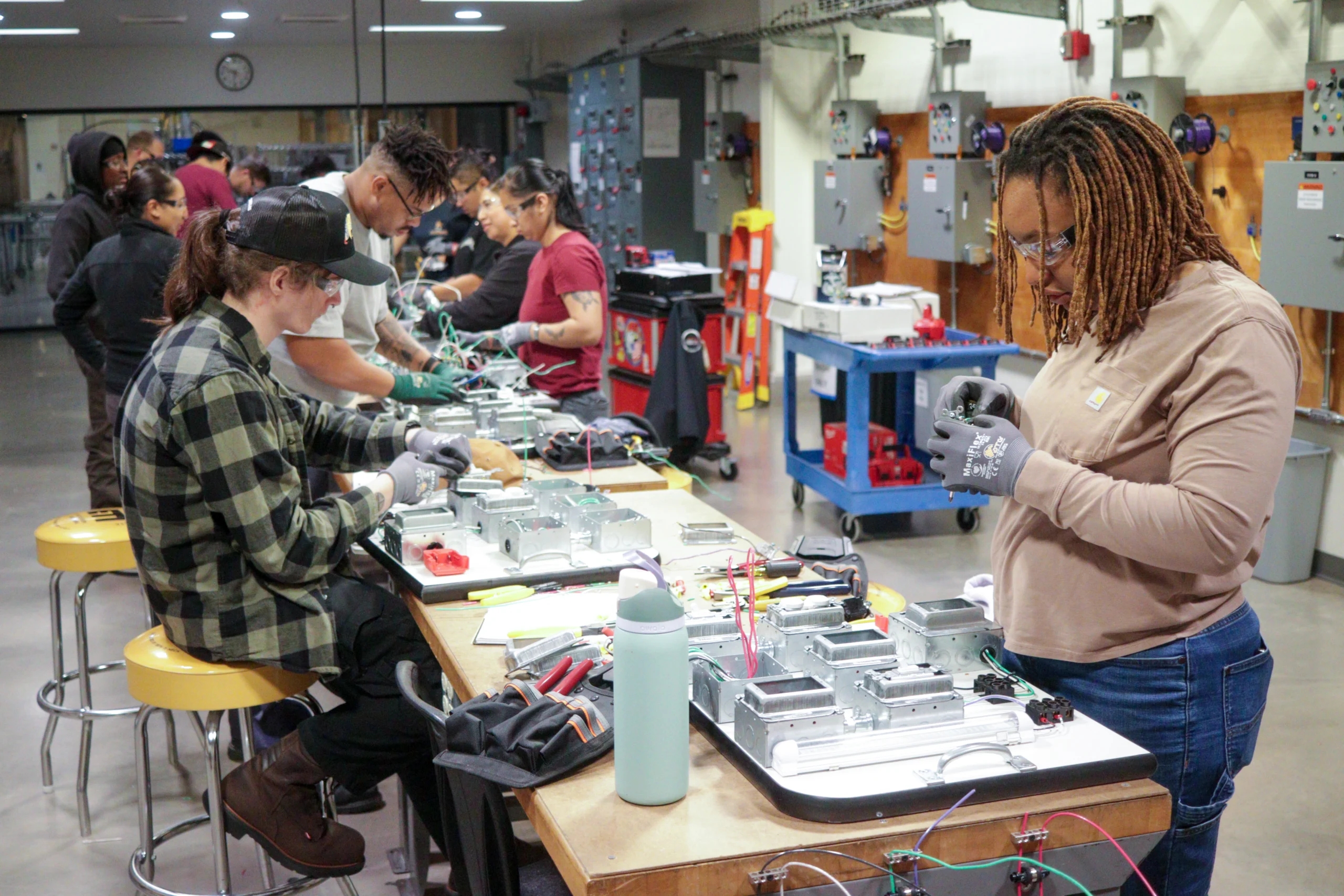
The training consisted of the first-year academic curriculum for the inside wireman course coupled with three weeks of hands-on training that included bending conduit, pulling wire, and safety training from the Occupational Safety and Health Administration. By the time they complete the pre-apprenticeship, they have finished the first semester of the formal apprentice curriculum.
The feedback was positive, Kufchak said.
“As the program started, some felt a little unsure about what they were entering into, but as the program progressed, so did their confidence” he said. “They’re excited to work with their male counterparts as they proceed from the class into a career.”
Cristina Tapia, a graduate of the pre-apprenticeship, said she liked how it created space for everyone to learn.
“With an all-vet class, the communication is the same, so we were really comfortable asking questions,” said Tapia, who found out about the class from a flier she got from a co-worker. “I didn’t care if I looked like a fool. I figured that if I had a question, someone else probably didn’t understand it either.”
Tapia, who served in the Army and is now in the California National Guard, said she likes the solidarity of the IBEW as well as the skills. It reminds her of her military days.
“It’s nice to have that bond,” she said. “We all have the same goal, and we’re all here to get the job done.”
Local 11 has committed to four cohorts of 25 VEEP candidates each year, said Training Director David Nott.
“That commitment to our VEEP participants shows up in our training and the support we provide them,” he said. “We are about to kick off our 12th cohort, and it gets better each time.”
The women-oriented pre-apprenticeship could extend to other locations, said Greg McMurphy, former Electrical Training Alliance assistant director.
“We’re hoping this will put up a flare for other women veterans to see the opportunity in the IBEW-NECA apprenticeship system,” he said.
Kufchak said the local is actively recruiting servicewomen on military installations, as well as through word of mouth. For Tapia, there’s a lot about the pre-apprenticeship to share with her fellow servicemembers.
“I hope it’s continued,” said Tapia, who is also hoping to get into union activism. “I’m really glad I saw that flier.”
Bringing in more women helps the IBEW meet the demand for electrical workers, and with candidates who are ready on Day 1, Nott said.
“VEEPs are great candidates who understand how to follow rules, are driven to succeed and are committed to this career,” he said. “Every local should be having conversations about this.”