
“I got in because my dad was a member.”
Anyone in the trades might hear that sentence once a week.
Trades are passed down in families. According to a 2017 New York Times analysis of the General Social Survey, a child of an electrician is 10 times more likely to become one than the average person.
That’s five times the average job’s likelihood of a child following in a parent’s footsteps.
They join because they know what a union trade demands and, more importantly, what it offers.
But what if you are a young man whose father is so absent that there’s no path to follow? How do people who don’t know anyone who went through an apprenticeship learn if it is right for them? And which one?
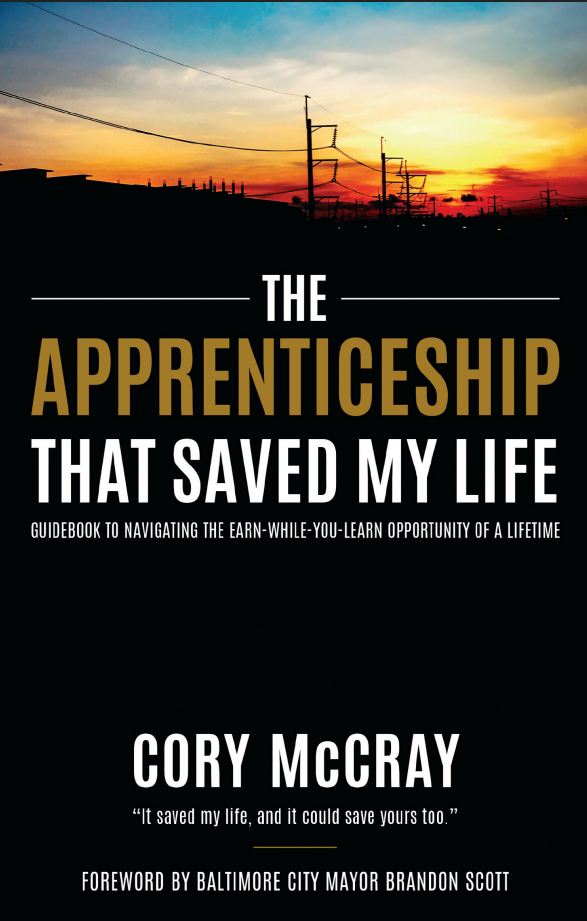
Baltimore Local 24 member Cory McCray — also a Maryland state senator — was that person, and he wrote The Apprenticeship That Saved My Life to take all he wished he had known before starting his apprenticeship and make it accessible to everyone.
The book is short, dense with information and personal stories. Each chapter begins with a moment from McCray’s life growing up in West Baltimore, in and out of the criminal justice system, connecting the lessons he learned there with the challenges and opportunities of the union apprenticeship.
But these are lessons that apply to any kid who grew up not believing that there was an honest way out of their economic trap.
Chapter 5, for example, is about how to succeed even if you did poorly in school or went to a school that never asked much of you at all.
Chapter 6 is about finding positive mentors when the adults you looked up to — and may still love and respect — gave you life lessons that don’t serve you anymore. McCray writes that his brother Bernie taught him: “Never let anyone take anything from you without a fight and don’t turn your back on your family.”
Throughout, McCray targets his message at young people who have never seen a promise anyone bothered to keep. It’s a book for every person who wants something better than what they have and is willing to work for it but hears about an apprenticeship and assumes there’s a catch.
On every page, between explanations of what an apprenticeship is, what the different trades are, what an annuity is, and how overtime works, McCray keeps that skepticism front-row center and answers it.
They’re going to teach me for free? Hire me to learn to do a job? How much of a sucker do you have to be in America in 2026 to believe that there is a fair deal for anyone who didn’t grow up rich?
McCray’s book is ready with an answer, and every apprenticeship director, high school guidance counselor or policymaker interested in workforce training should study this book.
McCray’s lessons on how to identify an apprenticeship scam — on-the-job-training-only programs and for-profit 18-month pre-apprenticeships, for example — are crucial for potential members, as well as high school guidance counselors who are unfamiliar with the trades.
It’s like a travel guide for a foreign country, but the trip you’re taking is out of a life with no future into one with a bright future.
This book will make it easier for anyone with no connection to a trade to walk into a JATC and apply.
But it may be more useful for the people around them. For parents wanting better for their kid without knowing exactly what that might be. Every guidance counselor or school administrator in the country should have a dog-eared copy of their own and a stack to give away. Policymakers with no connection to blue-collar work would benefit from reading, then rereading, this book and then passing laws that punish the scams harder and reward good actors.
And training directors might find new ways to make their programs more welcoming by developing policies and practices that will help people new to the trades succeed.
As McCray writes, “Growing up on the streets of Baltimore, I only looked out for myself and my team. The apprenticeship was teaching me that there was enough opportunity to go around.”
The following is an edited transcript of a conversation with McCray.
Why did you write the book?
I wrote this for two reasons. First, I’m in the classrooms once or twice a week. When you ask people, ‘Have you heard what an apprentice is?’ only one or two hands go up.
When I think of teachers, mentors — I didn’t get this until the last few years — they all have college. They don’t understand what an apprenticeship is.
There are kids — kids like who I was — and parents and college counselors everywhere who don’t know what is possible. They can’t conceptualize being an electrician. Not only that, but you tell them this opportunity has been 15 minutes away their whole life and they just don’t know about it? It feels like a hustle.
When I’m in a classroom, I want to leave them something that helps them see themselves.
After 20 years doing this, I wanted something that I could put in people’s hands when I can’t be in the classroom. What would I say to 15-year-old me? But also, what would I have wanted my mom, Renee, to know?
And the second reason?
This is crazy, but I looked on Amazon and the only book I saw on apprenticeship was by a person who didn’t go through one. How is it 2026 and that’s true?
Trade unions are the experts on apprenticeship, and yet we don’t own this space. We’re not even in it. We have to take up our space because the space isn’t empty.
I’m a state senator. I don’t need to know about everything I vote on. I need to know who to trust. We should be the subject-area experts on this.
There is so much federal and state money going into job training programs, and right now apprenticeship is sexy. If you ask most legislators to articulate what it is, they can’t. So they turn to “experts” and who is there? Lobbyists for the for-profit programs.
Whether you like it or not, having a book will help make us experts.
What is the most important single step organizers and training directors can take to answer the skepticism?
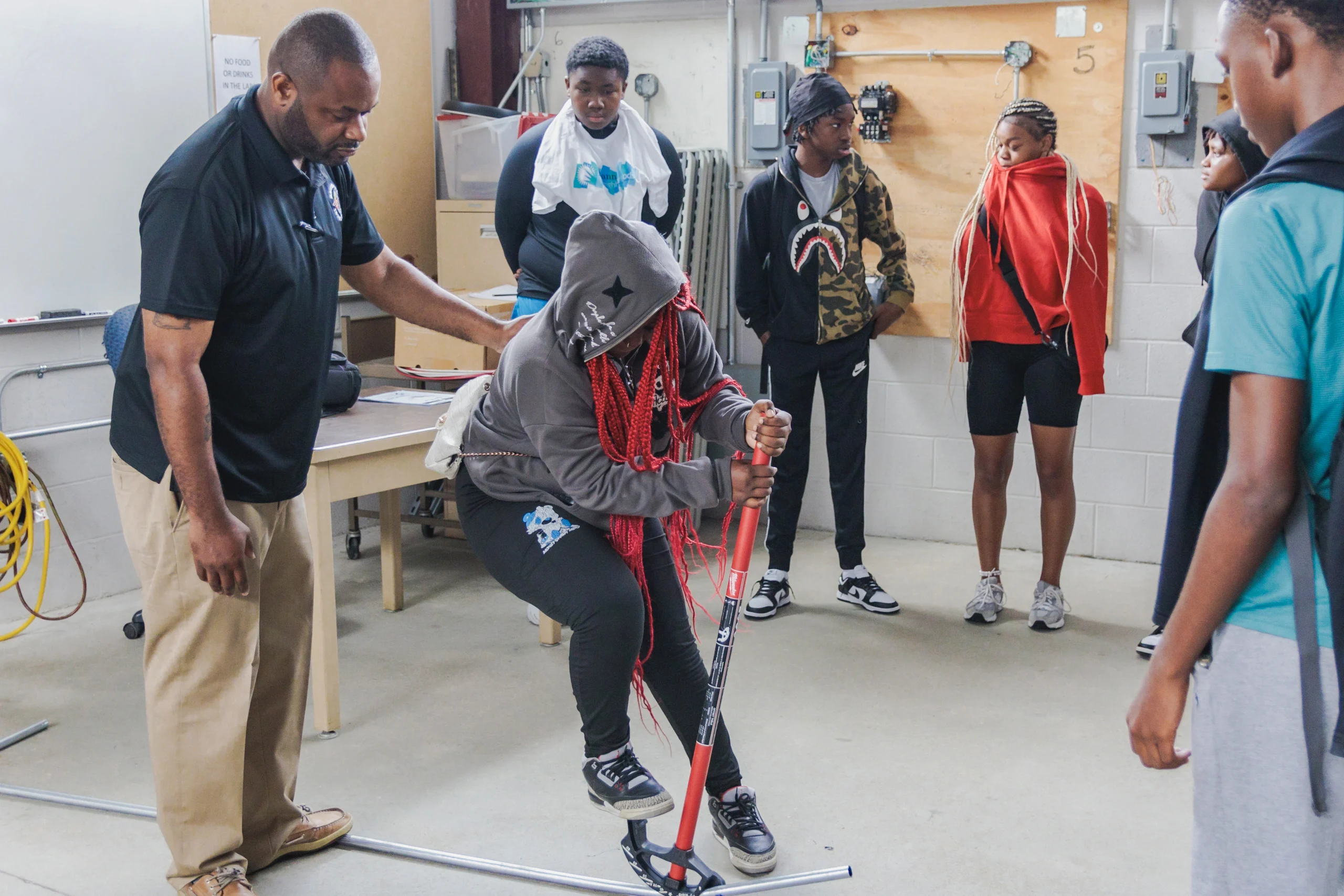
Do tours. It’s great to go to school, but we should open our doors.
And we mix it with visits to multiple apprenticeships. The students, when they get to the first place, they are very nervous and don’t want to show it. By the third stop, the nervousness flows away. They become familiar enough with the environment to be vulnerable, and they can see it more clearly.
And while we were thinking about the students when we planned these visits, I started to see guidance counselors who came from schools not even on the trip because they wanted to understand, too.
As we get exposure, the kids also develop relationships. The training director is a person you’ve met. I walked into the JATC because I had to. We will be more successful If those aren’t the stakes.
And then you open your doors. Come anytime. Invite parents. Have regular visiting hours.
Some of our strengths feel like they are too good to be true. Welcoming people in challenges that.
And we need to invite every freshman legislator to come down. Not just the senior people, but the new ones, of every party, every election cycle.
What is the most important thing you want people to walk away understanding?
Ask if there is guaranteed job placement.
I want people to understand what an apprenticeship really is and if there is no guaranteed job at the end, walk away.
Look, I understand, it can be hard to believe. “I don’t need to know how to do the job, but If I show up on time and have a good attitude for a whole year, I get $3 more?”
Yes.
We are targeted by these for-profit programs that deliver the debt, not the job. They compound our negative experience.
A friend of mine went to a trade school for 18 months about the same time I started at Local 24. It was on the same street, just a little farther down. When he was done, he had debt, a degree and a recommendation to go to the IBEW.
He paid to get the same advice I got free from my mom.
I went to work the first week of my first step and haven’t applied for a job since.