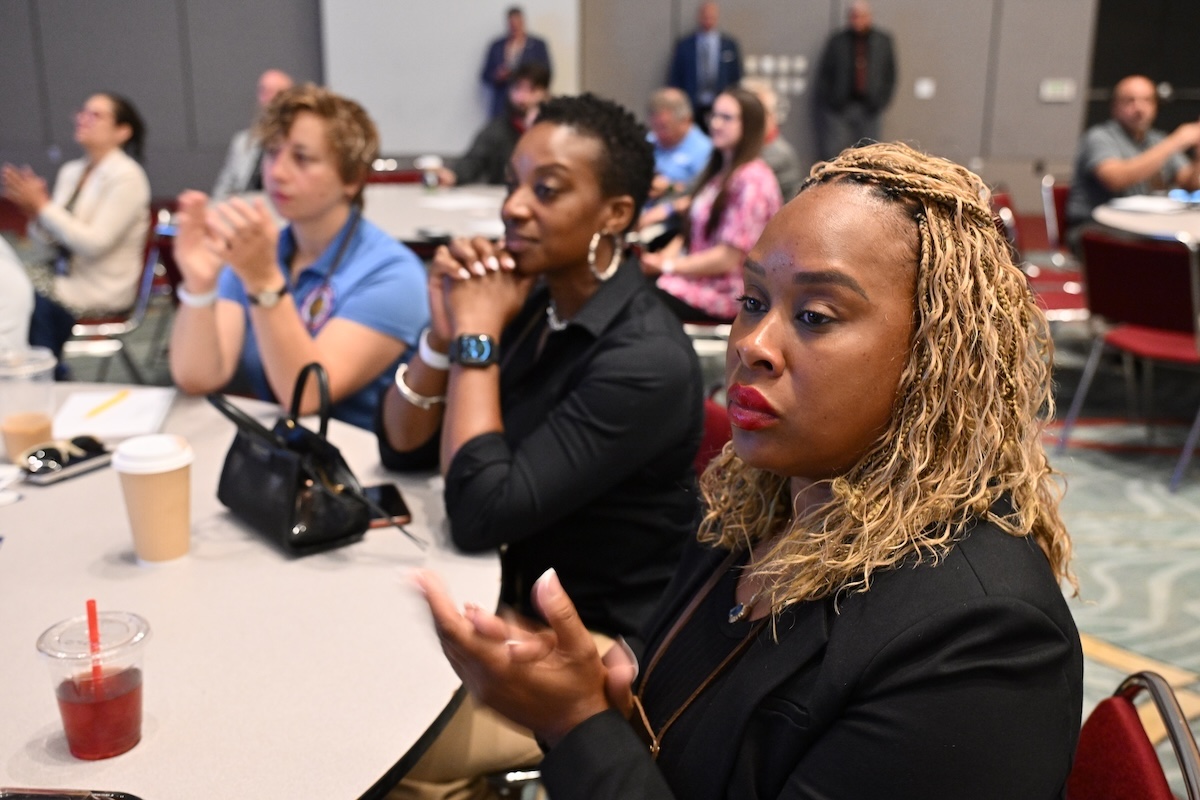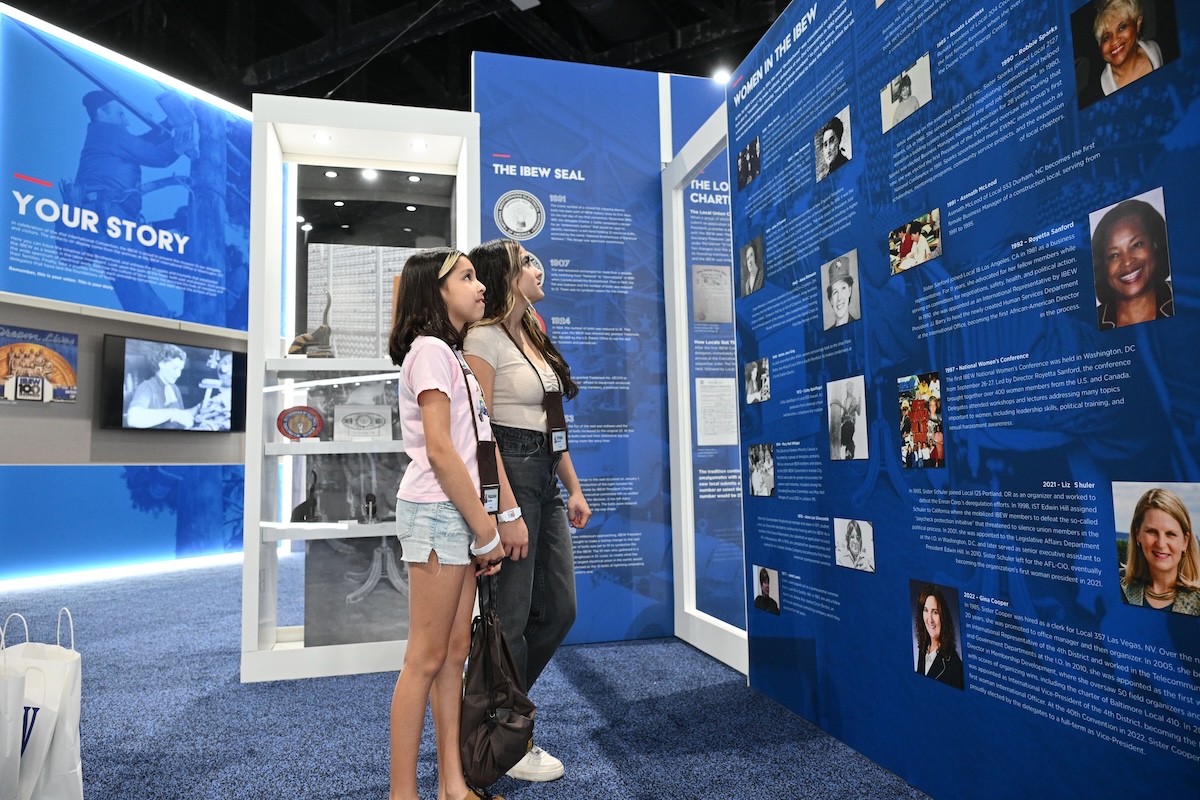

Hundreds of people attended a historic gathering of the Electrical Worker Minority Caucus’ meeting Saturday morning, celebrating a civil rights pioneer and measuring the seismic impact of the caucus over 50-plus years.
After the recent death of EWMC co-founder and former President Robbie Sparks, the caucus organizers presented a panel unlike any they had held at recent international conventions. Instead of the usual focus on the current work of the EWMC and how membership in the EWMC has changed individual lives, they spoke about how the organization has changed the IBEW.
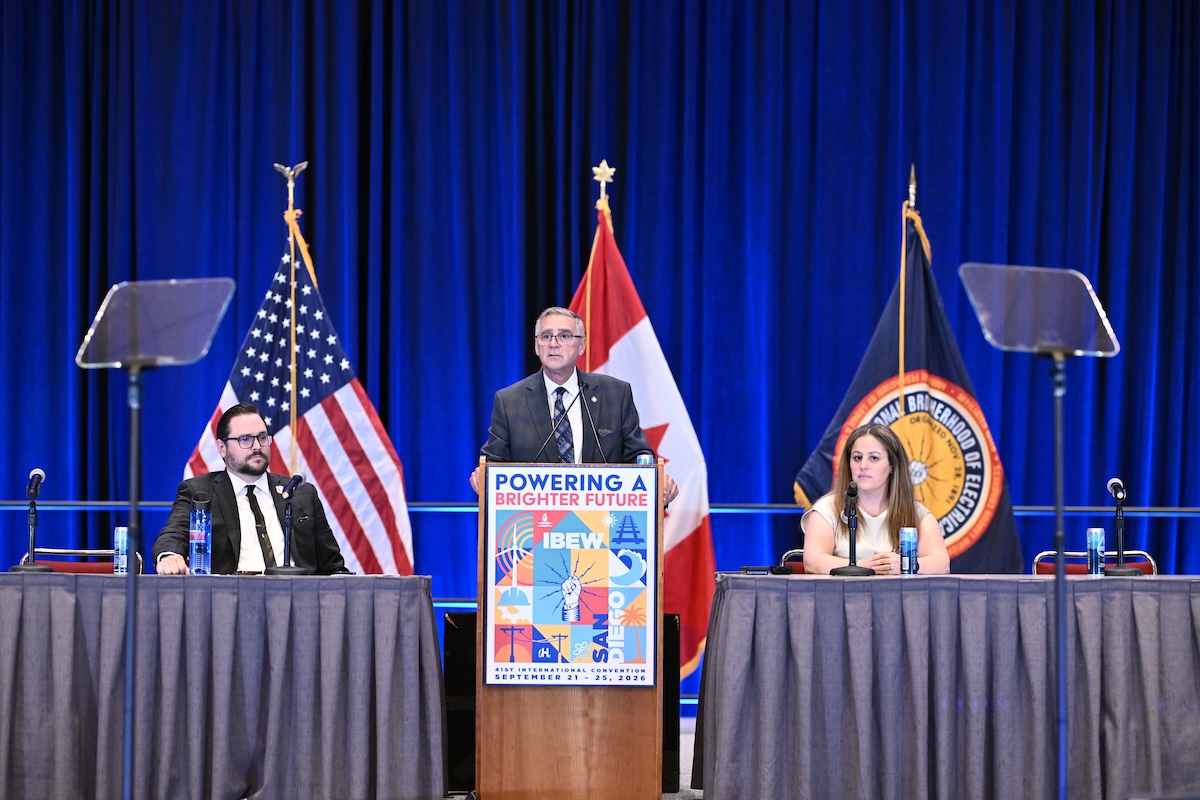
EWMC President Sean Bagsby introduced International President Kenneth W. Cooper, along with International Secretary-Treasurer Paul Noble and International Executive Council Chair Joe Calabro.
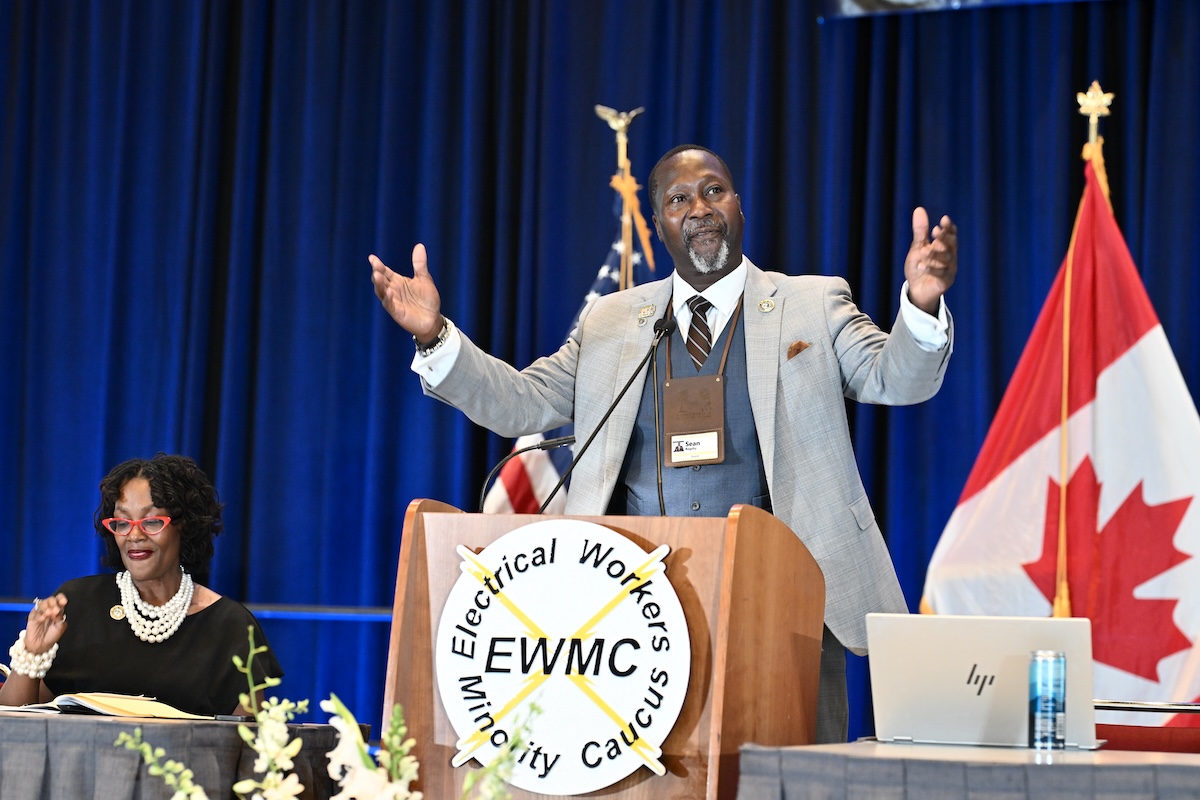
“This is truly the house that Robbie built,” Cooper said. “She never stopped working, and the work speaks for her.”
There was deep sadness from speaker after speaker, including past EWMC presidents Keith Edwards and Victor Uno; former EWMC executive council members including Royetta Sanford and Dorothy Fortier; and longtime EWMC leaders Joe Wells, Sabrina Hernandez and John Easton.
“Since the last convention, we turned 50, and with the passing of Sister Sparks, we felt the need to focus on history, but also on impact,” Wells said. “We’ve changed the IBEW in so many ways, but many of the newer members don’t know it was our work.”
Edwards told the story of the founding of the EWMC in 1974 by International Representative Mel Horton and two delegates to the 30th convention, Leon Wilkerson and Johnny Walker, all members of now-defunct Shreveport, La., Local 2188.
Sanford told the stories of the founding members of the EWMC executive council.
“Through strategic action by those founding members and their vision and foresight, they built a bigger, better, stronger and more inclusive IBEW. Our members are stewards, union officers, mentors, examiners, foremen, training instructors, executive board members, business managers and even some international representatives,” she said. “The IBEW is literally being led by the EWMC.”
Fortier carried the story through the 1990s and retold the long history of EWMC-sponsored convention resolutions that expanded the Brotherhood’s focus and concern more broadly.

Wells spoke about the growth from six EWMC chapters in 2006 to an expected 60 by the time of the annual EWMC Leadership Conference, to be held in Boston in January 2027.
“We’ve had great growth in the last 20 years. Now we need everyone’s help to make sure people know who we really are,” he said.
There were personal stories about how membership in the EWMC gave the speaker the training, connections and confidence to thrive and grow into leadership positions.

“My experience in the IBEW has been almost flawless since my first day in 2015. Sometimes I feel like it has been too easy,” said Chicago Local 134 executive board member Pamela Wilson. “But I know it was the work of the last 50 years of the EWMC that has made my career what it was supposed to be.”
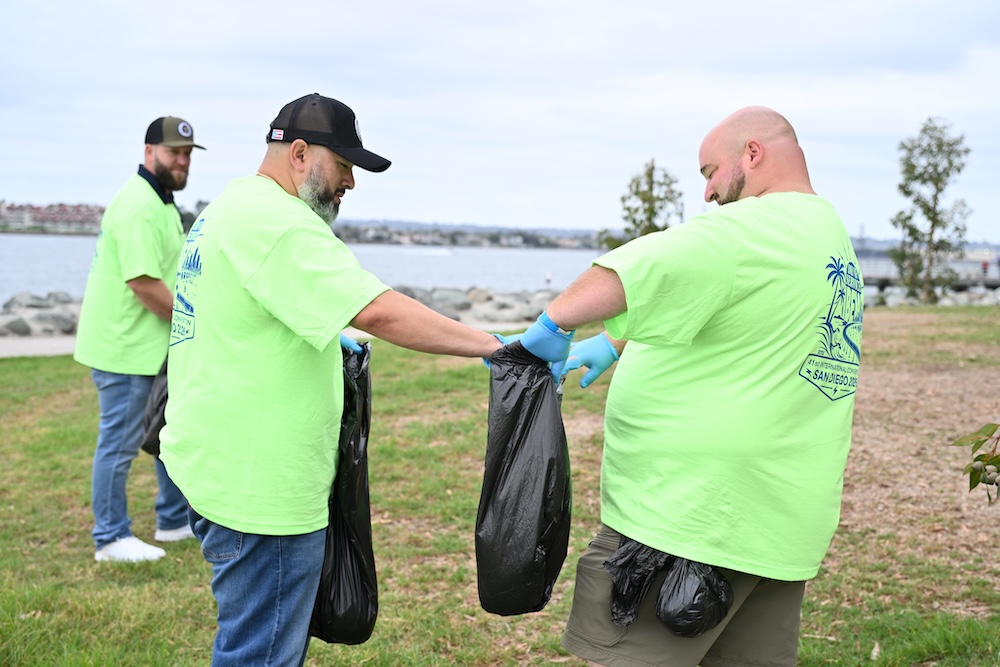
The meeting closed with brief reports from chapter presidents from across the country, who reeled through community service projects they’ve run and are planning.
Bagsby closed the meeting emphasizing the centrality of the EWMC to the IBEW’s million-member mission.
“EWMC is part of the coalition to reach a million … plus. Our diversity is our strength. If you do the work, it doesn’t matter who you are — you belong in the IBEW and the EWMC,” he said. “We know what we’ve been charged to do. Now let’s do it.”