IBEW News

Your Turn: Cast Your IBEW Photo Contest Vote Now

Once again, last year broke the record for submissions to the IBEW Photo Contest, but what set 2025 apart wasn’t the number but the quality and variety of images we saw.

Sure, cameras on mobile phones are improving, but that doesn’t explain the extraordinary number of beautiful, mysterious and compelling submissions.

The membership took to heart lessons from past winners. They moved in closer. They showed us the faces of brothers and sisters hard at work. These finalists brought us to places we’ve never seen. We were taken a dozen miles out to sea, walked deep beneath Alaskan lakes. We were shrouded in steam and showered with sparks, in the clouds, underground, in the middle of the night and under the noon sun. We even cast reflections in the glow of the Northern Lights. 

We selected the finalists. The ultimate decision is left to you. 

This isn’t just a beauty contest, though. The winning picture could be pretty, but it could also inspire awe or wonder, or it might tell us something important about blue-collar life in 2025. 

Whatever you choose, choose wisely because the first-place winner is awarded a $1,000 prize, and $750 and $500 go to second and third place, respectively. There’s also a $200 honorable mention prize available for each IBEW branch: broadcast, inside construction, outside construction, government, manufacturing, railroad, telecommunications and utility.

Voting is open through Jan. 30. You don’t have to be a member of the IBEW to vote. The only rule is one person, one vote. Winners and honorees will be showcased in the March edition of The Electrical Worker.

Scroll through the photos below, and click here to vote on your top three.
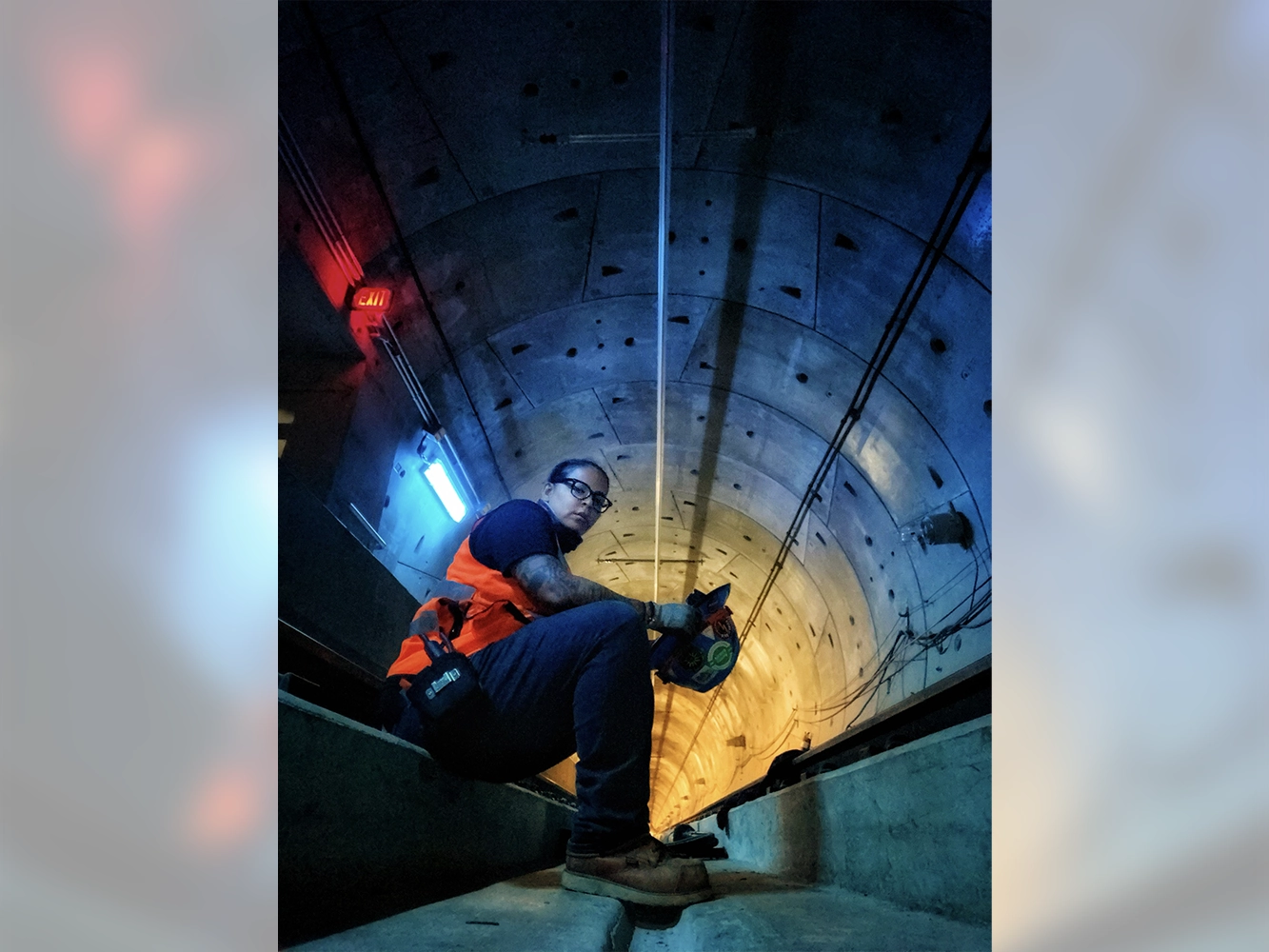
Natalie Anaya
Los Angeles Local 11

Not everyone can appreciate the underground scenery of Los Angeles’ Metro system, but for Local 11’s Natalie Anaya, it represents the work she’s done on the subway from the beginning. When she started there, it was just dirt. Since then, the journeyman inside wireman has done everything from welding to pulling wire to putting up panels and installing devices. With this image, taken with her iPhone using the timer, Anaya said she wanted to capture a “hard day’s work in such a cool part of the jobsite.” She added: “Few people worked in the actual tunnels. I was fortunate enough to be one of those people.”

Luis Barrera
Dublin, Calif., Local 595

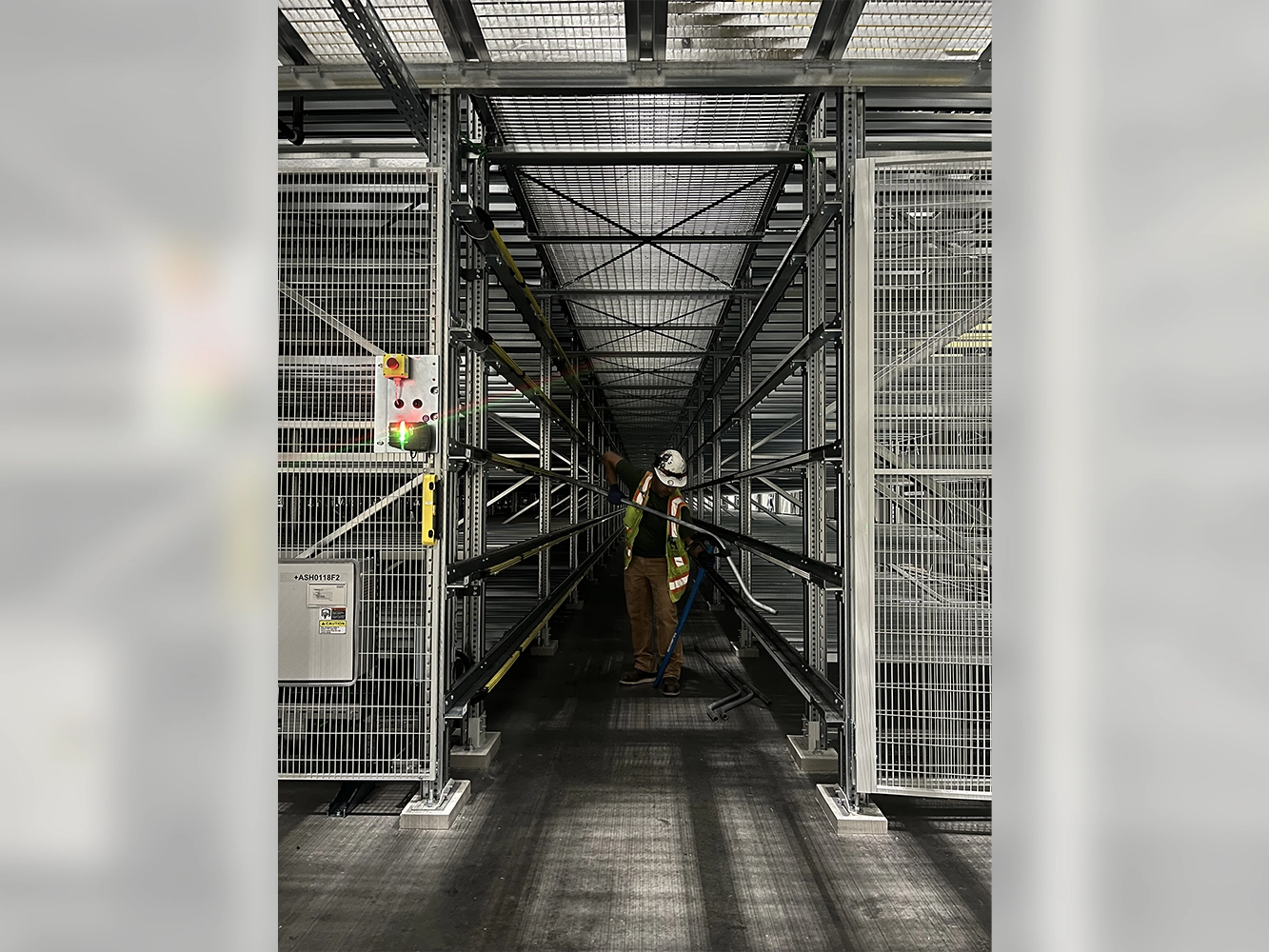
Fulfillment centers, by design, are supposed to be uniform, easy to navigate. They are supposed to not only fade into the background but be background. But Luis Barrera of Dublin, Calif., Local 595 said he had his eye on this one hallway for weeks. He started taking pictures there, then self-portrait using the timer on his mobile phone. He wasn’t happy with the outcome, though. It wasn’t until he brought in a remote shutter trigger that he finally had the time to frame the scene exactly as he wanted. The green light. The glowing metal on the shelves. The bent conduit in the light while he receded into shadow. “I never thought of sending in a picture to the Photo Contest before this one,” he said.  

Michael Boggs
Austin, Texas, Local 520

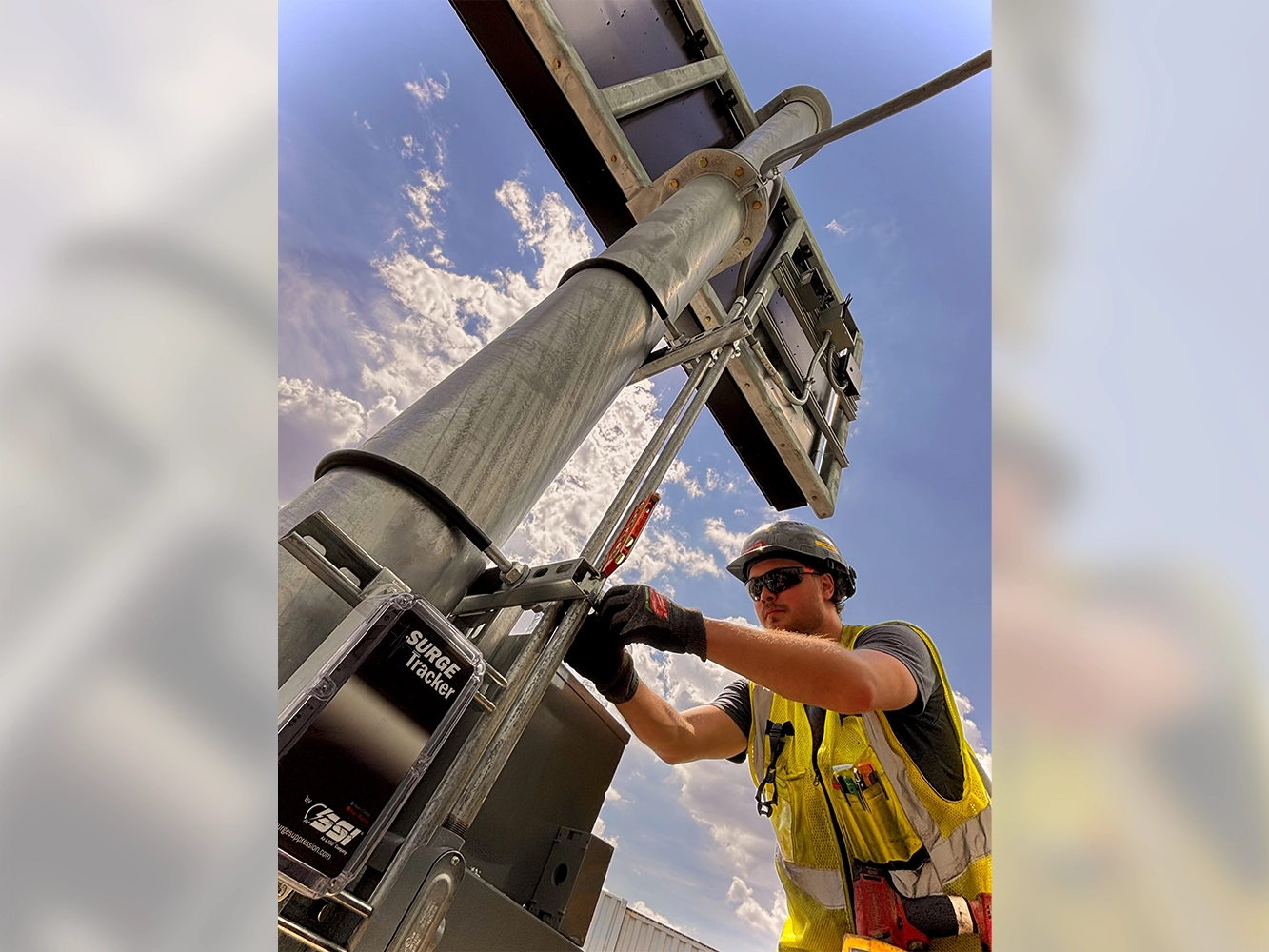
Austin, Texas, Local 520 apprentice Michael Boggs saw fellow apprentice Brandon Trush strapping and locking down some rigid conduit at the Southwest gate in Austin’s airport, and he decided to capture the moment. “I was just trying to take a candid photo, and it seemed like a nice set-up where Brandon was against the backdrop of the sky,” Boggs said. “I thought he looked mad cool.” Boggs also hopes that when passengers are looking at the screens displaying their arrival or departure times they think of the workers who made that possible. “That’s your union brothers’ work and care looking out for you,” he said.

Nicole Curtis

Minneapolis Local 160

Minneapolis Local 160 member Nicole Curtis never tires of seeing the northern lights blaze across the night sky over Minnesota. “It’s the blessing of a night shift and outside rounds,” said Curtis, who has worked in operations at the Sherburne County Generating Station, or SHERCO, for seven years. For this photo, Curtis took a road that leads to SHERCO’s holding pond to get a better view. “As I was driving, I saw the lights reflecting off the pond,” she said. “I was like, ‘That’s actually really cool.’” She turned off the car and set up her shot. “I can put my iPhone on night mode so the shutter stays open longer and it just grabs it,” said Curtis, who enjoys posting workplace pictures on social media. “A lot of times — maybe it’s the Millennial in me — when I post them, I hashtag them ‘industrial beauty.’”

Robert Eagle
Orlando, Fla., Local 606

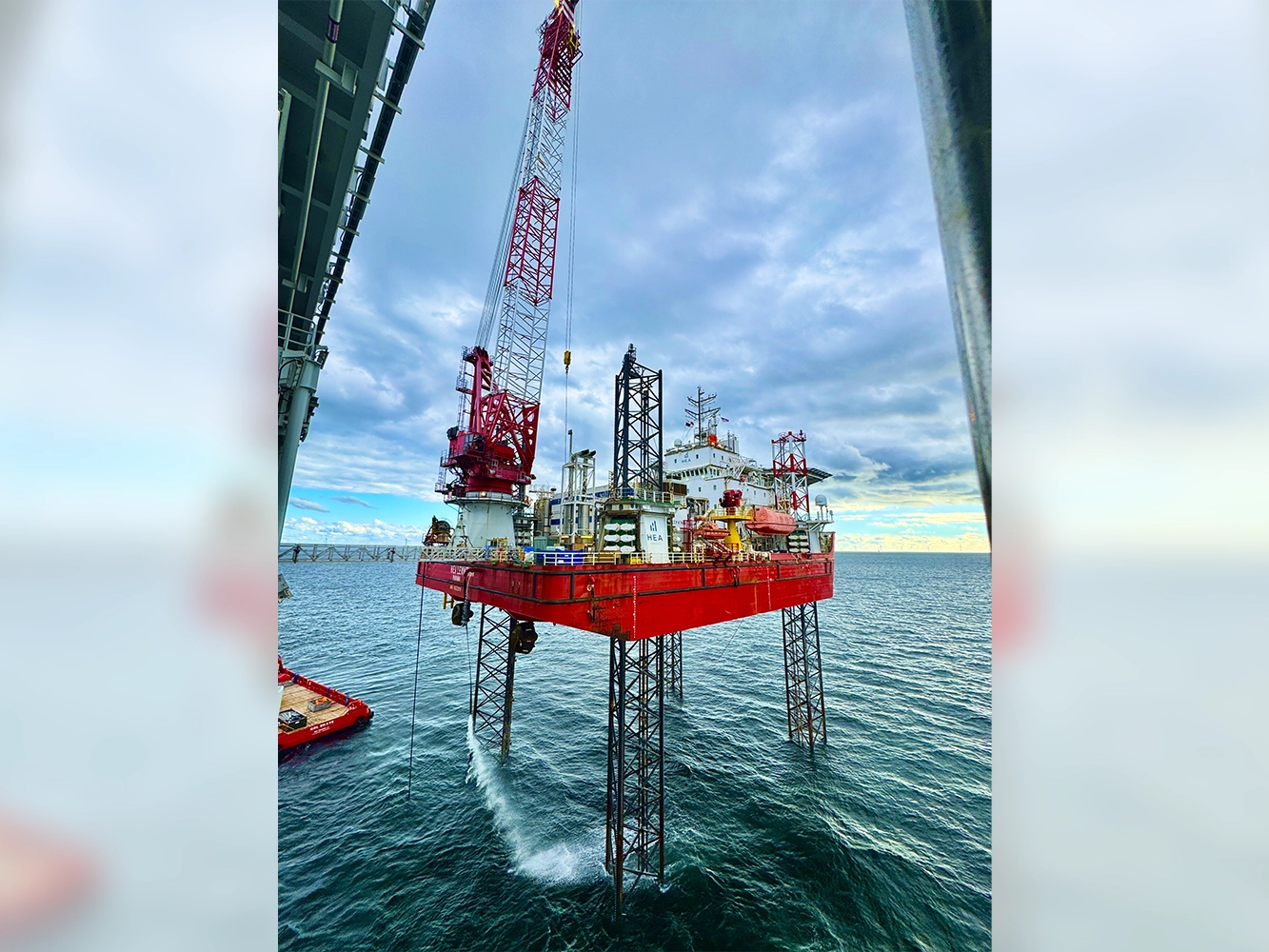
Robert Eagle, a member of Orlando, Fla., Local 606, has been working almost exclusively on offshore wind projects for the past two years. This picture shows HEA Leviathan, a “jack up” offshore support vehicle at Revolution Wind, a 700-megawatt offshore wind farm under construction off the coast of Rhode Island. The four 240-foot-tall legs lift the vessel above the waves, providing a stable platform for the 400-ton-capacity crane. The offshore wind industry in the U.S. has been sabotaged recently by the Trump administration, which revoked Revolution’s license even though it is close to completion. Developer Ørsted is now suing the administration to allow the project to finish.

Quint Homan

Burnsville, Minn., Local 949

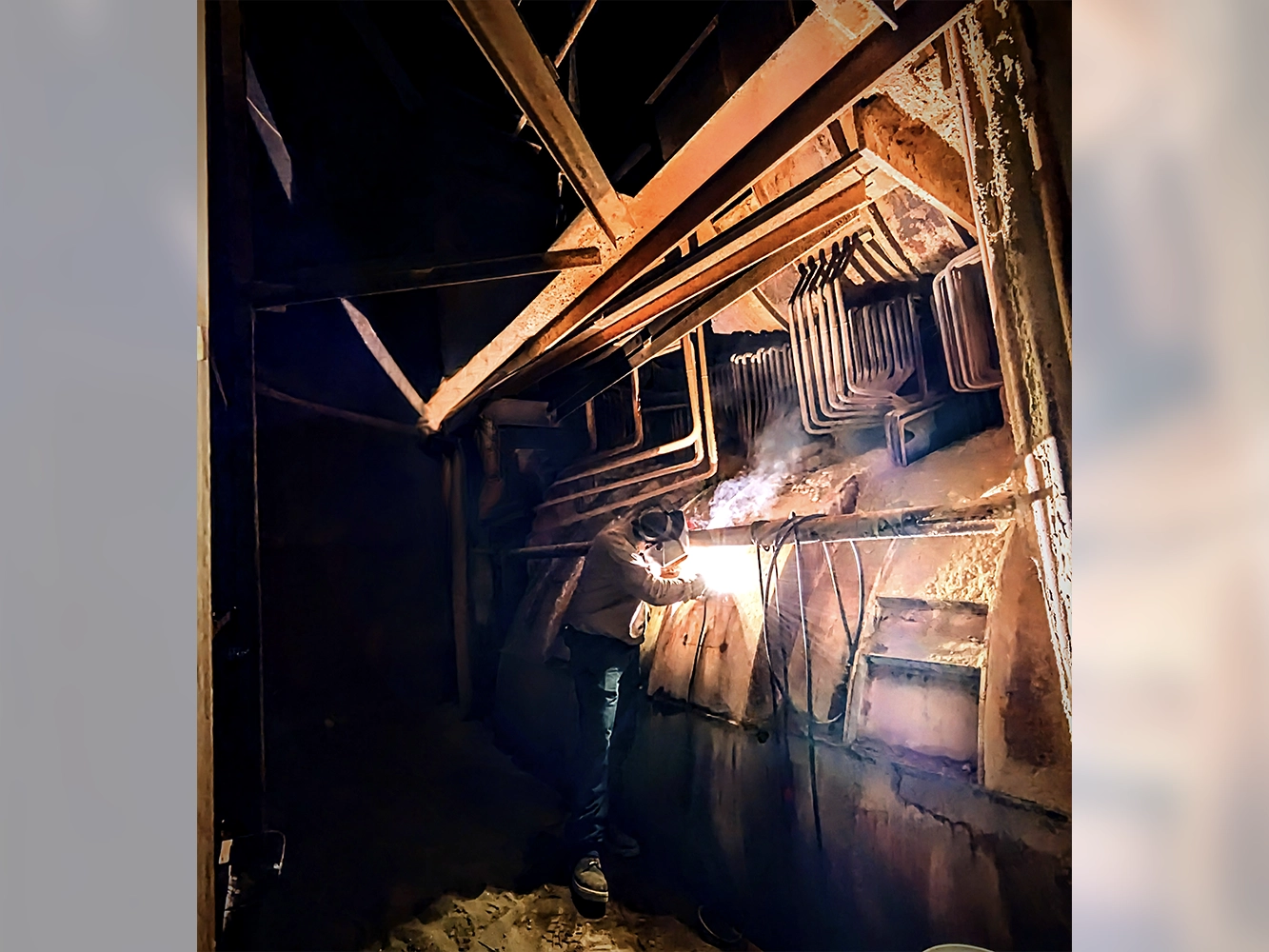
Quint Homan, a certified mechanic-welder, took this picture of Kevin Gapp welding up the outside jacket of the cyclone in the Big Stone coal powerhouse in South Dakota. The cyclone is where the coal is mixed with air before it enters the combustion chamber. Gapp is welding on the wind box, or intake side. The tubes that sprout like “spider legs,” in Homan’s words, are water tubes that protect the cyclone from the heat of the combustion. The Burnsville, Minn., Local 949 member took it with his iPhone.

Jason Jenkins
Orlando, Fla., Local 222

Jason Jenkins was performing tower inspections for signatory contractor SPE Group when he took this picture of power lines stretching across a branch of the St. John’s River near Jacksonville, Fla. The Orlando Local 222 member used a Samsung Galaxy S21 to capture the flatlands of northern Florida. “I don’t take a lot of pictures,” said Jenkins, a member since 2011. “I just thought the symmetry of where I was working would make for a really good shot.”

David Pardo
Detroit Local 58

When the smoke and steam cleared at the steel mill and Detroit Local 58 member David Pardo saw fellow member Larry Grassel, working on some motors, he knew he had to take a picture. It was a typical day for Pardo and Grassel, but not one that most people envision when they think about the work that journeymen wiremen do. “I think the average person thinks we only do switches and plugs. Or the often-asked-for ceiling fan,” Pardo said. “It’s surreal what we do. It’s also inherently dangerous. It’s not a job for everyone.”

Sean Petersen
Orlando, Fla., Local 222

Sean Petersen, an IBEW member since 2018, lives in the warm climes of Puenta Gordo, Fla., on the state’s Gulf Coast. But The Orlando Local 222 member has become accustomed to the cold and all kinds of weather working as a traveling lineman. He took this shot of a fellow IBEW member running wire on a foggy morning in Lakeville, Minn., about 25 miles south of Minneapolis. He estimated that he was about 20 feet above ground when he took this photo with his iPhone. “You deal with something different every morning,” said Petersen, who was working for signatory contractor M.J. Electric.

Hunter Richardson
St. Louis Local 2

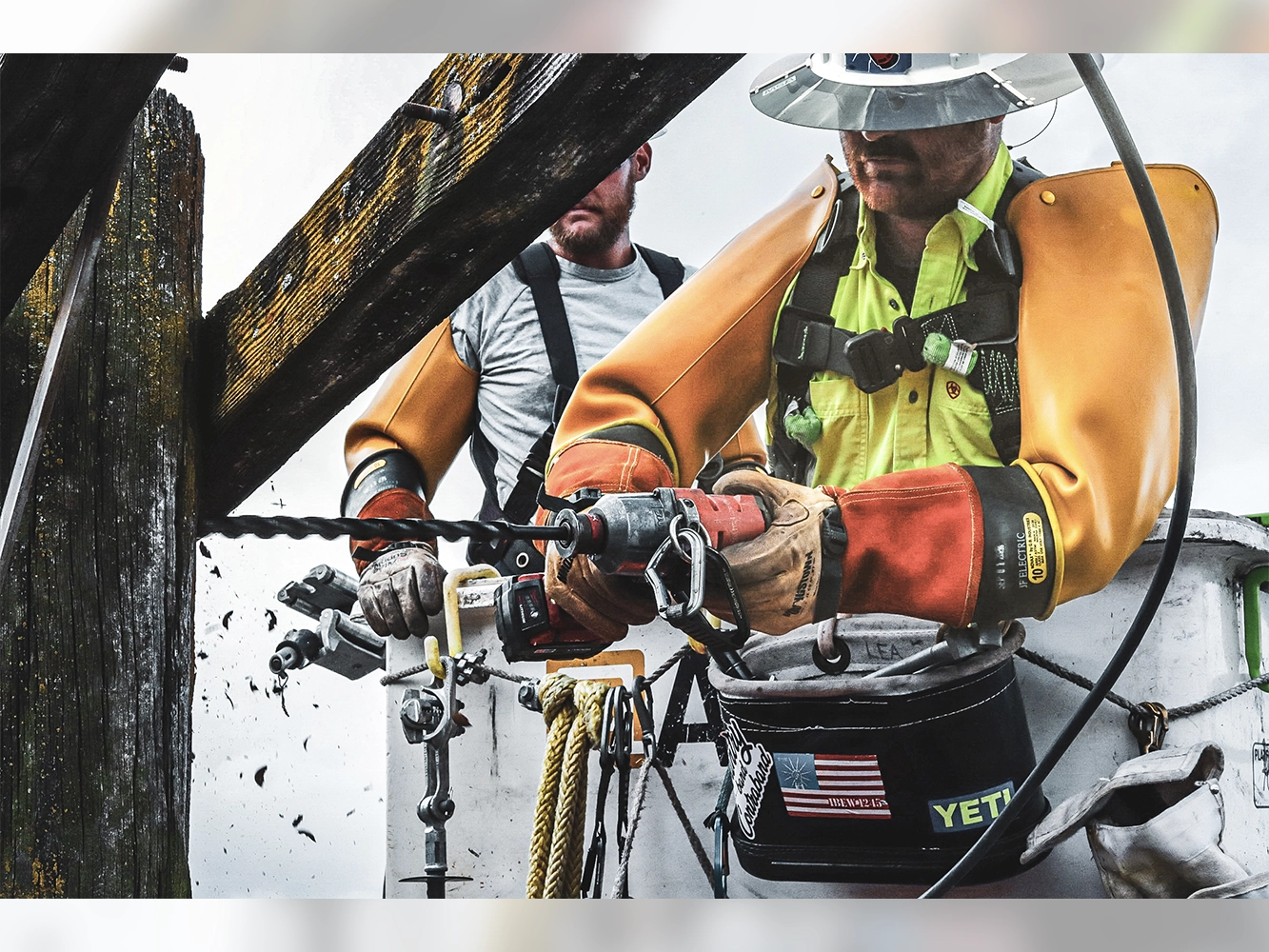
Using a Canon EOS 6D, St. Louis Local 2 member Hunter Richardson was in a bucket about 45 feet above ground when he shot this picture of two IBEW brothers repairing an old pole along the Missouri River, near the state capital of Jefferson City. Wood chips are visible as the two use what a is commonly called the “money gun” — a high-impact torque wrench made by Milwaukee Tool. “It’s just rugged,” said Richardson, a member since 2021 whose grandfather and great-grandfather also were IBEW linemen. “It kind of tells you what being a lineman is all about.”

Paul Salgado
Diamond Bar, Calif., Local 47

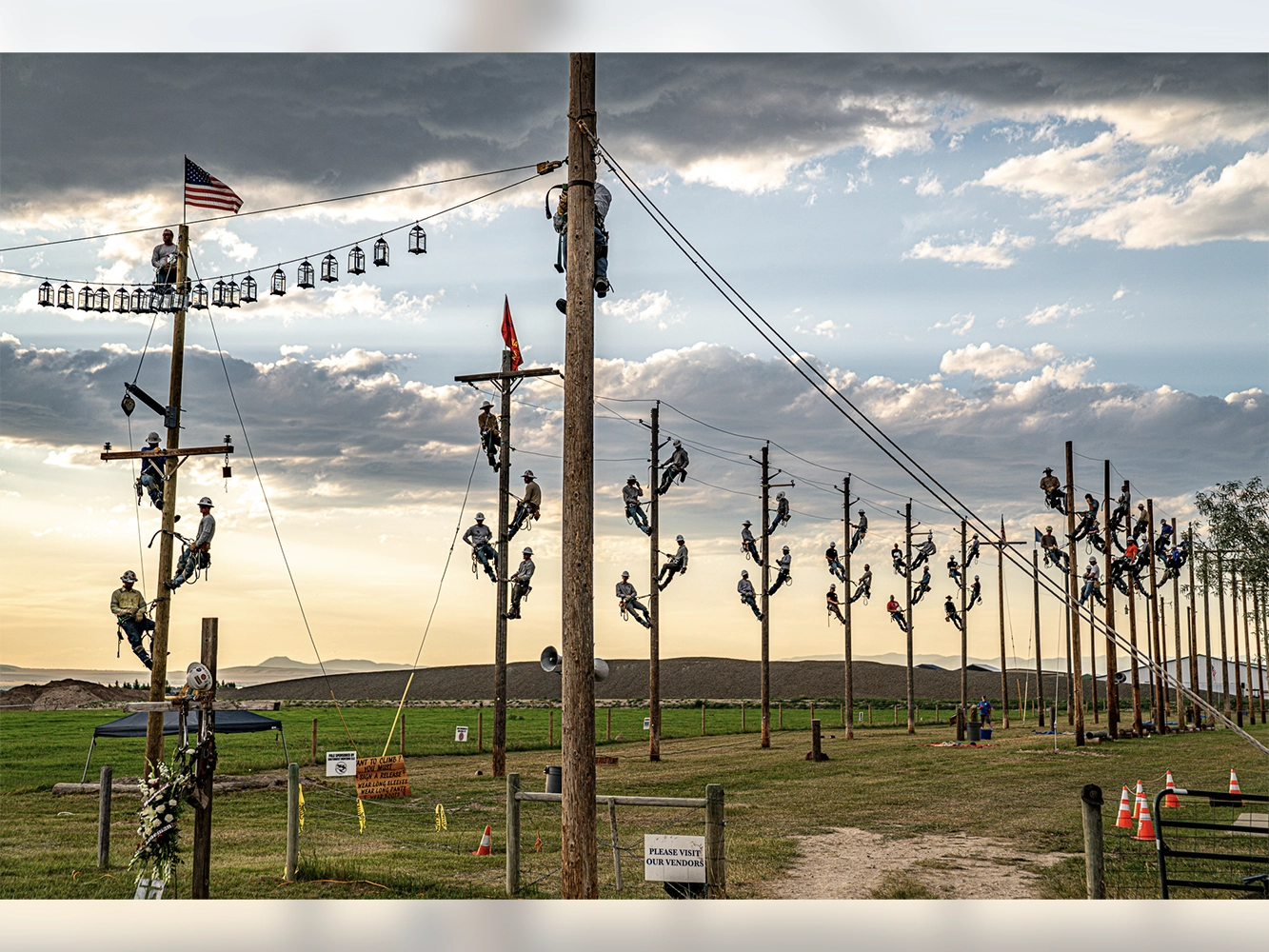
The hanging lantern observance on the eve of the annual Montana Lineman’s Rodeo honors lineworkers who have died on the job. But the sunset ceremony before last July’s rodeo at the Townsend Fairgrounds outside Helena also found participants representing crews from inside and outside Montana paying somber tribute to 46-year-old David Dixon, the rodeo’s president and an active member of Butte Local 44, who was killed the day before in a four-wheeler accident at the fairgrounds. “He was big in the community,” said Diamond Bar, Calif., Local 47 journeyman lineman Paul Salgado, who submitted his photo of the ceremony. “He was a shop steward and on the e-board — a real union guy. “You can imagine how extremely emotional this was,” said Salgado, a senior field media adviser and podcaster with Sturgeon Electric Co. “It was gut-wrenching.”

Zach Snyder
Seattle Local 46

Snyder used his iPhone to take this black-and-white photo of Local 48 brother Luke Meadows while the two worked beneath the docks of Seattle’s ferry terminal. At first glance, it looks like Meadows is standing in still water, but note the boat operator behind him. He’s working to steady the boat so Meadows can keep his balance while using a magnetic drill to hang a pipe rack. “It was a very physical job,” Snyder said. “You’re wearing a life preserver. You’re standing in a boat. You might be standing on a floating platform. Your efforts are diminished because you are moving.”

Nathan Stewart
Little Rock, Ark., Local 295

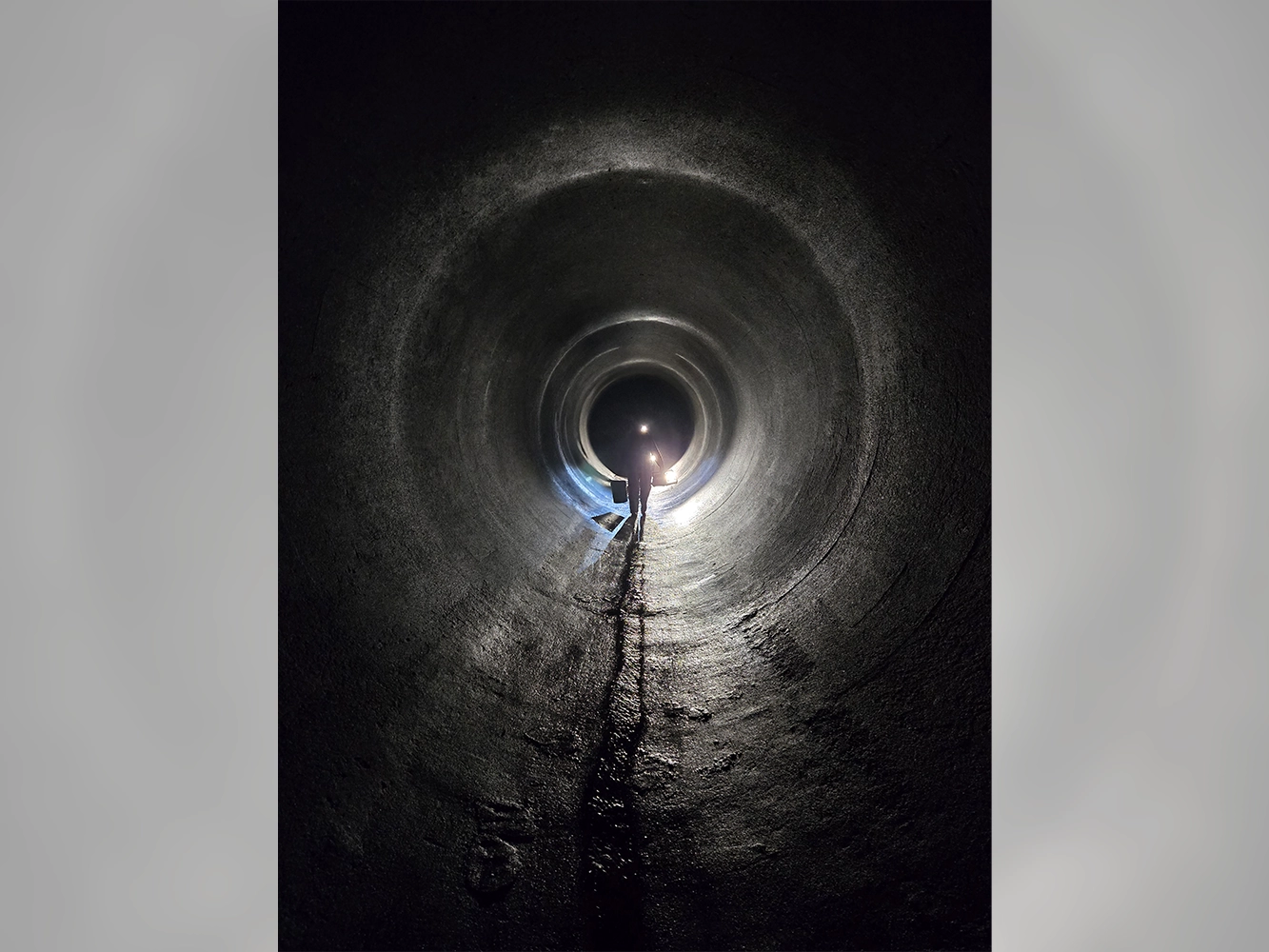
Tucked in the maze of islands in southernmost Alaska’s Inside Passage, 45 minutes by boat or air from Ketchikan, at the foot of 52,000-acre Lake Tyee, you will find a 25-megawatt hydroelectric power station, plus Anchorage Local 1547 member Nathan Stewart and his family. Stewart, a transplant from Arkansas, is the maintenance and operations foreman for the Tyee “tap lake.” Unlike most hyrdo plants, there is no dam on this natural lake. There are, instead, an 8,300-foot-long unlined power tunnel and a 1,350-foot-long steel penstock that houses two generators. It was during the annual summer outage that the penstock is drained and the system is inspected. Last summer, Stewart captured partner Dan Rohr walking the tunnel on his mobile phone. “I wish more people could see this part of the country. I used to dream of places like this,” he said. 

R.J. Vicente

Boston Local 103

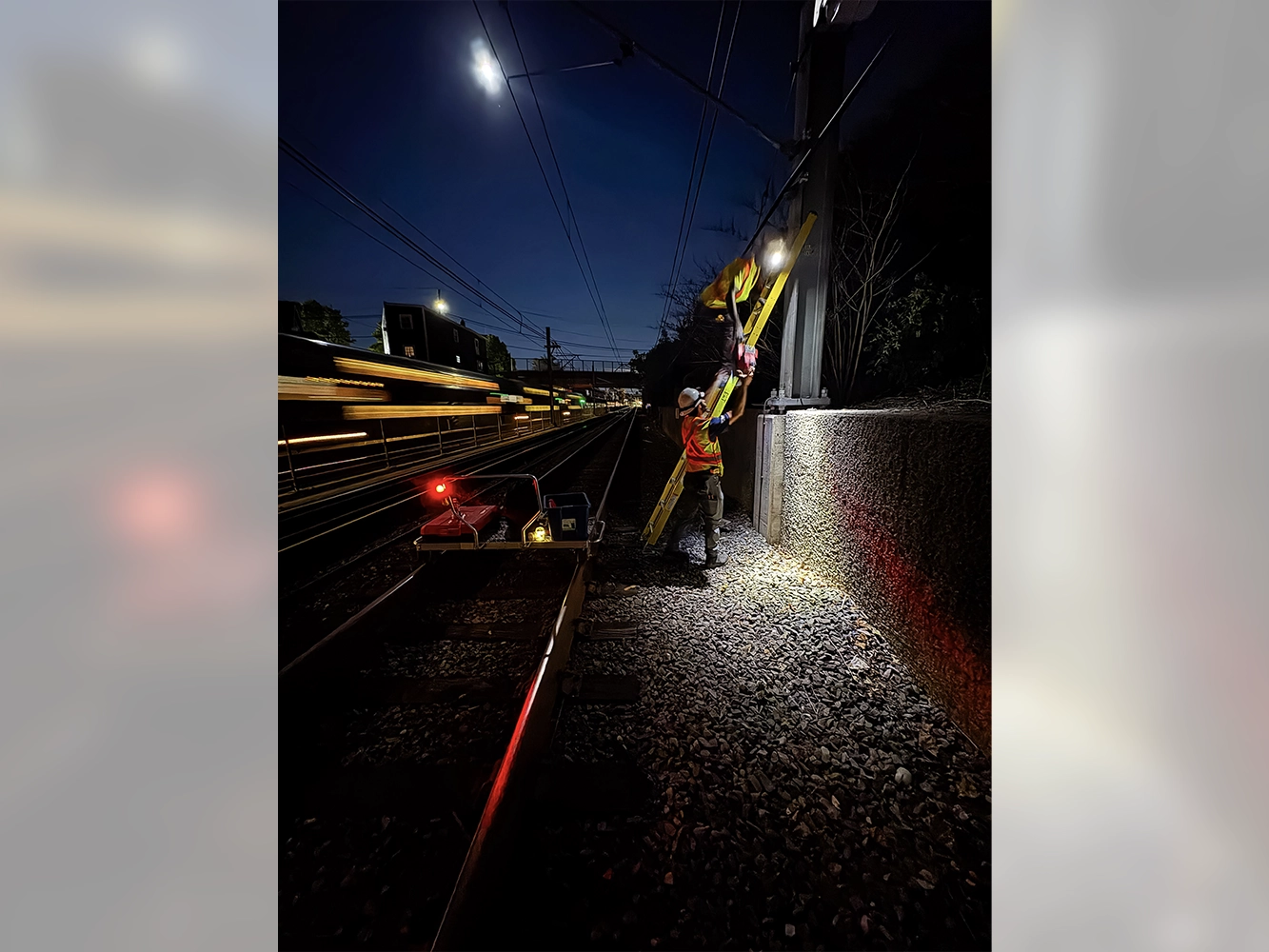
Boston Local 103 members Wens Prophet and Anthony Vicente were installing enhanced communications equipment on Boston’s Green Line subway system last summer when their fellow crew member — Vicente’s father, R.J. — used his smartphone to capture what he called a “one-in-a-million shot” of a commuter train speeding by on the adjacent Fitchburg Line tracks. R.J., a journeyman wireman with Pine Ridge Technologies who was organized into the IBEW four years ago, is also a lifelong photography enthusiast who had admired the work of previous IBEW Photo Contest winners published in The Electrical Worker. “I was very intrigued by those photos,” he said. He wasn’t sure whether his entry above was in league with them until he looked at it on a larger computer monitor later. “I pulled it up, and I was like, ‘OK, I’ll definitely enter it,’” he said.

Author