Melissa Reyes’ journey to become a dynamic voice for working people in the Carolinas has been anything but conventional. But the member of Charlotte, N.C., Local 379 — who recently led a massive IBEW organizing effort in one of the least labor-friendly states in the U.S. — says energy, persistence and a commitment to justice have helped her development as a respected leader.
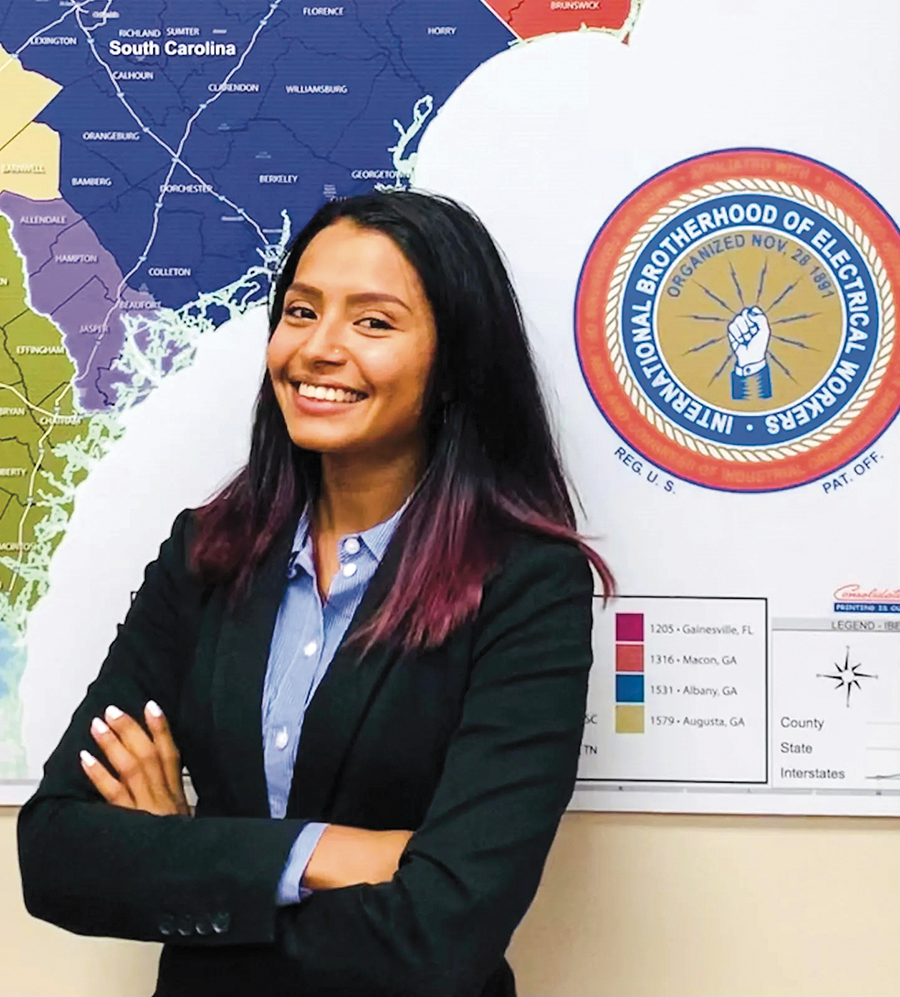
“Always try to say ‘Yes’ when there’s an ask of you,” Reyes advises, “because you just really never know where that might take you.”
Reyes’ story begins in Houston, where her parents immigrated in the 1980s from El Salvador during that country’s civil war. Her father became a line clearance tree trimmer.
“My dad was with Asplundh for over 30 years and didn’t have much to show for it,” Reyes said. “When I joined the IBEW, I learned that Asplundh is unionized in other states. That was one of the many reasons I became passionate about organizing.”
Growing up in an immigrant household, Reyes felt the tension between her parents’ traditional expectations and her own drive for independence. When she was 15 and restless to strike out on her own, she ran away from home and took a year away from school. To support herself, Reyes worked full time in dead-end jobs, facing housing insecurity and struggling to keep afloat.
Eventually, she finished high school. “But when I graduated, I didn’t have the support of my parents,” she said. “I couldn’t fill out federal student aid forms without them, so I had to abandon the idea of college.”
Through a friend, she found work as a translator for an electrical subcontractor from Mexico.
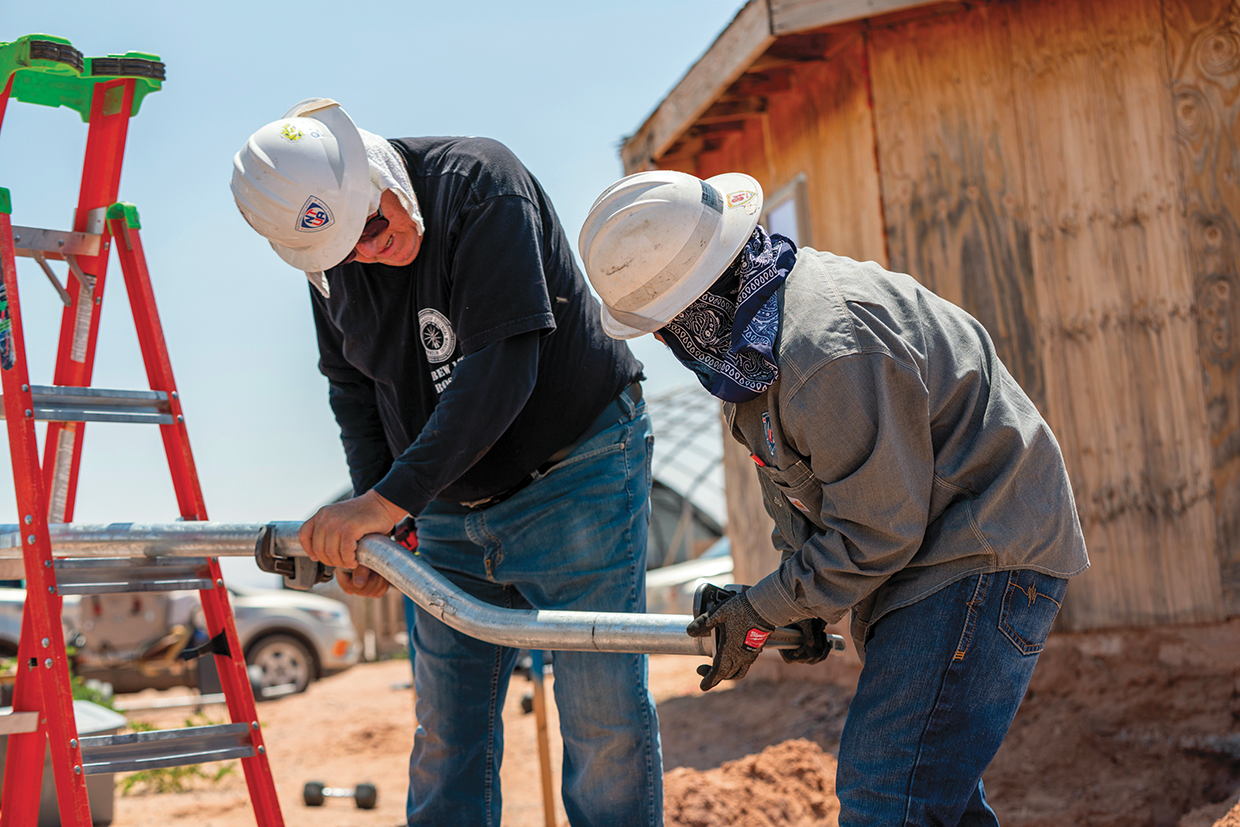
“I show up to this giant warehouse where they’ve got to change all the light fixtures, and it’s just him and one helper,” said Reyes, who was paid $100 per day. “I started turning tools, too, because I felt terrible just sitting there.”
She loved it. “You get a real sense of accomplishment out of seeing a finished product,” she said.
Having made her way to Charlotte — and now hooked on electrical work — Reyes applied for an apprenticeship with Local 379 in 2013 but was turned away for lack of experience. Seeking to improve her proficiency, she took a staffing agency job doing nonunion electrical maintenance at a local plastics plant.
“I learned so much,” said Reyes, who stayed on for more than a year. “Any time we had a new install, my boss would go through the code book with me.”
Impressed plant managers wanted to hire her directly. “But I said, ‘No, I really want to get into the apprenticeship,’” she said. “My boss told me, ‘Make sure you take pictures of all your work.’”
When Reyes returned to Local 379 for another apprenticeship interview in 2014, she submitted a binder containing her work photos. “Somebody told me later that doing that elevated me into being chosen,” she said, “because women entering the program was still a rarity at the time.”
That’s no longer true, Reyes said. “Thanks to our local’s outreach efforts, such as pre-apprenticeships, the dynamic has changed,” she said. “Our apprenticeship looks more diverse than ever.”
North Carolina State Organizing Coordinator Matthew Ruff saw something special in her.
“She was asking hard questions in a new-member class,” he said. “When people want an explanation, it indicates that they’re present. And if they care about their own future, they might just care about their brothers and sisters, too.”
After topping out, Reyes served on Local 379’s executive and examining boards, and she got involved with its Women’s Committee and RENEW chapter. She also canvassed and helped with candidate screenings for the Charlotte-Metrolina Labor Council.
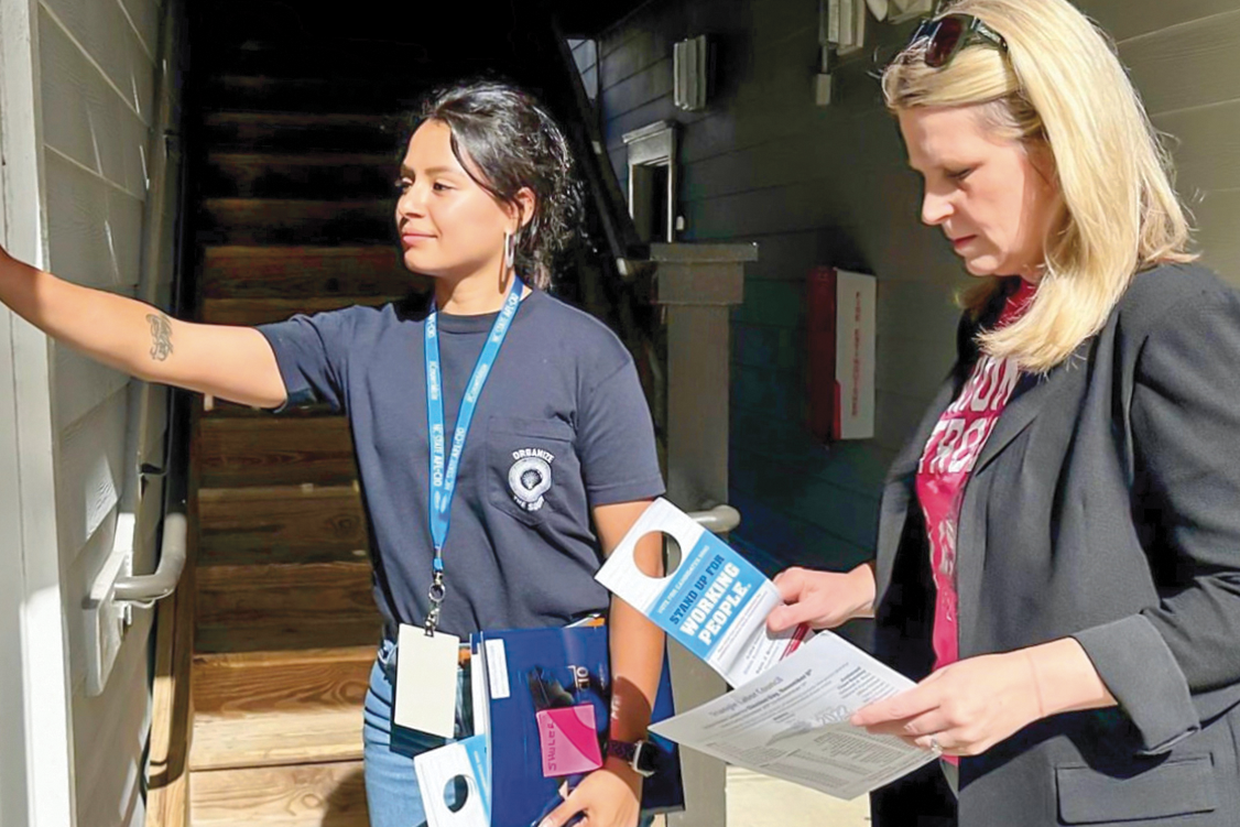
“Before I got into the union, I would go to marches for different causes,” she said. “I appreciate that the IBEW gives us a platform.
“Our Declaration states that our cause is human justice, rights and security,” Reyes said. “You can carry that forward to speak out for what’s right.”
In 2018, she was asked, as a child of immigrants, to speak at a memorial for a construction worker from Mexico who fell 19 floors to his death on a project in Charlotte three weeks after he arrived in the U.S.
“I’d never done anything like that before,” Reyes said. “It was really emotional for me, and it pushed me out of my comfort zone.”
Reyes’ activism caught the attention of Tenth District International Vice President Brent Hall, who tapped her to be the district’s representative on the IBEW’s international-level RENEW Committee.
“You can just tell she’s a born leader,” Hall said. “You’d think that she’s just quiet and reserved, but once she gets to know you and she gets comfortable, you can tell she’s full of energy.”
In 2022, Hall invited Reyes to work full time for the district office as a professional and industrial lead organizer for the Carolinas.
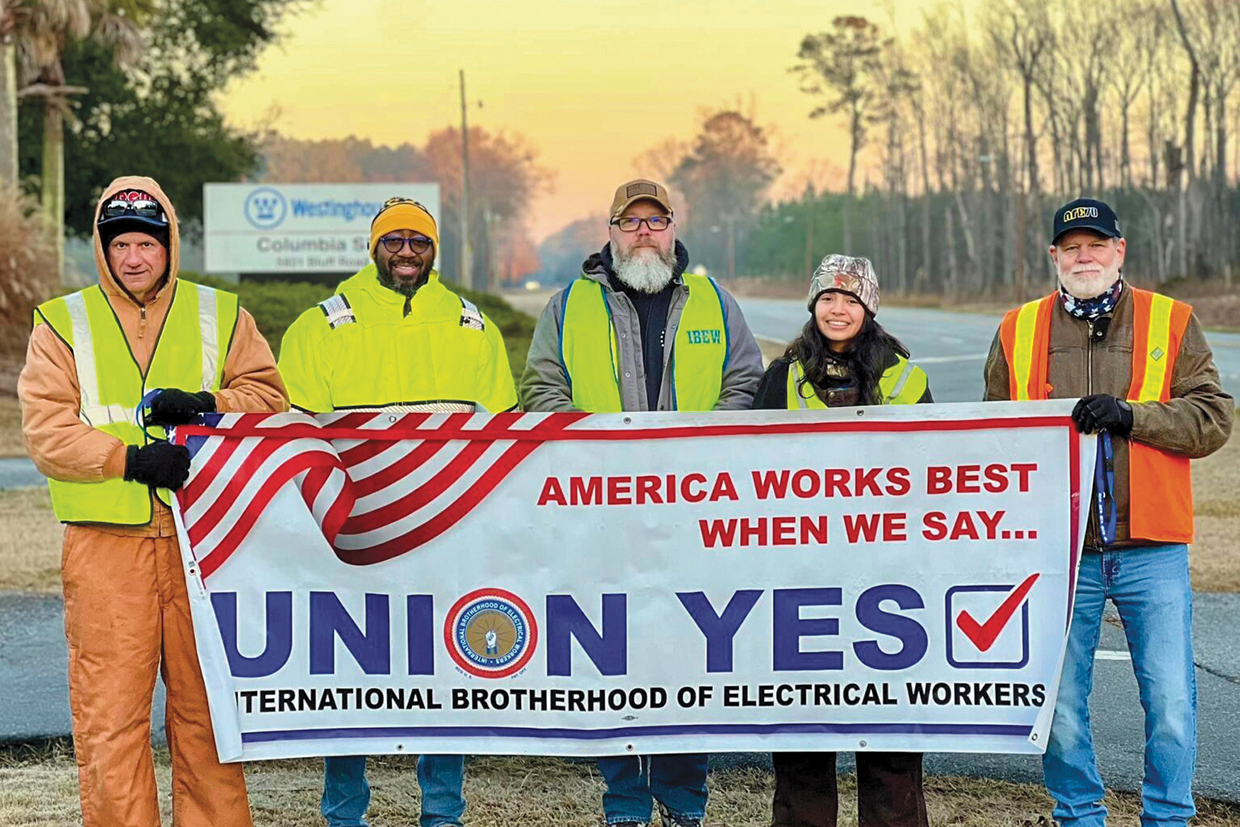
Six months after accepting the job, Reyes was leading a major effort to organize more than 600 workers at a Westinghouse nuclear fuel assembly plant in Columbia, S.C., a campaign that brought Ruff and more than 40 other organizers from across the country to one of the least union-dense states in the country.
“Manufacturers like Westinghouse pick the South for their low union density,” Reyes said. “Most workers don’t understand the power they hold in a union.”
Throughout the campaign, the IBEW team held dozens of worker meetings, rallies, honk-and-waves and picnics and made hundreds of phone calls and door knocks. “It was an emotional roller coaster,” Reyes said of the experience.
There was plenty of IBEW energy and optimism, but full-throated opposition — from Westinghouse’s professional union busters to Gov. Henry McMaster — proved insurmountable, and the IBEW lost the spring 2024 vote.
“That campaign tested Melissa emotionally, mentally and physically, and she passed,” Ruff said. “We just didn’t win.”
Afterward, Reyes took a break from organizing. “I just couldn’t get over it,” she said. “I decided to get back into the field and do electrical work.”
Her break lasted until this July, when Local 379 members elected Darren Helms as business manager.
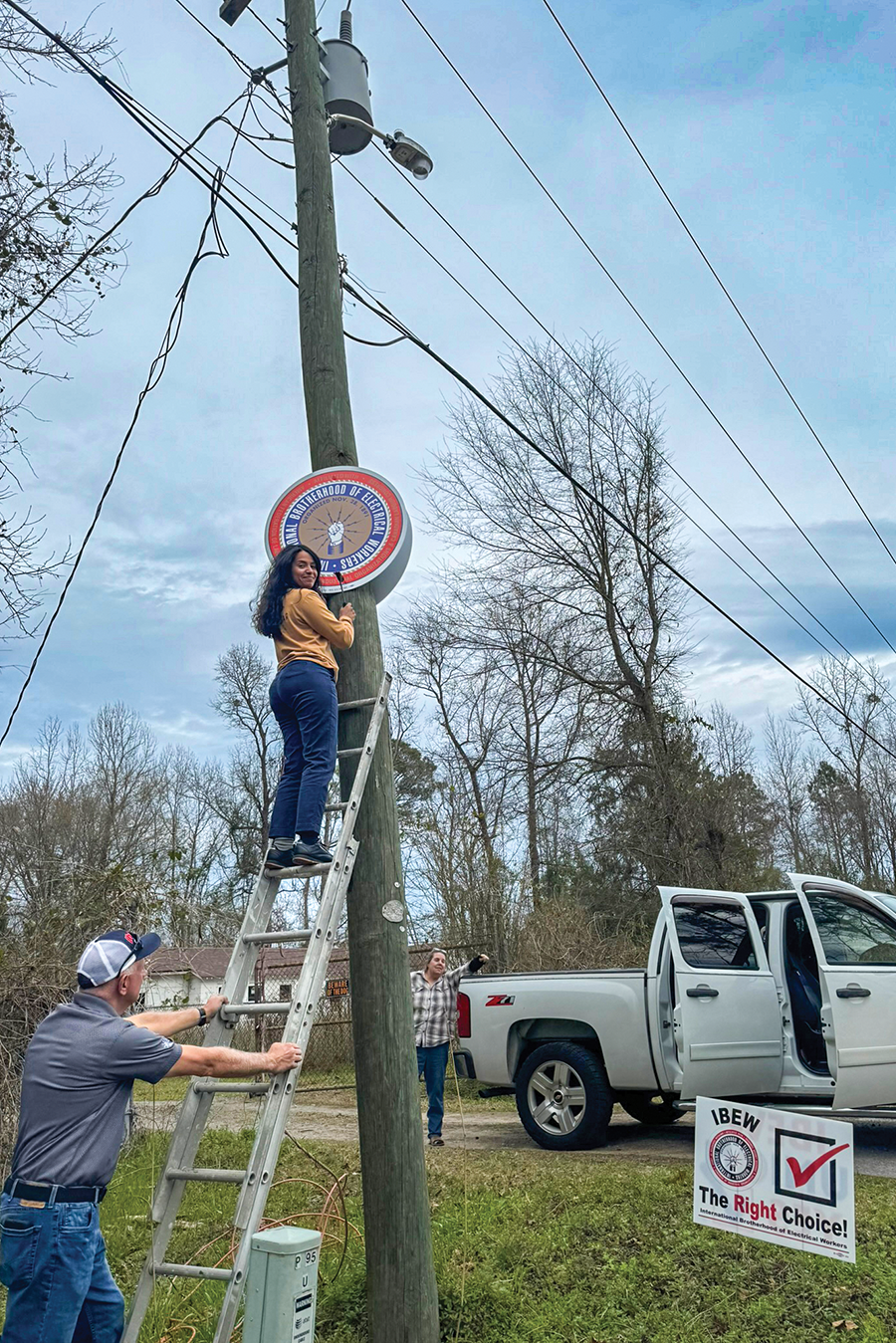
“I started talking to people about who I was going to hire as organizers, and almost every person mentioned Melissa,” said Helms.
“She was running a big job for Miller Electric as a foreman, and I knew it was going to be a tough sell to get her to come back to organizing,” he said. “But we met a couple of times, and her vision and what she wanted to accomplish aligned with my own.”
Reyes admits she is happy to be back at it. “We’re reaching out to our members on jobsites, meeting with people, and making them feel seen and heard,” she said. “Face-to-face is just so important when it comes to connecting with workers.”
Helms said Reyes is helping change people’s notions of unions while getting more work for the IBEW and bringing in new members. “She’s a firecracker, she’s tough as nails, and her story motivates people,” he said. “She’s just a natural leader.”
Reyes also has been working on grading candidates for public office. “We need a pro-labor majority on [Charlotte’s] city council, and we have our eyes on a race that could tip the scales in our favor,” she said.
“If we were in an alternate reality, she might have a letter on her chest and a cape or something,” Ruff said. “I’m glad she’s on our side.”
Hall described Reyes as an asset to her local, the IBEW and her community.
“The term is probably overused, but she pulled herself up by her bootstraps,” Hall said. “She recognizes where she came from, and it resonates.”
Reyes said she simply seizes every opportunity.
“With the commitments I made, I wasn’t chasing an outcome. I was just doing it because it’s what I’m passionate about.”