When the IBEW negotiated double-digit raises in its new contract with CBS, it was another victory for an uncommon bargaining strategy that puts working men and women at the table with their bosses.
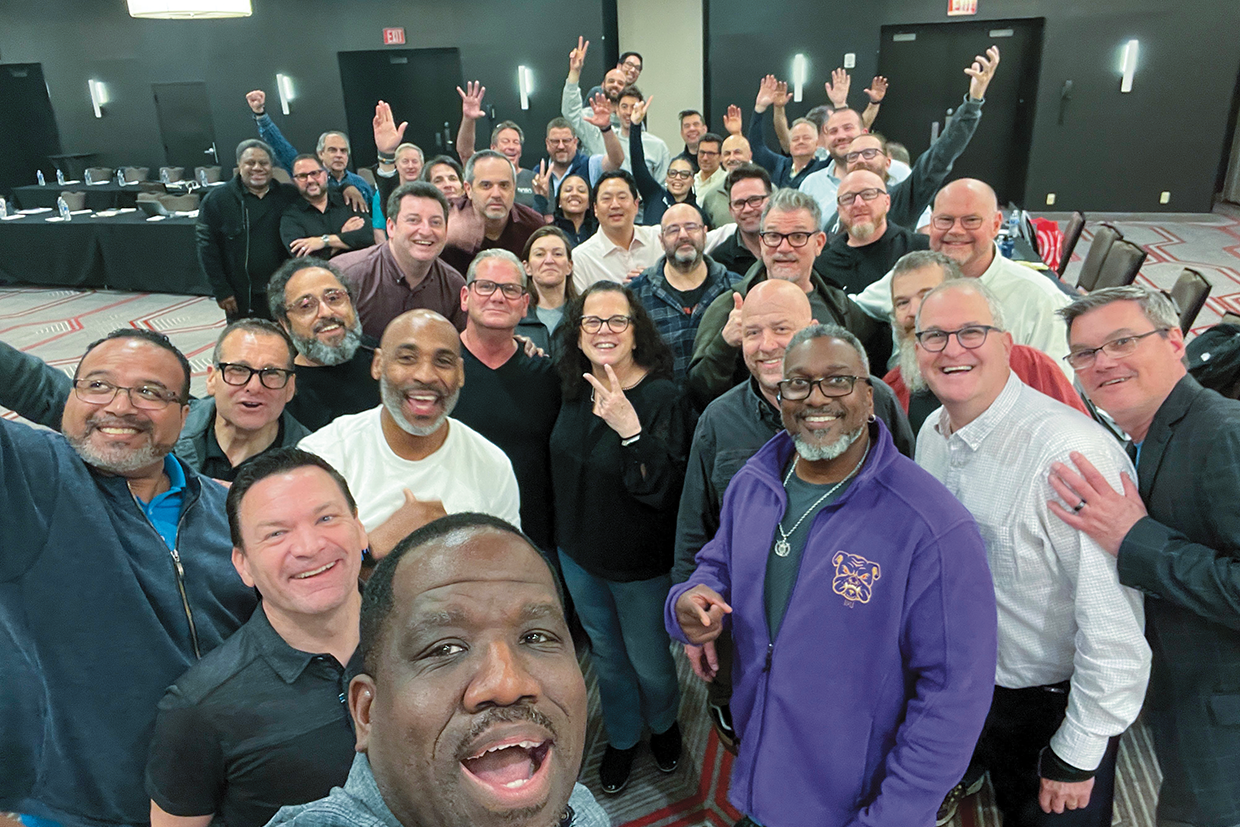
Fifty rank-and-file members of the union sat across from the managers they work with every day to hash out details of a contract for 4,300 union technicians, camera operators, editors and broadcast specialists.
For New York Local 1212’s Phil Doyle, it all makes perfect sense, even if the process would strike those in most of the IBEW’s other branches as odd.
“Rank and file have always talked to bosses,” said Doyle, a technician and news and station committee negotiator who also serves as vice president of his local. “If it was two lawyers talking in a room about workplace issues they weren’t directly involved in, that would be strange, right?”
For decades, the CBS-IBEW contract has been directly negotiated by a team of working men and women selected by the business managers of Local 1212; Washington, D.C., Local 1200; Hollywood, Calif., Local 45; and Chicago Local 1220.
Those business managers, along with Broadcast Director Robert Prunn and international representative Neil Ambrosio, organize the strategy and then guide and advise each committee as they progress through the proposals. When some proposals aren’t resolved in committees, Prunn and Ambrosio are ready to step in.
“We all go in with a plan, and in real time we can give them information, data, fact-check what management is saying and help them avoid traps,” Prunn said.
In May, the two parties agreed to another three-year contract, just as they have since 1939. The proposal was approved by more than 90% of the membership.
Crafting an agreement meant facing the thorniest problems in a rapidly evolving industry.
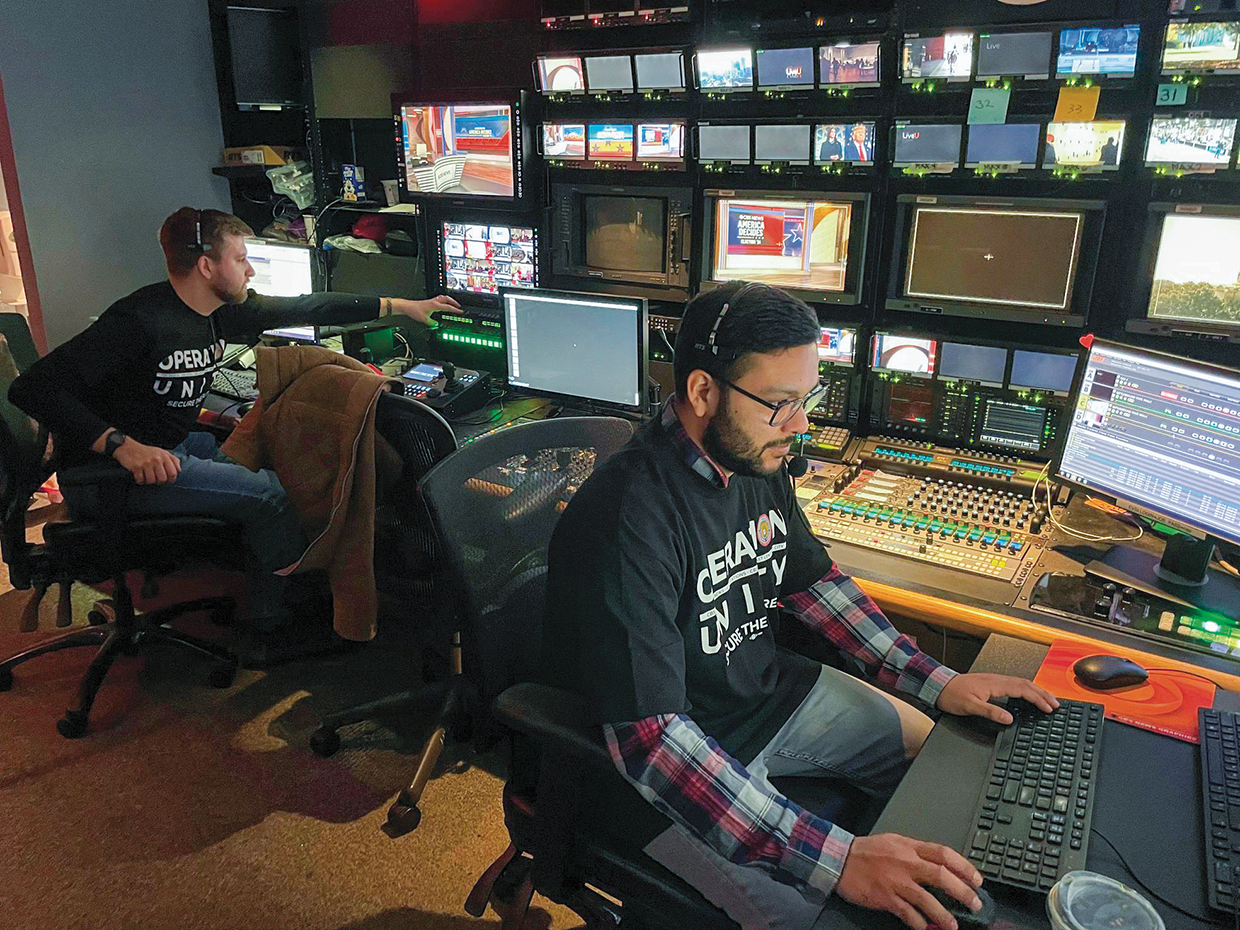
The headline was the unprecedented pay raises. Most numbers covered by the contract will see 13% higher wages over the next three years, while traveling sports freelancers will also receive a 14.75% increase in travel-day pay.
“While wages have been flat and more jobs outsourced at other major networks and many streamers have been aggressively anti-union, CBS and the IBEW are showing that a partnership built on rewarding exceptional talent can be profitable for everyone,” said International President Kenneth W. Cooper.
This year, negotiations were split between three subcommittees: news and stations, sports, and CBS operations and engineering. The units include the people behind sports and news programs broadcast by CBS, but they are almost never on screen.
“There is a saying, ‘the magic of television.’ The magic is us,” said Dan Hamm, a technical director at CBS for 25 years and president of New York Local 1212.
This spring, Hamm was the chair of the engineering and operations subcommittee. It was his fifth contract negotiation.
When he started on the negotiating team, he thought it would be like in the movies.
“In my head, I thought it’s zero sum. The more I was involved, the more I learned it isn’t that cut-and-dry. A lot of times they are trying to abide by the contract, but communication breaks down,” he said. “When you talk frankly with the senior management, you start to see they are trying to solve problems and then it becomes, ‘We have a problem, both of us have this problem. It’s our problem.’”
For the first few negotiations, Hamm just listened and took notes. Three years ago, he said, he was finished learning.
“It’s an honor, but it’s heavy,” he said.
In his day job, Hamm sits in what is called the Sports Palace, the beating heart of the broadcast center in Manhattan.
“It’s chaos,” he said. “I prevent that chaos from hitting the air.”
Technical director Jared Leong, a Local 45 member and Hamm’s committee co-chair, put it this way: “In my world, you protect air. At all costs, no outages. We call it ‘Five nines uptime: 99.999% uptime.’ With how expensive our ads and shows are, even a second of black could mean millions of dollars.”
Hamm said part of the chaos he has to protect the viewers from is in the television industry itself.
It used to be that you watched shows on TV and movies in the theater and broadcast news made money. If you wanted to watch “Seinfeld,” you tuned in Thursday night.
Now everything is available everywhere, all the time, made by anyone.
While CBS once competed with just ABC and NBC, today it competes with every viral visual storyteller in the world.
The only reliable way to rise out of the infinite froth is to be extraordinary, said news and stations committee co-chair Matt Tureck, a video editing supervisor and member of Washington, D.C., Local 1200.
“Union members contribute to ratings very directly. We are excellent photographers, excellent editors, maintenance engineers. Camera operators see things that producers don’t. Audio engineers see and hear things the reporter doesn’t. The better we are, the better we can support producers and correspondents,” he said. “The better we do, the better the ratings.”
Tureck has been in broadcast journalism for nearly 30 years, and over time he felt that some of his concerns were forgotten in negotiations. He didn’t complain. Three years ago, he saw an opportunity to get involved and took it.
“The little things affecting us at work that no one would or could possibly know about, they needed to know about,” Tureck said. “That’s what drew me to the negotiating committee. Hopefully I could be of use.”
And nearly all of those “little things” weren’t about salary.
“What is a producer allowed to do? Who can shoot with an iPhone? What about a little consumer camera — can someone outside the unit shoot it without an IBEW technician around?” he said. “As a union, we want to keep what we have always done.”
For example, managers wanted to reduce the size of crews that were sent on assignment. New technology means everything is smaller, they argued.
Tureck said the easy thing to do would have been to see this as just one more attempt to squeeze workers. But, he said, the managers had earned the benefit of the doubt.
“We thought, ‘Maybe they don’t understand the scope,’” he said.
One of the newest members of the negotiating committee, Local 1212 member Kenton Young, had his truck with all his gear in it. During a break, they brought all of it into the negotiating room: GoPros, drones, mini cameras and the live-view backpacks that send out signals instead of satellite trucks. As technology has evolved, everything is smaller, lighter, and more portable, they said. But look at it all.
“It wasn’t a stunt, something you do to look clever. It was honest. This is what you want me to carry alone in a hurricane,” Tureck said. “Many of the managers are very experienced. They understand a lot, but some things you have to see for yourself.”
In the end, crew sizes were left unchanged in the final agreement.
When both sides are committed, difficult conversations are not only possible but can foster relationships that prevent challenges from becoming bigger problems, said Bill Mastorakis, the sports committee chair and a member of Local 1212.
Sports is in a different place than news. CBS pays billions of dollars each year for rights to the NFL, college football and basketball, and the PGA. In a world where many can stream and fast-forward through ads, live sports are some of the most valuable destinations for advertisers.
Mastorakis is a technical director. He is responsible for getting everything the event’s director wants on air.
“I’m like the senior enlisted. I am not an officer, I make sure all the things that run on electricity that make a show successful are in place,” he said.
The relationships built in the no-second-chances world of live sports are carried into the negotiating room.
“They had four people all actively involved in day-to-day operations of CBS Sports, including the executive VP. Four people representing more than $3 billion of rights and operations, and us,” he said, highlighting the uniqueness of the bargaining session.
Sports is where the IBEW has the most thoughtful, reasonable and best relationships at CBS, Prunn said. And that translated into real success at the bargaining table: higher travel pay, more jobs, protected jurisdiction, even new classifications.
It doesn’t mean there wasn’t friction, but Mastorakis said the parties always used that friction to move forward.
“It gets rid of the us-and-them attitude about it,” he said. “That’s how things should be done.”
Prunn said he expects this working relationship to continue with CBS’ new parent company, Skydance.
“When members are this involved in negotiations, they become deeply invested in the outcome — and in the company’s success,” Prunn said. “That pride shows up on the job every day. With Skydance’s leadership team bringing fresh energy and resources, and George Cheeks staying on to run CBS, we’re enthusiastic about moving forward together.”
Hamm said he wished other people could have the experience he’s had — sitting as an equal at a table with his boss and his boss’s boss and working together for a common purpose — that perhaps there’s a lesson to be learned from the uniqueness of a negotiation process that’s worked in the broadcast industry for decades.
“We can still talk to another human being. We did it for small things in our contract, maybe, but there is a level of respect I have for them, and they have for me, that we can apply to a lot of other things in this country,” he said.