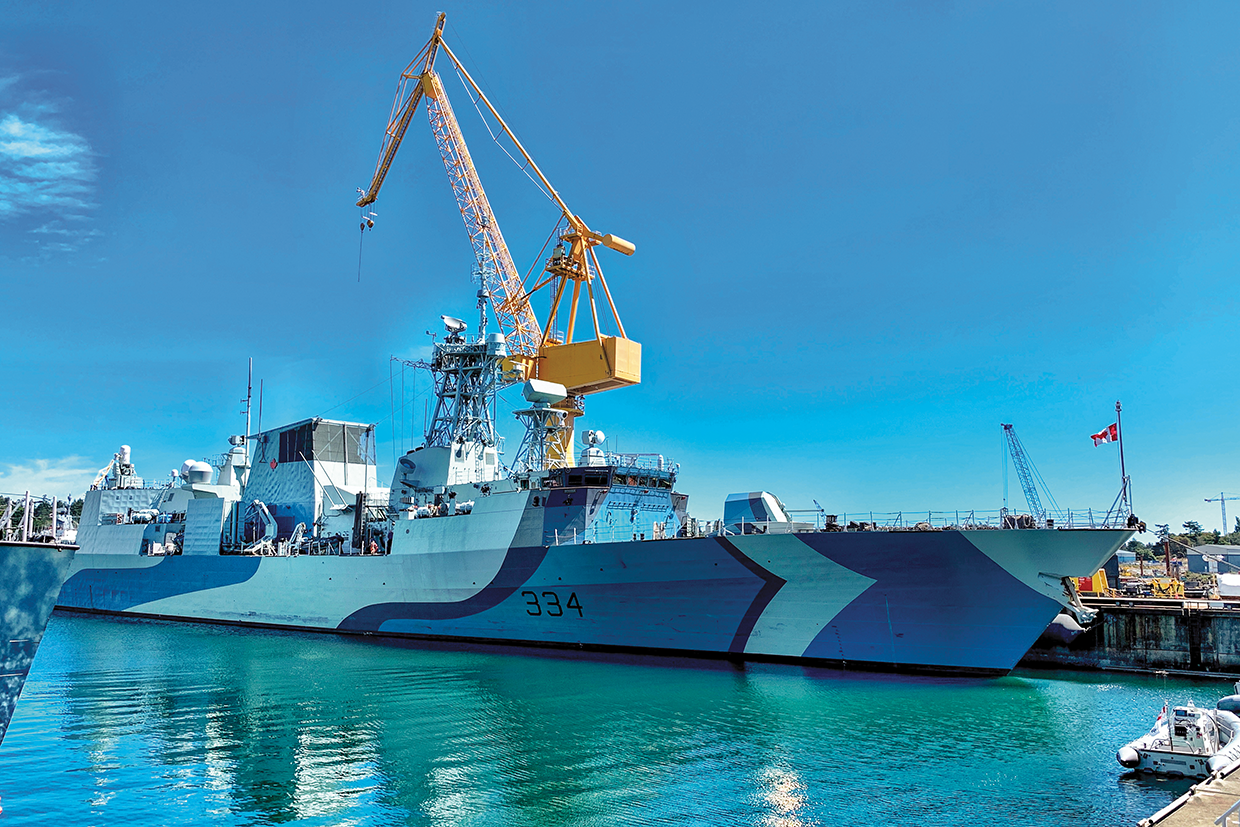
Victoria, British Columbia, Local 230 shipyard members have a lot to celebrate as they emerge from arbitration with a substantial pay raise, putting them on par with their East Coast counterparts.
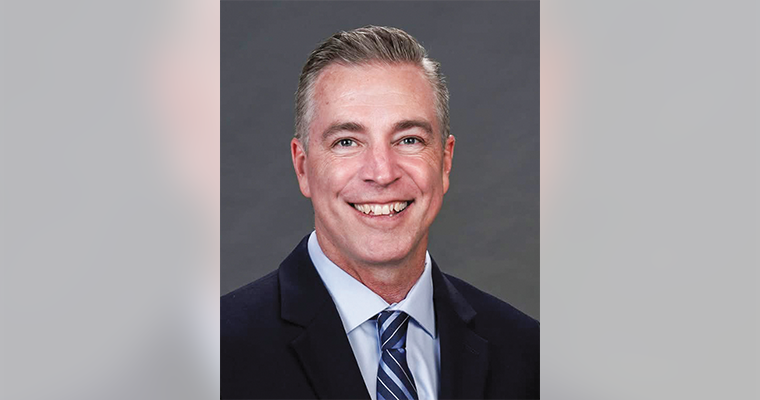
“Local 230’s success highlights the value of strategic risk-taking in tough negotiations,” First District International Vice President Russ Shewchuk said. “It’s a reminder that thinking outside the box and remaining persistent can deliver real results.”
It took nearly two years from the start of negotiations to receive the results of the arbitration. By the end, however, the members secured a 28% increase plus substantial retroactive pay.
“The arbitration came about when the bargaining went sideways,” Local 230 Business Manager Phil Venoit said, noting that other federal public sector unions were negotiating an increase of about 12% over four years. “That simply wasn’t enough for our craft trades workers who maintain the Canadian surface and sub-surface naval fleet on the Pacific.”
Roughly 200 Local 230 members fall under the agreement and belong to the Dockyard Trades and Labour Council, a contingent of mostly international unions that operates like Metal Trades Councils do in the United States.
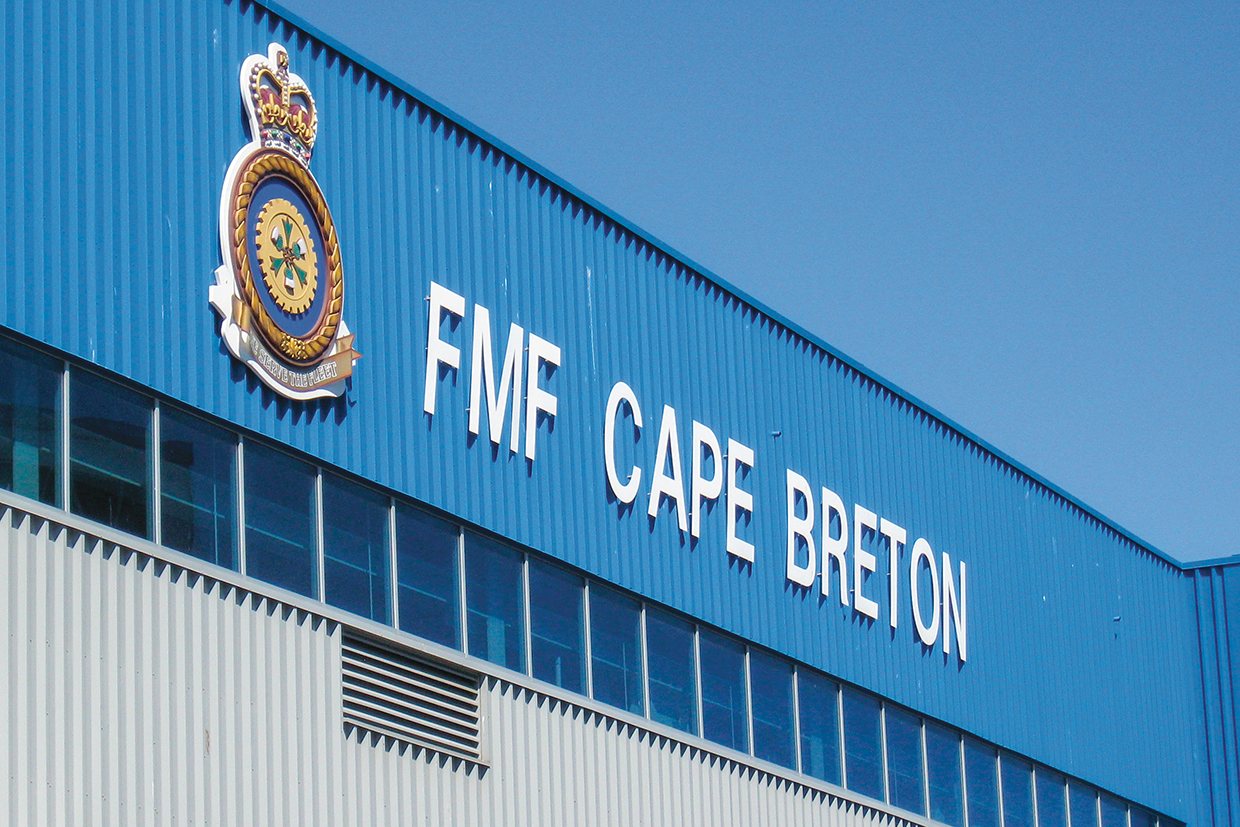
Jon Gable, an electronics technician, serves as treasurer of the council and participated in the negotiations. He credits a tour of Fleet Maintenance Facility Cape Breton, which is the West Coast counterpart to the East Coast’s FMF Cape Scott, for demonstrating the comparability between the two coasts.
“The employer and arbitration panel gained a lot of insight into what we do and how unique the work is,” Gable said of the tour.
The disparity in pay despite the similarity of the jobs came about in part because of different bargaining outcomes. Prior to bargaining, the union has to choose between binding arbitration and striking in the event of an impasse. The East Coast cohort had been successful with arbitration, whereas the West Coast had chosen striking. This time Local 230 members chose arbitration in the hope that, by demonstrating how the coasts are essentially mirror images of each other that the pay should also be equal.
While the majority of the bargaining process moved at a snail’s pace, the final days progressed quickly, said Jeremy Switzer, an electrical technician who also serves as a steward and Marine Sector chair.
“It was very fast-paced,” Switzer said. “At one point, I realized that the discussions were building momentum. I looked over at Phil (Venoit) and (IBEW Delegate) Daniel Nelson, and thought: ‘Is this really happening? Are we really going to end up with this massive increase in our wages?’”
The need for arbitration this time had roots in previous bargaining rounds dating to 2012, Venoit said, when a negotiated 5.2% raise was rescinded through Progressive Conservative legislation just four months after the agreement was made.
“The resentment never really went away,” Venoit said. “It held thick in the minds of members who felt betrayed by their employer and the federal government, and dismissed in subsequent rounds of bargaining.”
The perseverance of Local 230 paid off. Not only did it receive the standard increases enjoyed by the balance of the federal civil service, but the arbitrator also noted the injustice that was yanked away in 2012.
“The arbitrator saw the bias and disparity of basic pay equity between the East Coast and the West Coast workforce, who work on the same vessels and perform the same work with the same credentials,” Venoit said.
For Gable and Switzer, the process was a chance to positively affect their union siblings’ quality of life.
“It was exciting to be part of such an important agreement that really made a difference in the members’ livelihood,” Switzer said. “It was a massive win, and it brought me so much joy to be able to share it with my IBEW brothers and sisters.”
Share your IBEW news!
IBEW Canada is seeking impactful stories from local unions and members. Please contact Shaina Hardie at [email protected] .