Green energy never did much for Weirton, W.Va., until 2022.
It seemed like solar and wind construction blossomed everywhere but here. In the northern sliver of West Virginia between Ohio and Pennsylvania, nothing stepped up when first the coal mines shuttered and then the powerhouses followed.
Weirton Steel once employed more than 10,000 workers, but the final forge went cold in 2024.
In 2022, finally, the promise of clean energy found Weirton.
That last steel mill was to reopen to make transformers for green generation stations, three of which were being built in the jurisdiction of Steubenville, Ohio, Local 246, which includes Weirton.
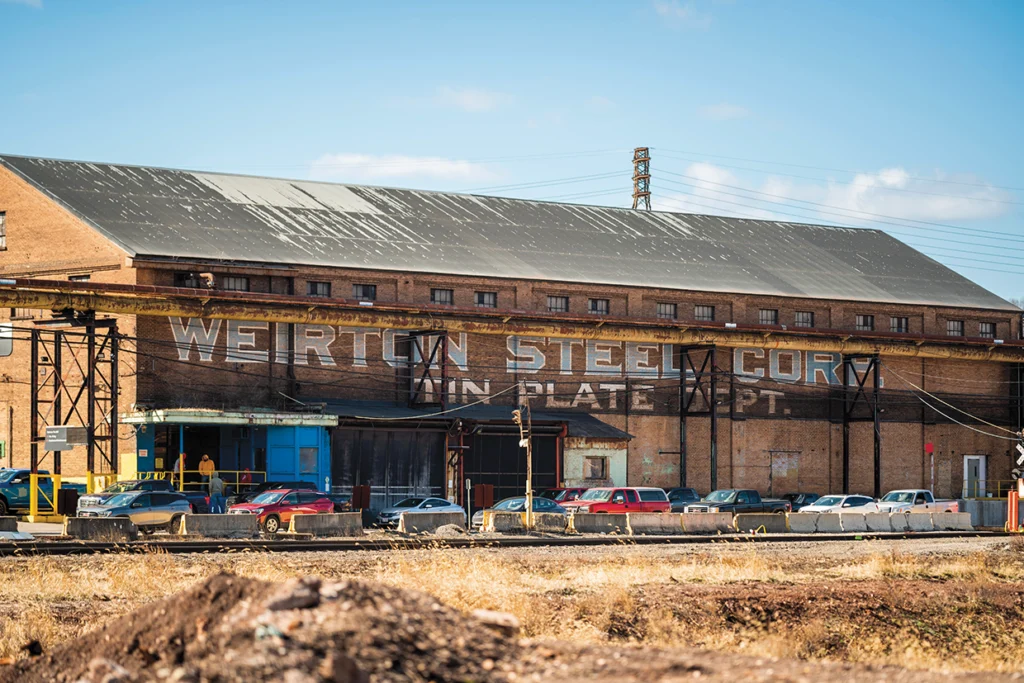
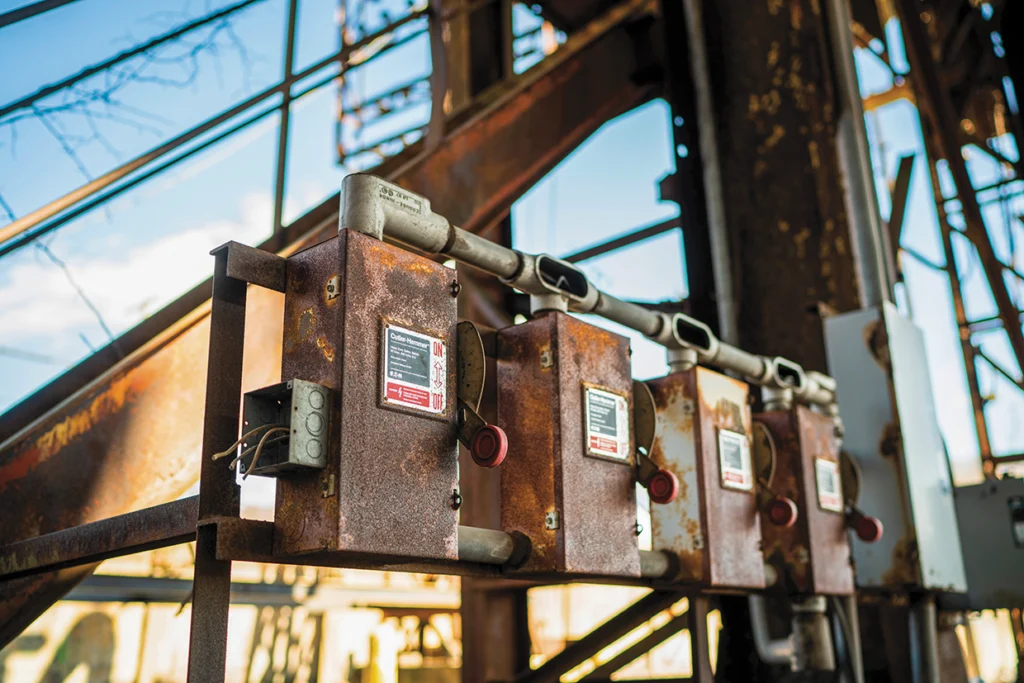
The shuttered steel mill in Weirton, W.Va., was reopening as a $150 million transformer factory. The project died when the Inflation Reduction Act was effectively repealed last summer, killing 200 to 250 jobs for Steubenville, Ohio, Local 246.
“There was a huge production. Then-governor Republican Jim Justice was there with his dog,” said Local 246 Business Manager Kevan Brown. “We were finally getting in on a high-demand industry.”
The $150 million project was made possible by incentives in 2022’s Inflation Reduction Act, which provided tax credits for the domestic manufacture of critical clean energy technology.
“I expected 200 to 250 construction jobs for at least five years,” Brown said, boom times for his 350-member local.
And then all those hopes died. The signs announcing the project faded. The gate stayed chained.
In May, the materials giant Cleveland-Cliffs killed the Weirton project. It was one of five nationwide. The tax incentives in the IRA were all gutted, and there was economic pandemonium from the blanket imposition of tariffs.
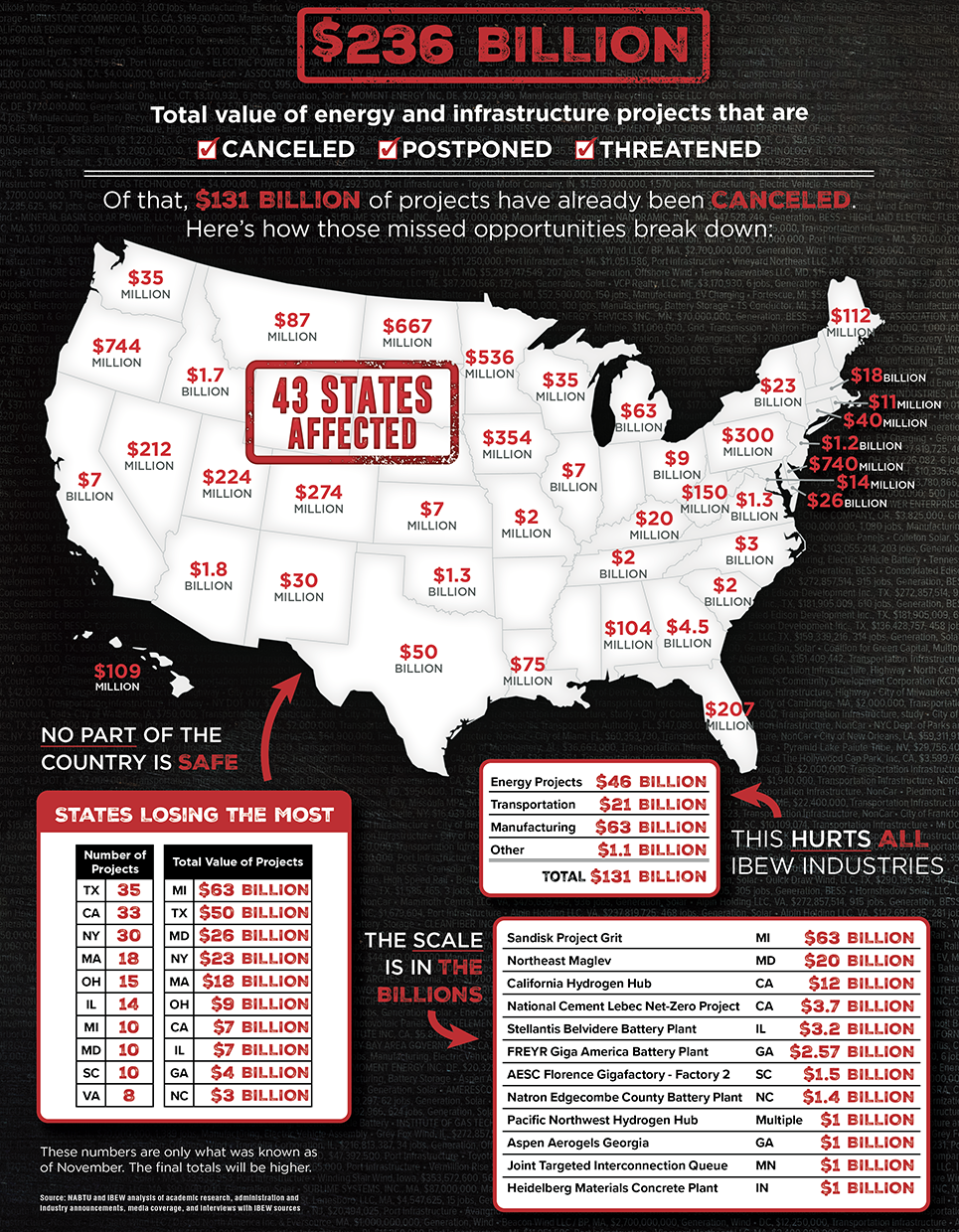
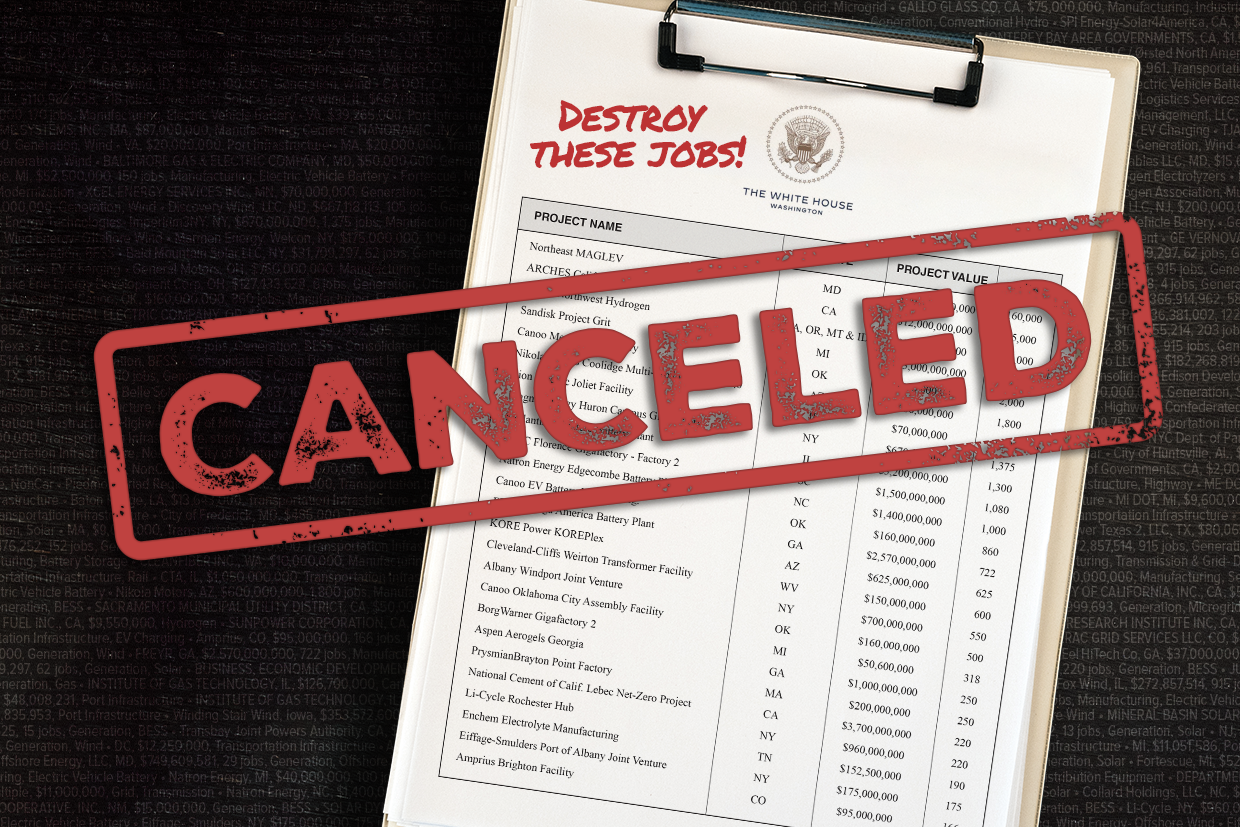
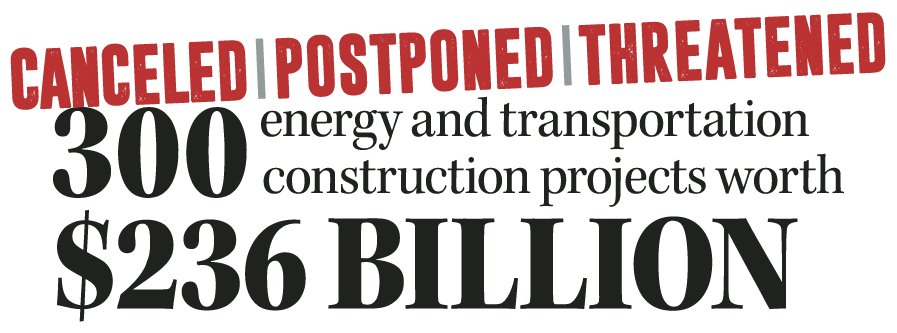
Since the start of the Trump administration, at least 300 energy and transportation construction projects, worth $236 billion, have been canceled, postponed or seriously threatened. Of that, $131 billion in projects are outright canceled. The cancellations represent at least 255,000 lost construction jobs, according to research conducted by the IBEW and North America’s Building Trades Unions.
These numbers only cover project cancellations or setbacks due to tariffs, tax credit revocations or economic uncertainty caused by the president’s policies in the first 10 months of his term.
Most of the damage is a result of the One Big Beautiful Bill Act, a $1.1 trillion tax giveaway to corporations and the top 1% of earners, who take home more than $1 million annually. Those cuts come at the expense of tax incentives and grant programs in the Inflation Reduction Act, Infrastructure Investment and Jobs Act, and CHIPS and Science Act that spurred hundreds of billions of dollars of private investment during the Biden administration.
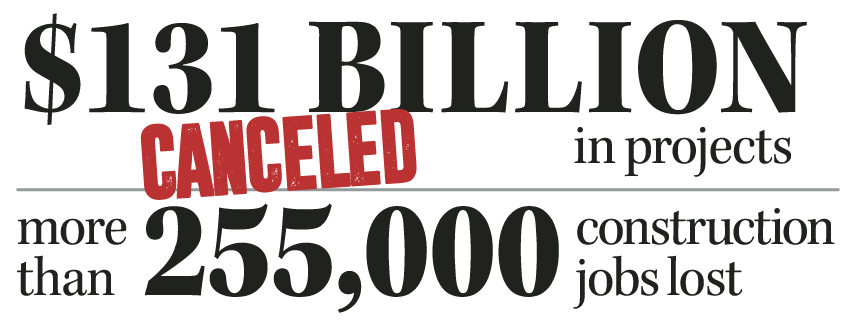
Almost 55% of the cancellation announcements did not include estimated job losses. The actual number of lost construction jobs is most likely much higher.
“I hear about the uncertainty constantly from anybody planning any project. They are hesitant to invest, are slowing everything to a snail’s pace or just stopping altogether,” said Construction and Maintenance Director Matt Paules. “We had so much going for us, and in 10 months he’s cut the knees out from under us.”
A Personal Cost
The Cleveland-Cliffs project was one of 53 manufacturing construction plans worth $134 billion that have been canceled.
Brown acknowledged that the tsunami of cancellations could have come at a worse time. There are open calls in parts of the country — at least 60 Local 246 members are traveling now.
But for the first time in too long, all of his members were going to get what their parents had: a steady job in their hometown.
It was a godsend for one of Brown’s members, a veteran who was a few years away from full retirement.
“He couldn’t travel for work because of all his appointments at the VA hospital. Once you get one of those VA appointments, you don’t reschedule. You can’t reschedule,” Brown said.
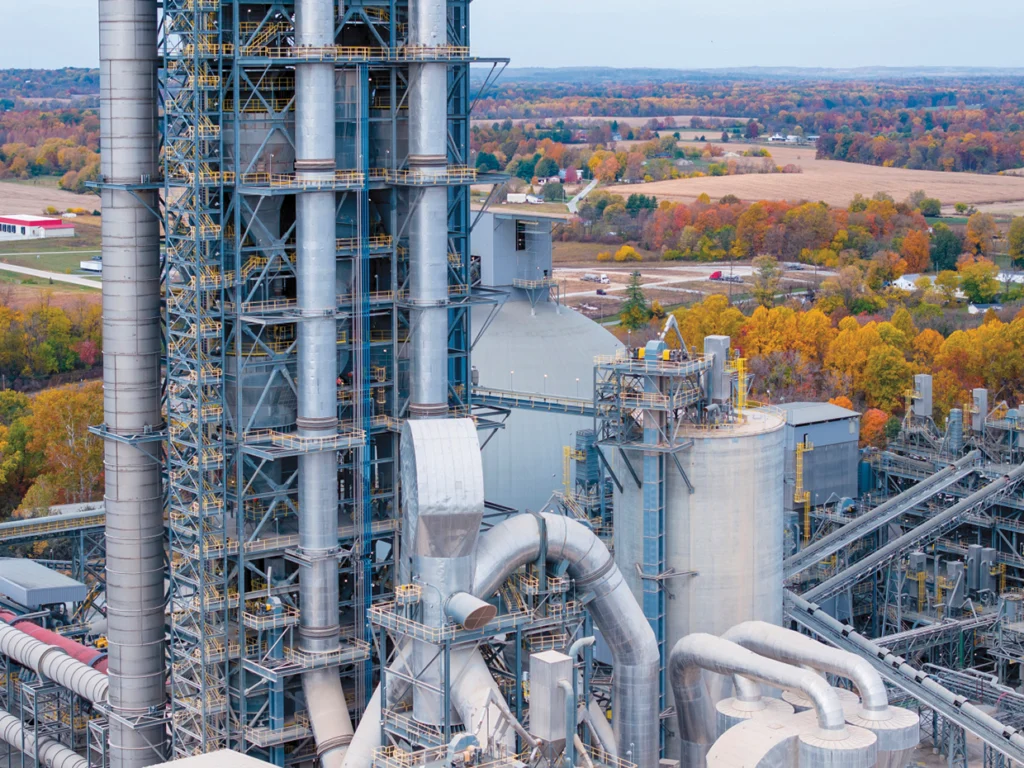
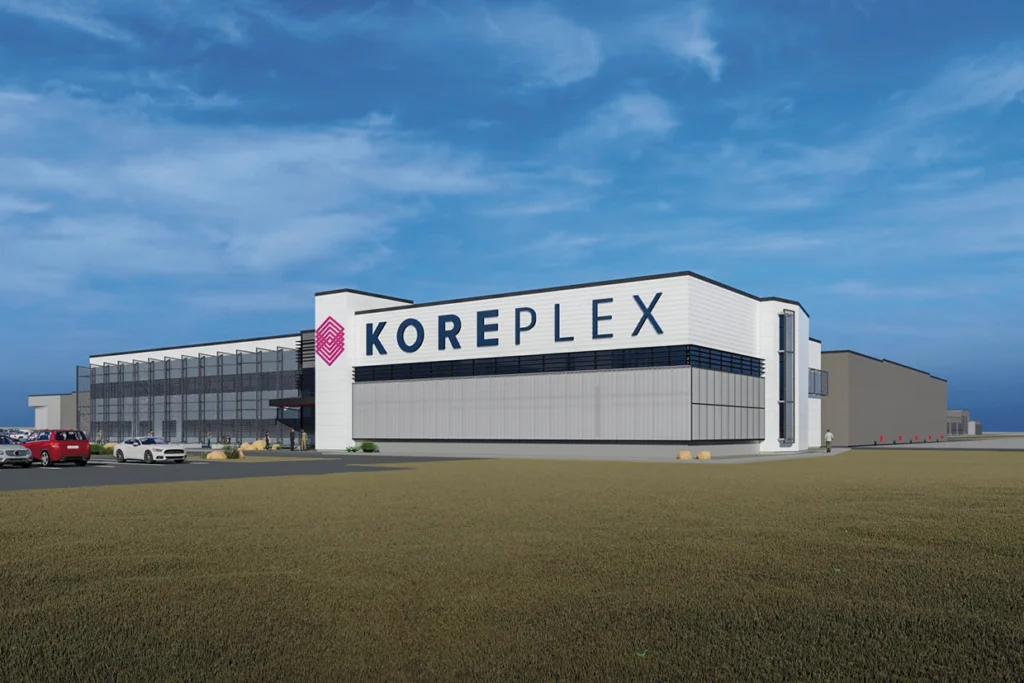
The Cleveland-Cliffs transformer facility would have carried this member through to the retirement he earned without sacrificing the health care he needed.
The project would have been perfect for the single parents in the local, for the ones who value a family dinner more than overtime, for the people who want to show up at their aging parents’ medical appointments in person and not over the phone.
Not anymore. To add insult to injury, the solar projects haven’t moved forward in months.
“It’s devastating,” Brown said.
Instead of heading out to a local job, the veteran member took early retirement and left thousands of dollars on the table. All he needed was a few years more for a full pension.
The cancellations come at a terrible time for the power grid. For the first time in decades, power demand is growing in North America, but in 2025, imports will account for about 80% of transformer supply and 50% of the distribution transformer supply, according to an analysis by Wood Mackenzie.
And while tariffs were sold as a way to make domestic manufacturing more competitive, the blanket policy is crippling domestic expansion and increasing the cost of imported components for U.S. manufacturers.
A Wasted Opportunity
Manufacturing was the hardest-hit sector by total dollar value, but energy generation represents the greatest number of projects canceled and threatened.
At least 190 projects in 35 states worth almost $68 billion were canceled or postponed in the first 10 months of the Trump administration.
Because the IBEW was so successful in building labor protections into the Biden-era laws — requiring prevailing wage and registered apprenticeship participation, for example — most, if not all, of these jobs would have been the IBEW’s work.
In addition to the canceled construction projects, the Trump administration and the Republican Congress killed 25 federal investment programs, affecting more than 1,400 projects worth in excess of $1.1 billion.
“We fought for decades to get our country reinvesting in infrastructure, in domestic manufacturing, and giving union workers a fair shot at the work,” said International President Kenneth W. Cooper. “Trump and the Republican Congress just killed all that for nothing.”
One of the largest projects to die was in Rockford, Ill.
Rockford is as solid a union town as you will find, said Local 364 Business Manager Alan Golden.
“We have 94% market share. Our largest nonunion shop has five guys,” he said.
There’s work for his 1,000 members, including Walmart’s largest cold-storage facility and a data center in DeKalb.
But it was still hard on the local when Stellantis shut down its facility in Belvidere in 2023.

“We’re a walkthrough right now. But it isn’t only about the jobs you have. It’s the jobs you’re going to have that matter,” he said.
So it was a good day when Stellantis announced that not only would it reopen the shuttered production line, but it would also invest $3.2 billion to build an entirely new EV battery facility.
Golden said he expected 200 jobs from the expansion, and several dozen permanent maintenance jobs on site.
“Not everyone wants to work seven 10-hour days at a data center. Money’s good, but everything else can suffer,” Golden said.
Then, in June, Trump canceled a $335 million award from a Department of Energy initiative supporting EV manufacturing and Stellantis killed the Belvidere battery plant.
About 1,300 expected jobs evaporated.
“This is a huge loss,” he said. “This plant means the world to Belvidere.”
A Betrayal
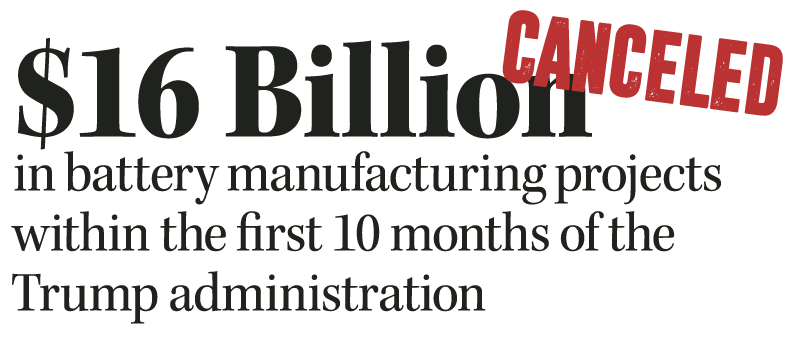
In total, nearly $16 billion in battery manufacturing projects were killed in the first 10 months of the Trump administration. Belvidere was just the largest.
Meanwhile, Chinese factories built 12.4 million electric vehicles last year. U.S. factories built only 1.1 million. China exported more electric vehicles — 1.2 million — than the U.S. made in total.
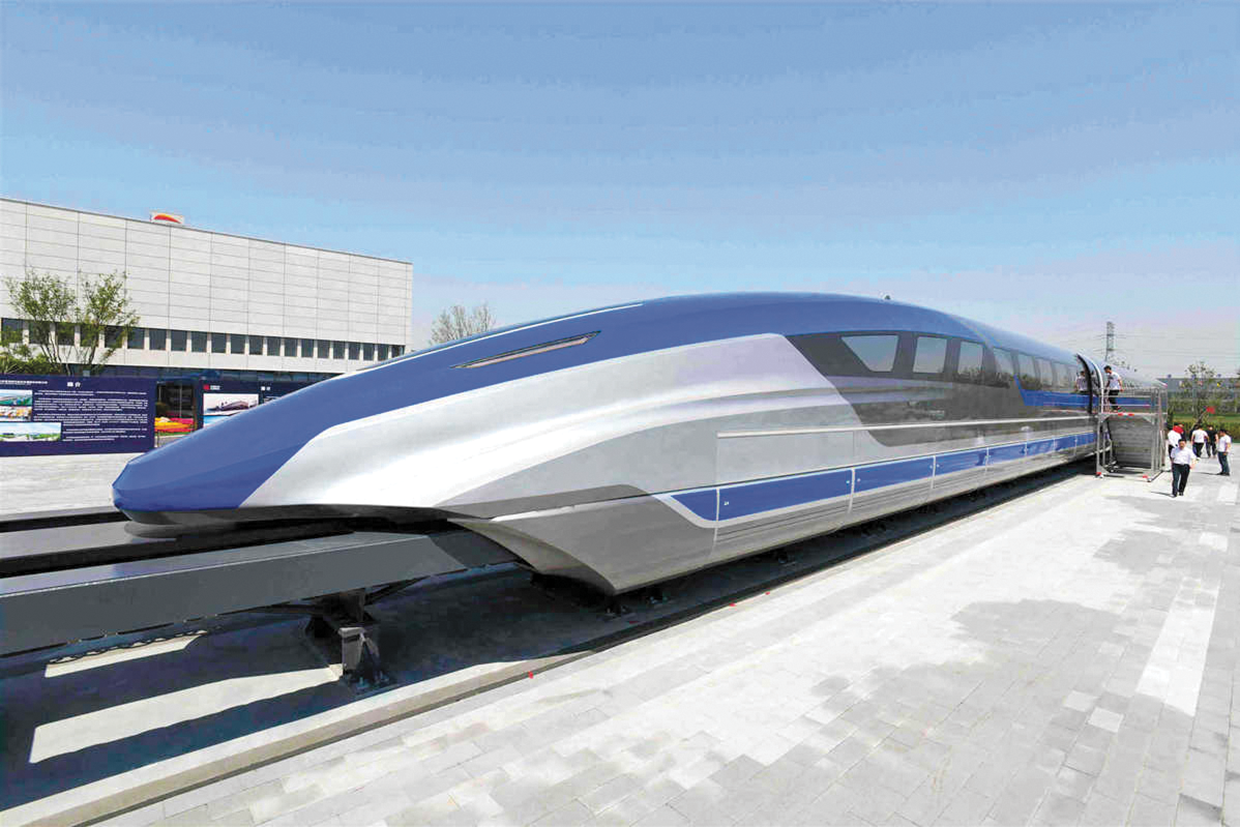
The first maglev train project in the U.S., Northeast MagLev, was killed 22 years after the Chinese built their first. Today, China’s high-speed rail network has 30,000 miles. The U.S. has not a single mile in service.
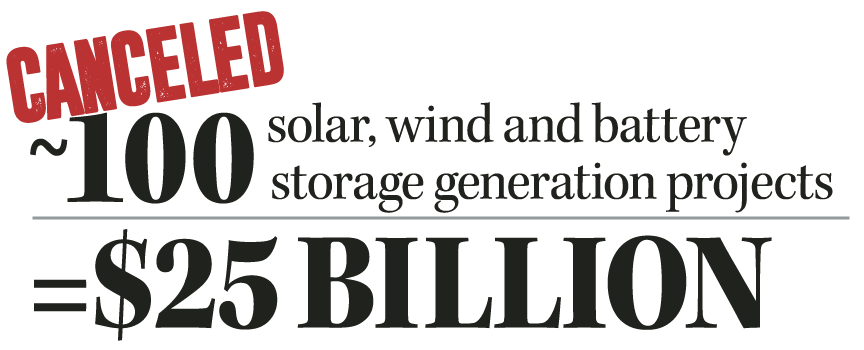
Nearly 100 solar, wind and battery storage generation projects were canceled, totaling nearly $25 billion. Last year, China installed 198 gigawatts of new solar in the first five months of 2025, far exceeding the total installed solar capacity of the U.S., 177 GW.
“This is national surrender. Killing all this work not only punishes working people, it fails the country,” Cooper said. The IBEW was extraordinarily successful in the legislative fights over the IRA, IIJA, and CHIPS and Science acts. For the first time, labor standards were built into tax credit and infrastructure laws that gave union workers an equal shot.
Developers were rewarded with smaller tax bills when they paid prevailing wages and used registered apprentices.
It’s possible, Paules said, that the midterms return the House and Senate to politicians who want to invest in America’s future and end this war on new generation and manufacturing.
But he worries that it may take until the end of Trump’s presidency in 2029. Paules said he wonders what will be lost.
“Maybe it all comes back; we’re just stalled for a while. But I doubt it. We fought for decades to build labor standards into the clean energy transition and finally got it done. We had a fair shot, even an edge, against the lowballers and bottom feeders,” he said. “I worry we won’t be able to get it back.”