There’s no such thing as working from home if you’re an electrician. But for students and job seekers near Rock Island, Ill., Local 145, there’s a way to give them a taste of what electrical work is like without wearing a hardhat.
“Our goal is for students to get a realistic and hands-on sense of what it feels like to work as an electrician without the risks of a jobsite,” Local 145 Business Manager Cory Bergfeld said about the virtual reality simulation the local offers at trade shows and other recruiting events. “We want them to see that electrical work is both technical and creative. Ideally, it sparks interest and encourages them to ask questions about joining Local 145.”
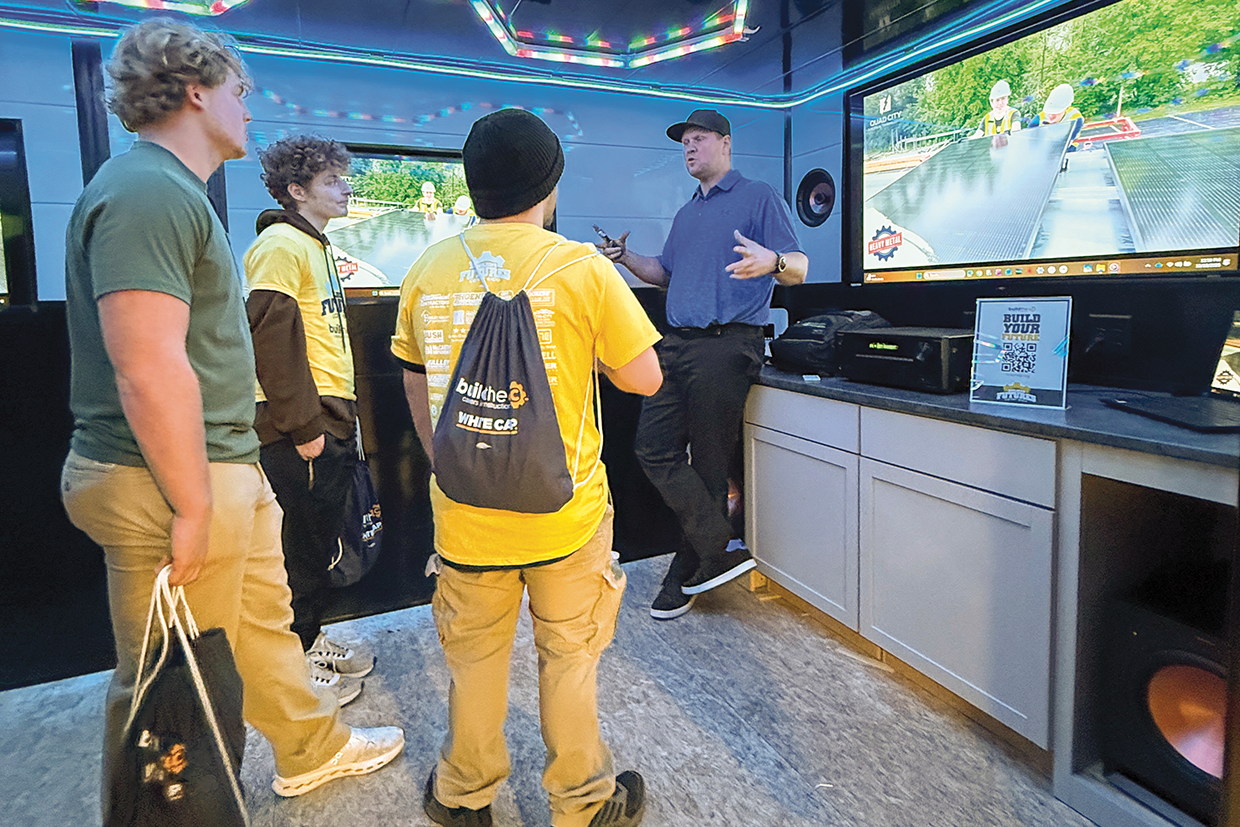
The local’s virtual reality training center was recently at the Building Futures Career Expo in Rock Island, one of the Quad Cities that span the Mississippi River in Illinois and Iowa. Over 1,600 students from more than 50 schools, as well as adult job seekers, attended. Hundreds of students rotated through Local 145’s VR station throughout the day, Bergfeld said.
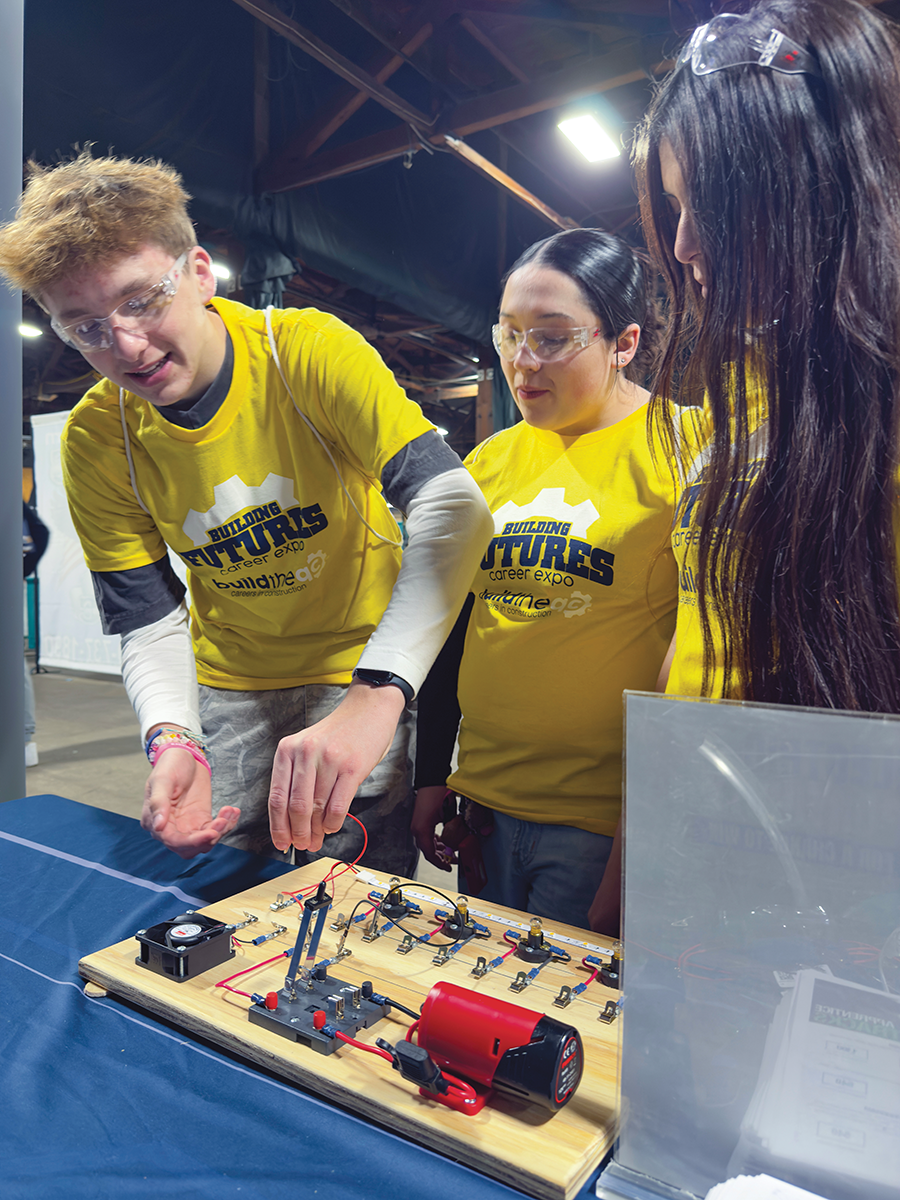
“The Local 145 virtual reality station stayed busy the entire day,” he said. “Students were excited about the hands-on experience, and a lot of them said the VR training center was one of the most memorable parts of the expo.”
The VR electrical training center consists of a headset-based simulation that places the user inside a realistic jobsite. Participants can handle tools, bend conduit, install components, troubleshoot wiring and safely explore some of the work that electricians perform every day.
The opportunity to explore electrical work brought in a variety of interested people, Local 145 Training Director Terry Van Hook said.
“I’ve noticed a common interest from all age groups. It’s something new and exciting,” Van Hook said. “It draws in students of all backgrounds, including those who have not considered the trade before.”
The VR simulation offers a wide range of benefits, from safety to being able to introduce the trade to more people in a shorter time. And those participants take that experience home with them. People remember hands-on experiences far more than lectures or videos, Bergfeld noted.
“You will never truly mimic real electrical work, but seeing some of the environments, tools and parts that we work with is a good starter,” Van Hook said.
The VR simulation has yielded real-world results. Several students who attended last year’s expo applied to the apprenticeship program, Bergfeld said. A few have since been accepted and are working through the training pipeline.
“The expo is one of our strongest recruitment touchpoints,” Bergfeld said.
Construction of the VR trailer itself served as an outreach opportunity. Robert Phillips attended the Heavy Metal Summer Experience, a program designed to introduce students to various trades. He was one of 10 students chosen to build the VR training center.
“Monday morning, they walked us outside to this empty trailer that was completely unfinished, I mean it was just bare studs. Throughout the course of the week, the other apprentices and I, with the help of a few experienced journeymen, transformed the trailer into a fully functional virtual reality center,” Phillips said.
The project also served as his introduction to the IBEW.
“That week left a very positive impression on me,” Phillips said. “I went from not being sure what I wanted to do for a career to, wow, an electrician’s apprenticeship would really fit me.”