
“When I was just out of high school, I worked at a grocery store for about a year. I’d applied for the apprenticeship and didn’t get in on my first try. They were looking for people with experience, but after the interview, the Local 64 president at the time gave me a call and said there was a job as a cable puller doing low-voltage work with the union.
I accepted, and I was able to get the needed experience, learn the tools, understand the jobsite, all that. I did that for about a year and then was able to directly upgrade into the commercial apprenticeship program.
I get paid to learn all I can. I definitely do ask a lot of questions, but you don’t get penalized for it. You know, it’s kind of the opposite. The more you learn, the more it’s like, ‘Oh, you get to go on this call,’ and you get new opportunities because you’re the go-getter. And I’ve tried to be that guy. I’d much rather tell someone I don’t know how to wire up a motor before I blow it up and make a $40,000 mistake. I’m happy to be the guy that admits I don’t know how to do something.
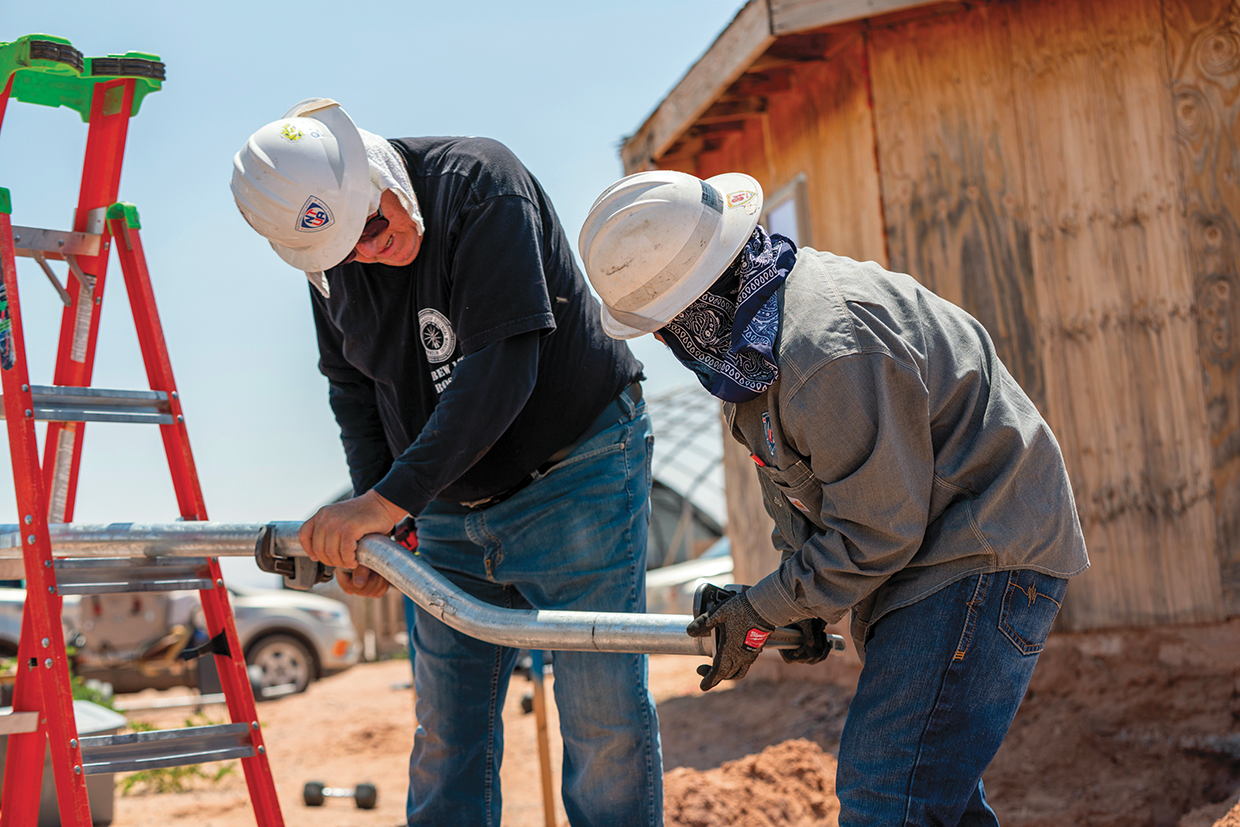
What I like best about electrical work is the variety. I’m not sitting behind a desk, and I’m not stuck doing the same thing. One day I might be pulling wire; another day, I might be bending pipe or laying a control panel or doing service calls.
My favorite work is service calls because it’s always something new. It’s a way to think: ‘This isn’t working. I have to fix it. So how?’ When you start working through that process, it’s probably one of the most enjoyable things about the job.
I want to get as much hands-on experience as I can so I really understand all the problems that can arise in the field. And I’d like to eventually learn the business end and perhaps open up my own shop and be a union shop owner. Companies I’ve worked for have been happy to explain their inner workings — it’s not like I’m going to steal their work. Everyone needs a new panel at some point, and the lights will go off. Someone’s got to fix them, and there’s always going to be that need.
Being an IBEW member has taught me how to save money and invest through the classes offered by the union. My overall work-life balance is good: I don’t have to work weekends, I get paid super well, and I get treated super well.
It’s a tight-knit community. I feel like I’m, you know, a person, as opposed to a number at a big corporation. I know I’ll have a career down the line, and that’s pretty important to me.”